Synaptic pruningWhy brains delete connections to mature
Synaptic pruning is the biological process of eliminating or weakening unused connections between brain cells. The brain starts with far more connections than it needs, and pruning strips away the excess noise as a person grows. This trimming shapes a dense infant brain into an efficient, specialized adult network.
By the edgi team We find the most surprising true thing about an idea and build a 60-second lesson around it.
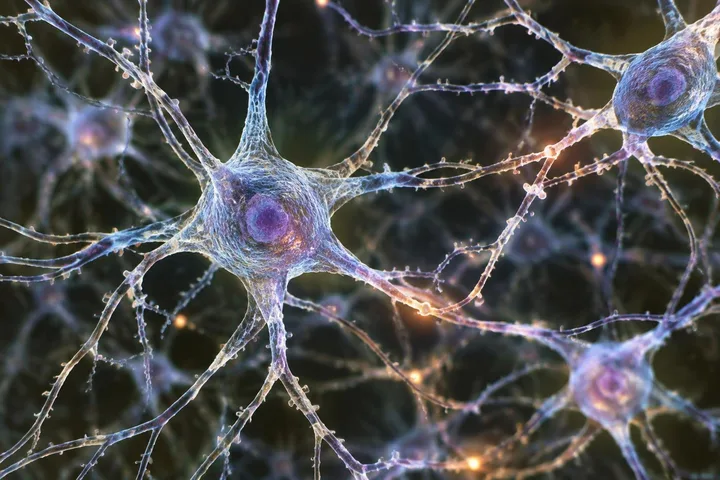
At age two, your brain is a dense, tangled forest of connections. It actually contains twice as many synapses as it will ever have as an adult.
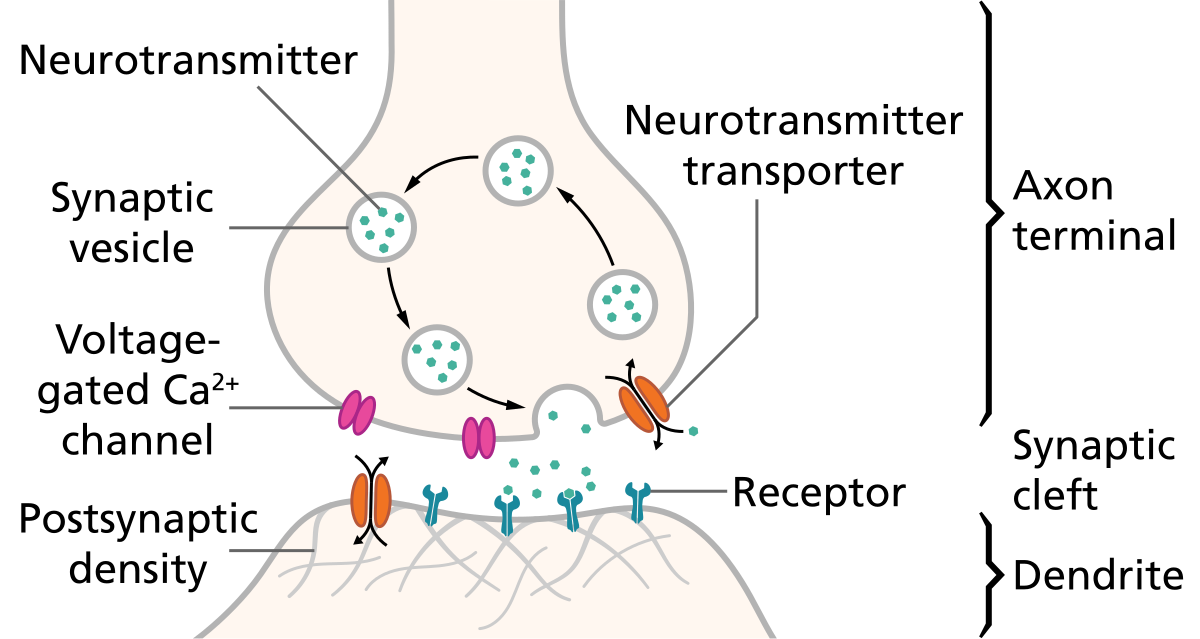
Schematic diagram of a synapse, showing the axon terminal, synaptic cleft, and dendrite. Thomas Splettstoesser (www.scistyle.com), CC BY-SA 4.0, via Wikimedia Commons
This isn't a bug; it's a feature. You are born with the raw potential to learn anything, from any language to any skill.
The great subtraction
In 1975, neuroscientist Peter Huttenlocher began counting connections in human brain tissue. He found a shocking trend: as we grow, that dense forest gets hacked back.
This process, essential for healthy brain development, continues into your late twenties.
Use it or lose it
The brain operates on a harsh 'use it or lose it' policy. Pathways you use often get strengthened. The ones you ignore wither away and die.
This pruning is the engine of neuroplasticity, allowing you to specialize. You don't get smarter by adding connections; you get smarter by deleting the noise.
How does synaptic pruning work?
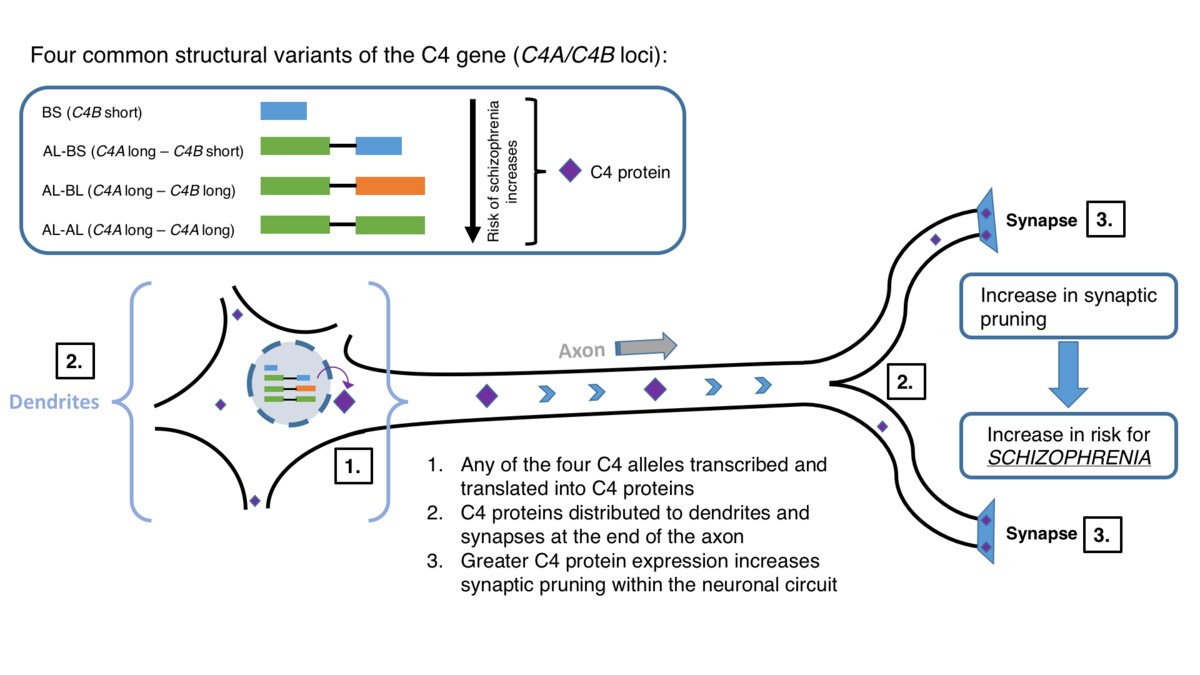
A child's brain contains roughly twice as many synapses as an adult brain, despite keeping roughly the same 86 billion neurons. During pruning, an axon retracts or dies off while its matching dendrite decays. Unlike apoptosis, where the entire neuron is killed, pruning selectively severs inappropriate connections while leaving the neuron intact.
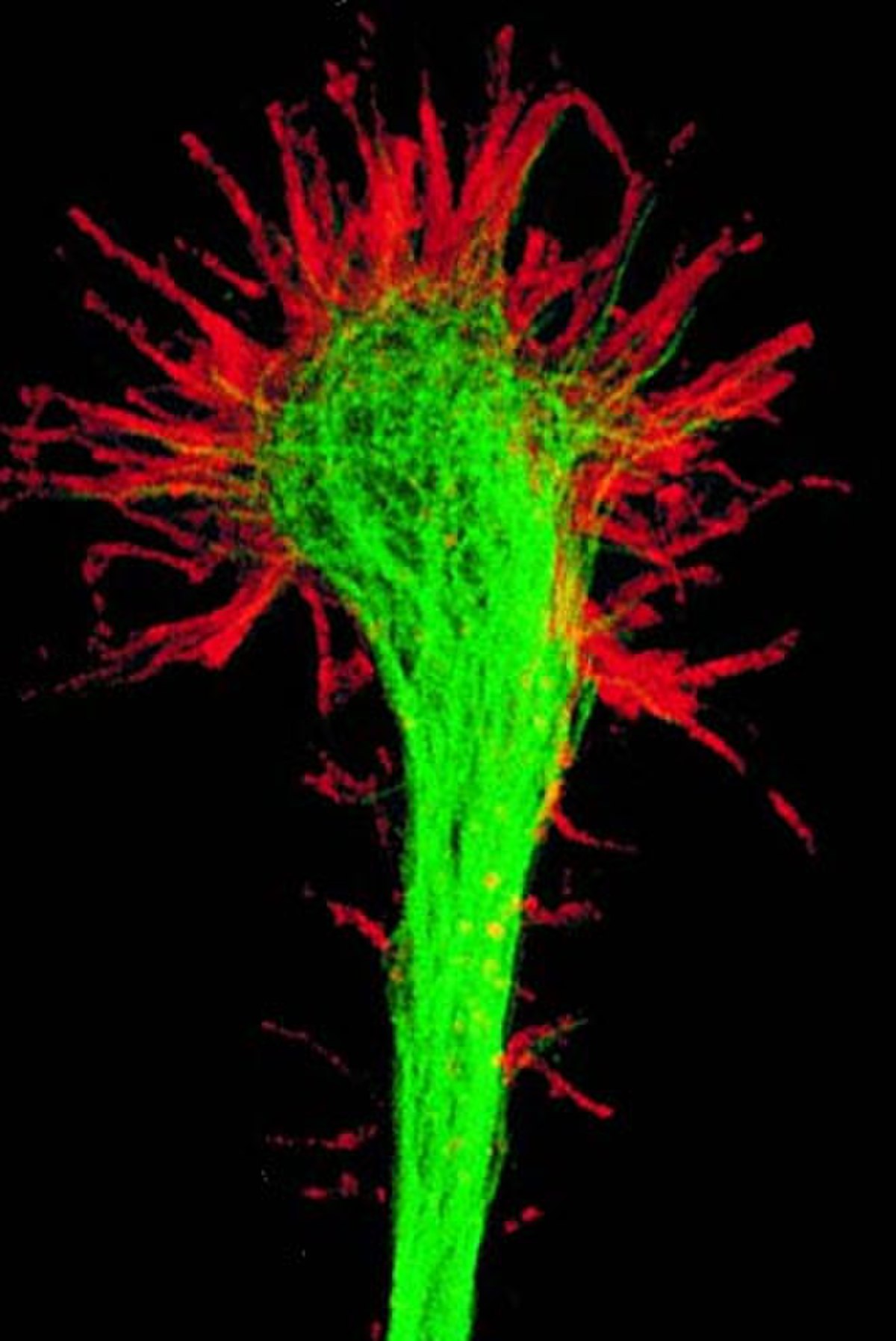
Pruning operates on a strict use-it-or-lose-it principle. Active pathways receive reinforcement, while rarely used pathways are eliminated through competition. In small-scale axon terminal arbor pruning, axons send short branches into a target zone, and the least stimulated branches are trimmed away to streamline signaling.
Large-scale circuit wiring
At birth, neurons send long axon branches to many targets at once, including incorrect areas. Early visual and motor cortices initially link to the superior colliculus, spinal cord, and pons simultaneously. Stereotyped axon pruning cleans up this overlap: visual neurons drop their ties to the spinal cord, and motor neurons sever connections with the superior colliculus.
Sensory input directly controls this physical sculpting. If eyes are sewn shut during the critical developmental window, the retina receives no light signals. Without input, the brain prunes the visual connections completely, causing permanent blindness.
The timeline of brain remodeling
Synaptic pruning begins near birth and continues into a person's late twenties. Magnetic resonance imaging proved that pruning does not stop at sexual maturity, overturning earlier assumptions about brain development.
This developmental pruning differs from the cognitive decline seen in old age. Early pruning is dependent on experience, similar to chiseling a block of stone into a finished statue. The later degradation in old age acts more like weather eroding that completed statue regardless of experience.
Test yourself
The brain removes unused neural connections through _____.
pruning. Pruning makes the brain more efficient by removing redundant or unused pathways.
Play the lesson in edgi and the card is yours. It lands on your Map next to the ideas it connects to, and turns from matte to foil to gold as you learn more around it.
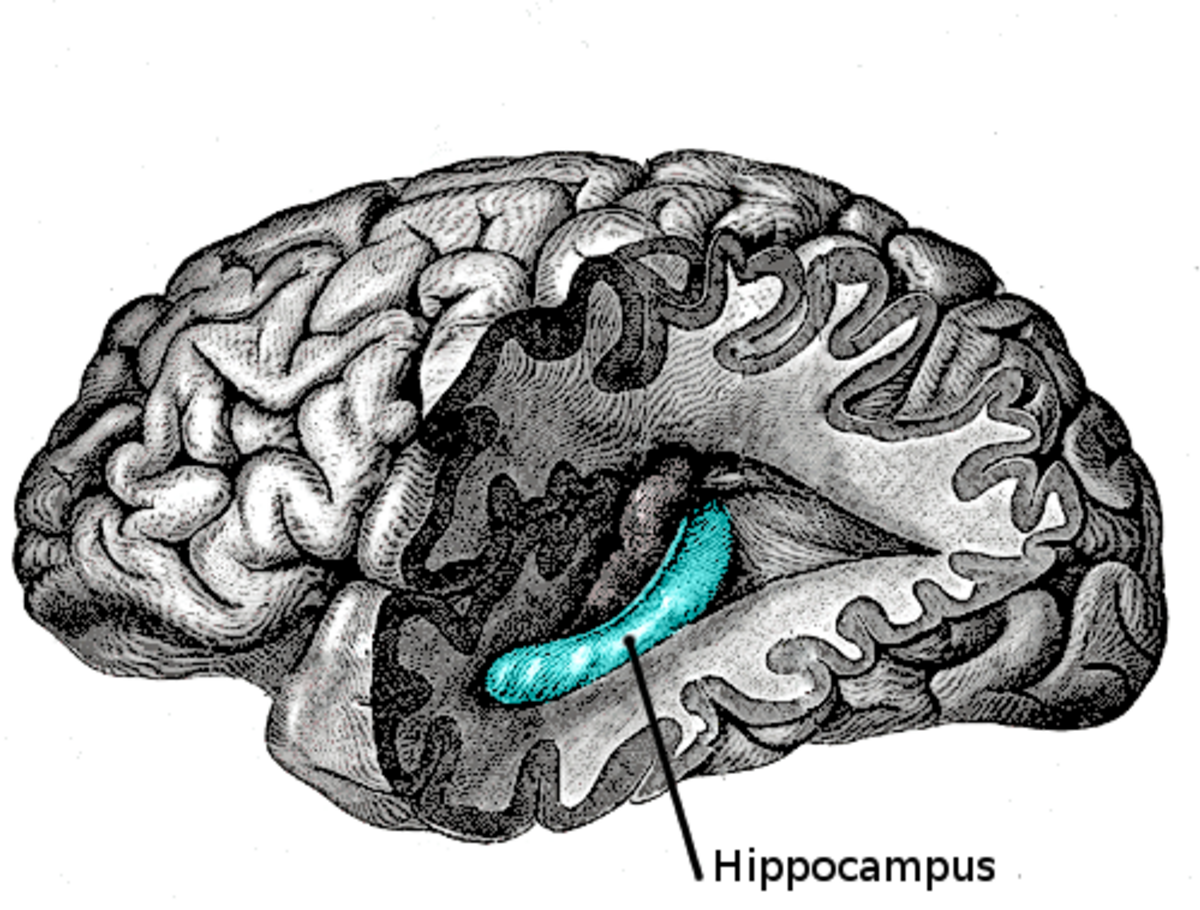
The total neuron count across the brain stays roughly constant at 86 billion, but specific regions shift dramatically. In the mediodorsal thalamic nucleus, adults have 41% fewer neurons than newborns, while glial cells rise from 10.6 million at birth to 36.3 million in adults.
What happens to the size of the brain during pruning?
An infant brain expands up to five times in overall volume by adulthood due to myelination and the growth of synaptic connections. After adolescence, synaptic volume decreases as pruning removes unneeded contact points.