IC50Why drug potency changes with test conditions
IC50, or half maximal inhibitory concentration, is a measure of how much of a drug is needed to slow down or block a biological process by 50%. Researchers use it to compare the strength of blocker drugs against targets like enzymes, cell receptors, or microbes. A smaller IC50 means a more potent drug, because less compound is required to achieve the same blocking effect.

By the edgi team We find the most surprising true thing about an idea and build a 60-second lesson around it.
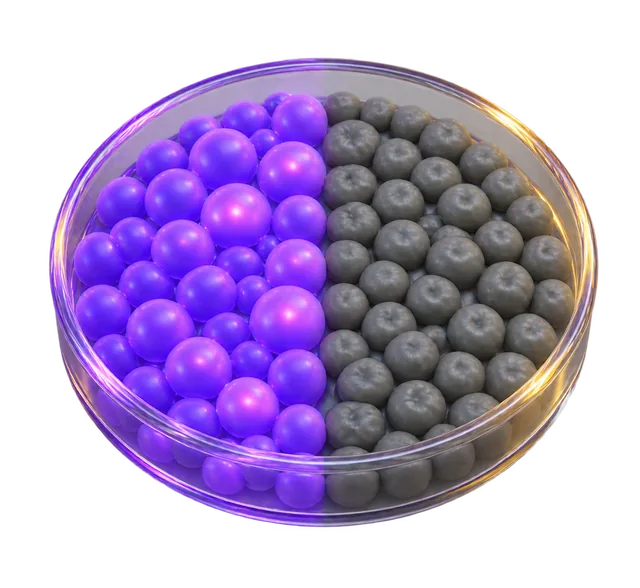
How IC50 measures drug potency
In pharmacology, IC50 quantifies the concentration of an antagonist (a blocking compound) required to reduce a biological response by half in laboratory tests. These tests can examine the activity of an isolated enzyme, a receptor on a cell, or the growth of a microbe.
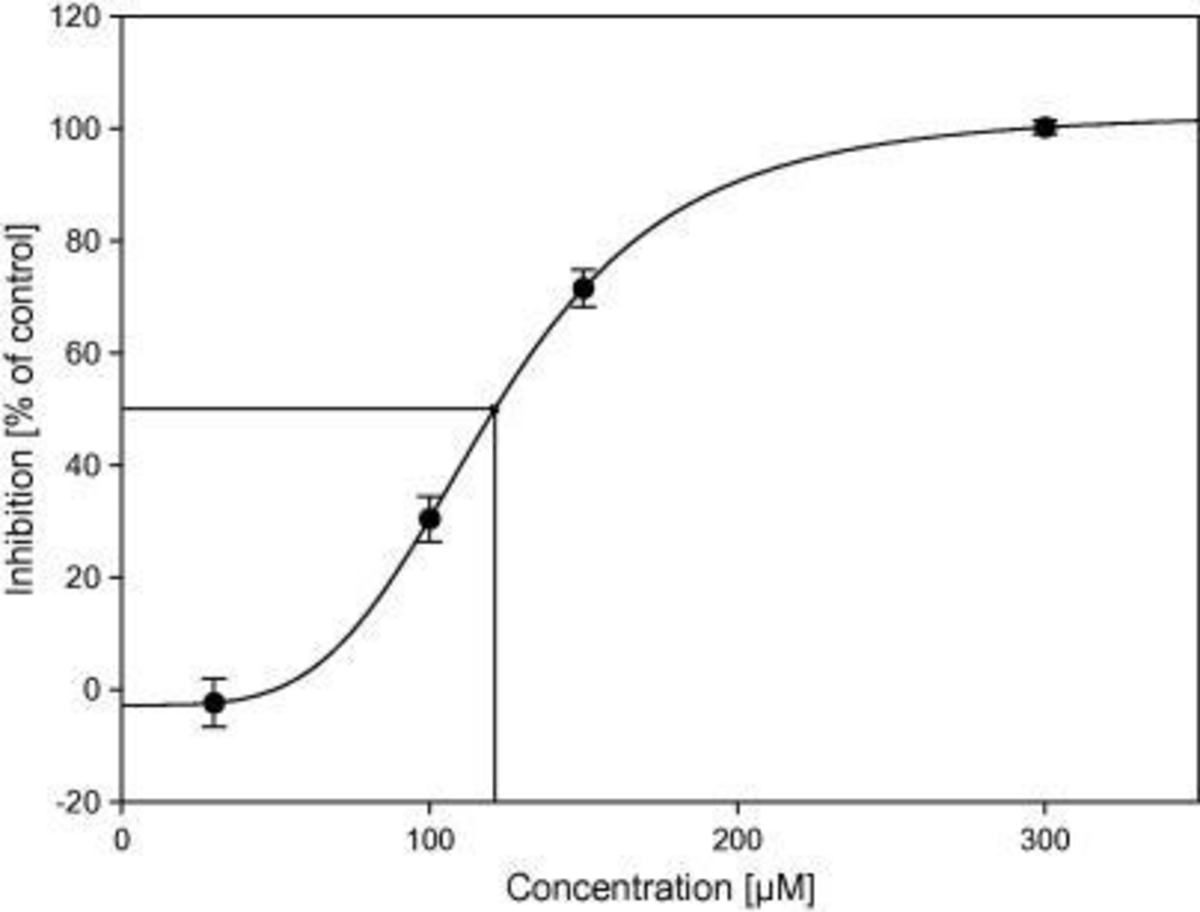
Scientists determine IC50 by building a dose-response curve, testing several different concentrations of the drug against a target. IC50 is typically expressed in molar concentration. When researchers need a scale where larger numbers mean stronger drugs, they convert it to pIC50, calculated as the negative logarithm of the IC50 value. Because of the negative sign, higher pIC50 values indicate exponentially more potent inhibitors.
Why IC50 is not an absolute measure of affinity
A drug's IC50 value is not fixed. It shifts depending on the experimental setup. If an experiment uses a higher concentration of the target agonist or substrate, the measured IC50 value increases, meaning more drug is needed to achieve 50% inhibition. For ATP-dependent enzymes, the concentration of ATP in the assay directly influences the observed IC50.
Because IC50 depends on laboratory conditions, it is not a direct measure of binding affinity. To find the absolute inhibition constant, known as Ki, researchers use the Cheng-Prusoff equation. This equation converts the relative IC50 value into Ki by accounting for the fixed concentration of substrate or agonist present in the test. Unlike IC50, Ki is an absolute measure of how tightly the drug binds.


Collectible card
Claim the IC50 card
Play the lesson in edgi and the card is yours. It lands on your Map next to the ideas it connects to, and turns from matte to foil to gold as you learn more around it.
Questions people ask
How does IC50 differ from EC50?
IC50 measures the concentration of an antagonist required to inhibit a biological function by 50%. EC50 represents the concentration or dose of an excitatory drug needed to achieve 50% of its maximum stimulating effect in a living organism.
How is IC50 measured in competition binding assays?
In competition binding assays, a fixed amount of radioactive ligand is placed in test tubes with varying concentrations of an unlabeled drug. The IC50 is the concentration of the competing drug that displaces 50% of the specifically bound radioligand.
Can IC50 be measured outside of test tubes?
Yes, IC50 terminology is used in whole-animal behavioral tests, such as the two-bottle fluid consumption test. In this assay, the IC50 is the concentration of drug in a water bottle that causes animals to decrease their fluid consumption by 50%.


Part of the Set · 9 cards
How Scientists Test What Kills Cells
Before a cancer drug reaches a patient, it has already killed cells in a dish, and someone counted exactly how many.
Learn the whole SetWhere this leads
- ChemotherapyChemotherapy uses systemic drugs to disrupt cell division, stopping rapid cancer growth while balancing toxicity to healthy tissues.
- CytotoxicityLearn what cytotoxicity is, how cells die through apoptosis and necrosis, and how scientists measure cellular toxicity.
- Cell CultureCell culture is the process of growing and maintaining living cells in controlled laboratory environments outside their natural host organism.
- AssayAn assay is a laboratory test that detects, measures, or assesses the activity of a target substance in a sample.