ChemotherapyTreating cancer with controlled toxicity
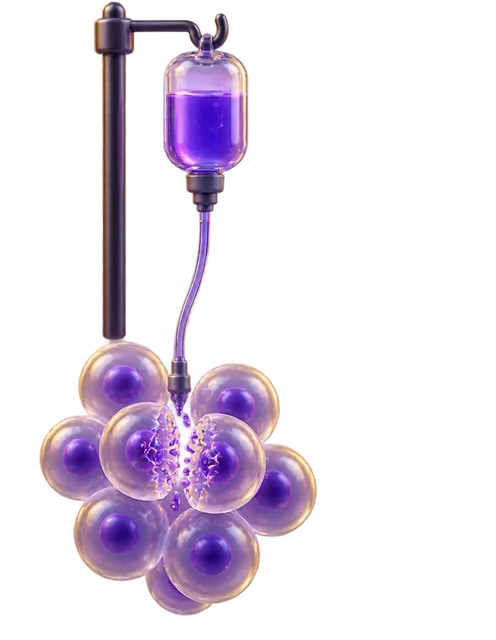
Chemotherapy is a systemic cancer treatment that uses drugs to disrupt cell division and trigger cell death. Because it enters the bloodstream, it attacks fast-multiplying cancer cells throughout the whole body. It works on the principle of carefully dosed toxicity, killing tumor cells faster than healthy ones.
By the edgi team We find the most surprising true thing about an idea and build a 60-second lesson around it.
In 1943, an Allied ship secretly carrying mustard gas was bombed in the Italian port of Bari. Thousands of sailors were exposed to the chemical cloud, leading to a medical crisis.
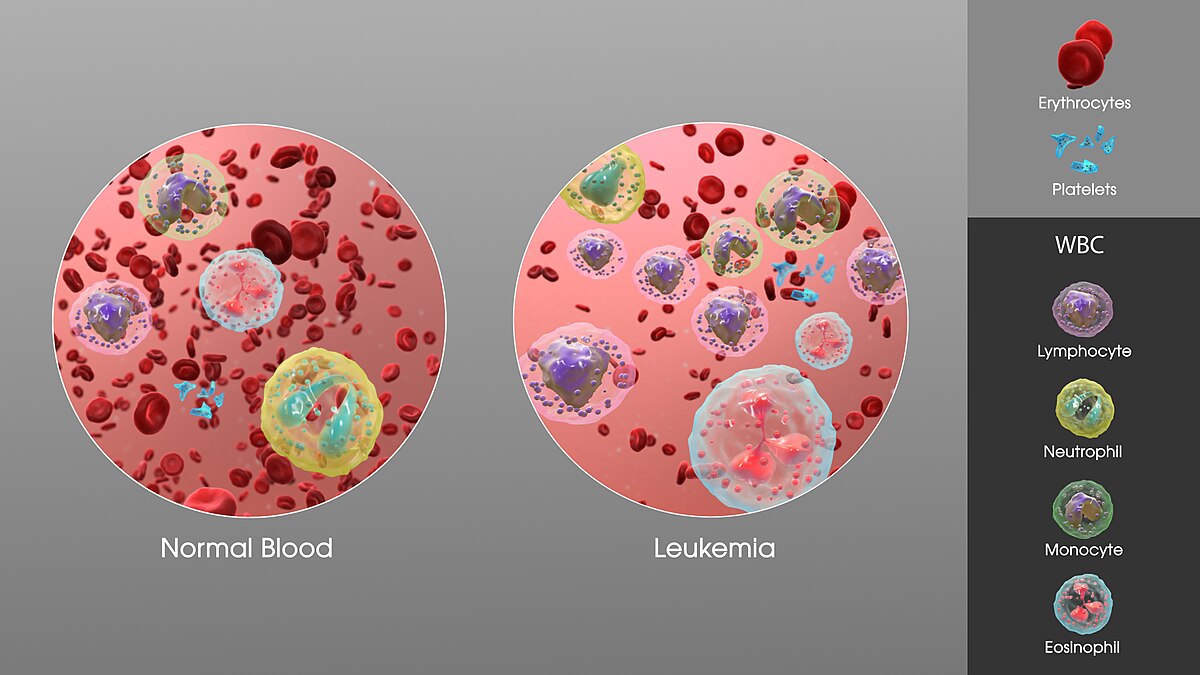
When doctors examined the survivors, they noticed something strange: their white blood cell counts had completely bottomed out.
Diagram comparing normal blood with blood affected by leukemia, showing the increase in white blood cells. Manu Sharma, http://www.scientificanimations.com, CC BY-SA 4.0, via Wikimedia Commons
The deadly mechanism
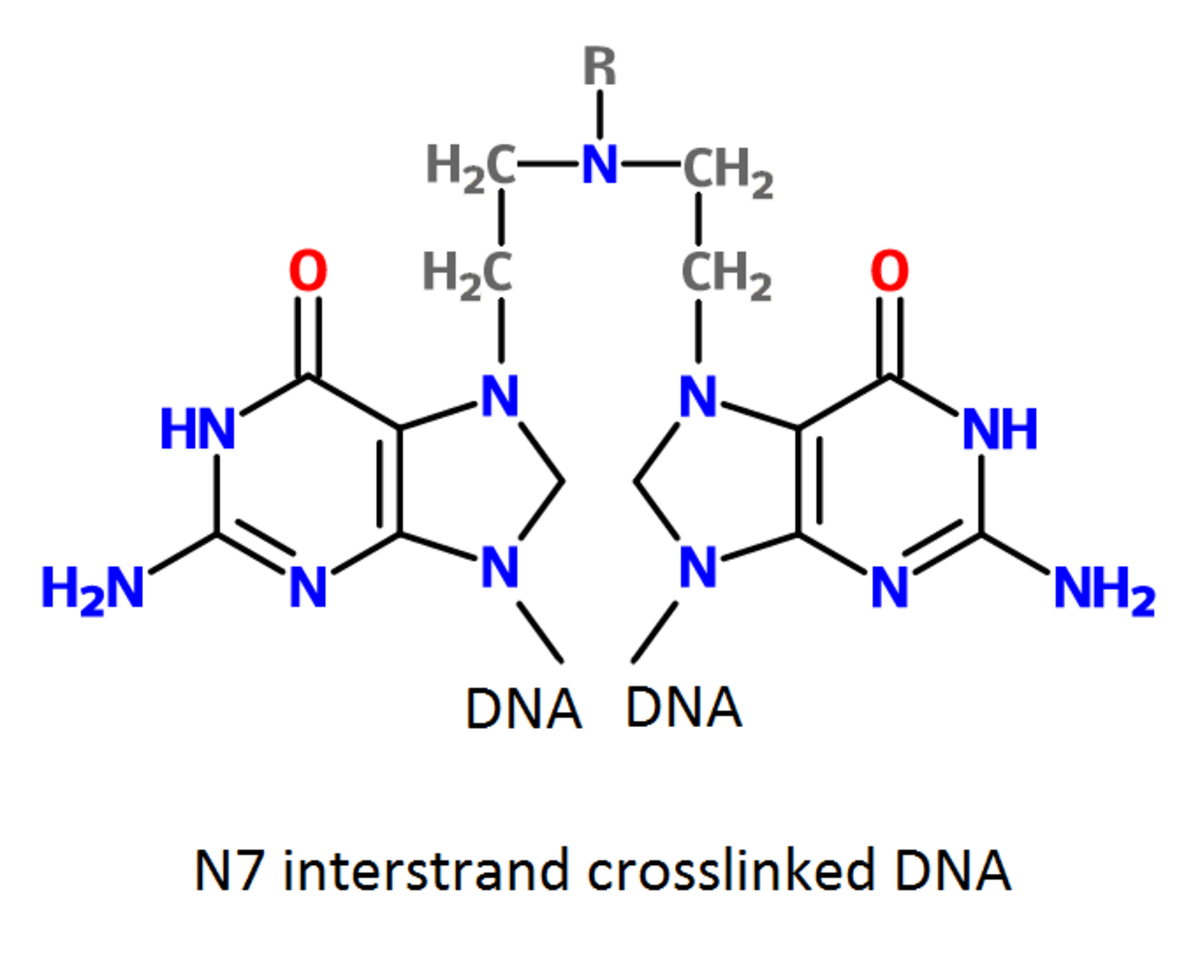
Mustard gas was designed to destroy tissue, but it specifically attacks cells that divide rapidly. Cancer cells are defined by their ability to multiply out of control.
Chemical structure diagram illustrating two DNA bases cross-linked by a nitrogen mustard molecule. Simon Caulton, CC BY-SA 3.0, via Wikimedia Commons
Doctors realized that if they carefully dosed this poison, they could kill the cancer faster than they killed the patient.
The legacy
Dr. Stewart Alexander analyzed the Bari data and proposed using a derivative of the gas to treat leukemia. It became the first FDA-approved chemotherapy, shifting oncology from surgery to systemic chemical warfare.
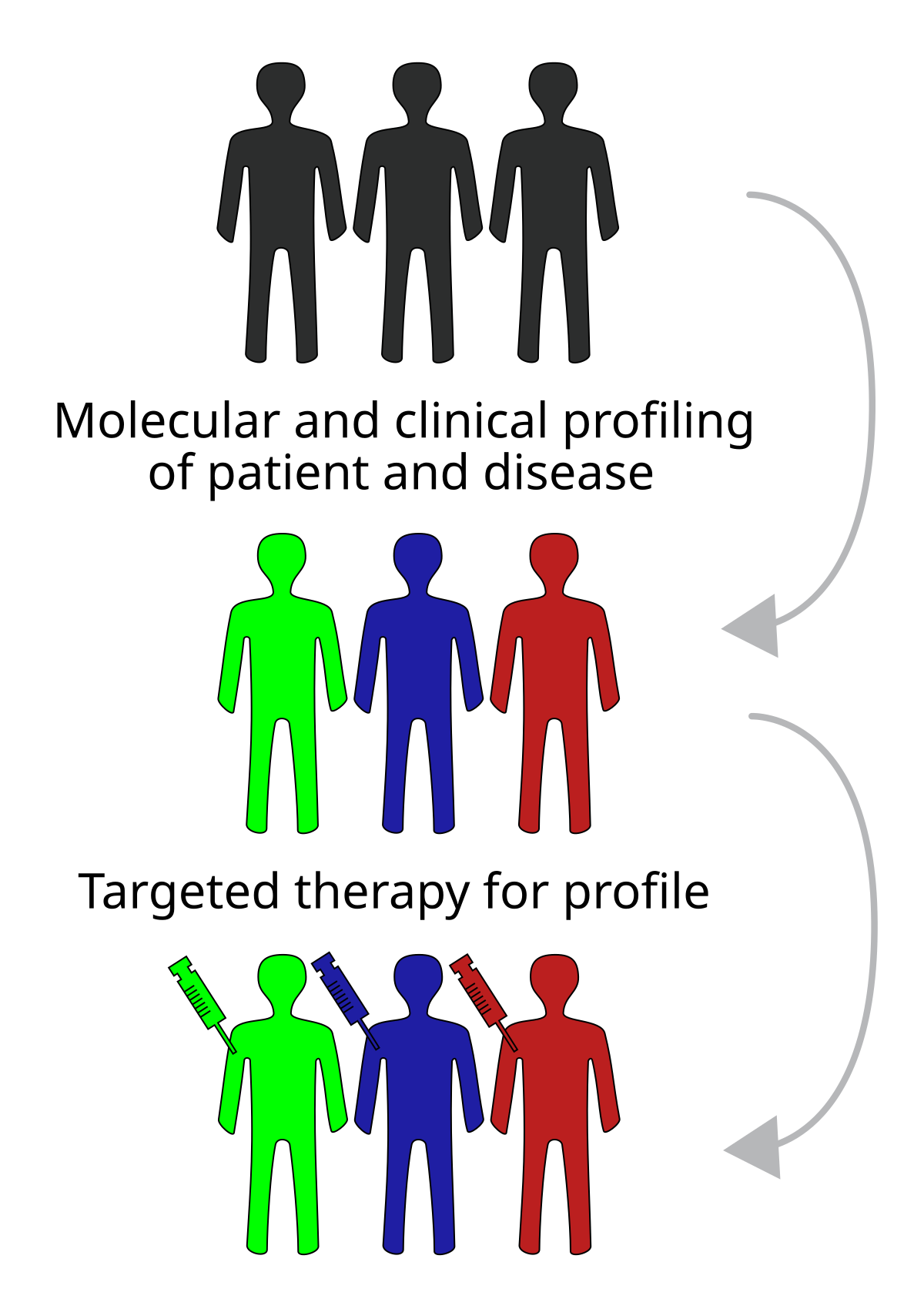
We have since moved toward targeted therapy, but the core logic remains: carefully controlled toxicity to stop the spread.
Diagram illustrating the process of targeted therapy, showing three black human figures representing patients. Simon Caulton, CC BY-SA 4.0, via Wikimedia Commons
How chemotherapy attacks dividing cells
Traditional chemotherapeutic drugs are intracellular poisons that interfere with mitosis, the biological process of cell division, or induce direct DNA damage. When cancer cells cannot divide properly or repair this genetic harm, they initiate apoptosis, which is programmed cell death.
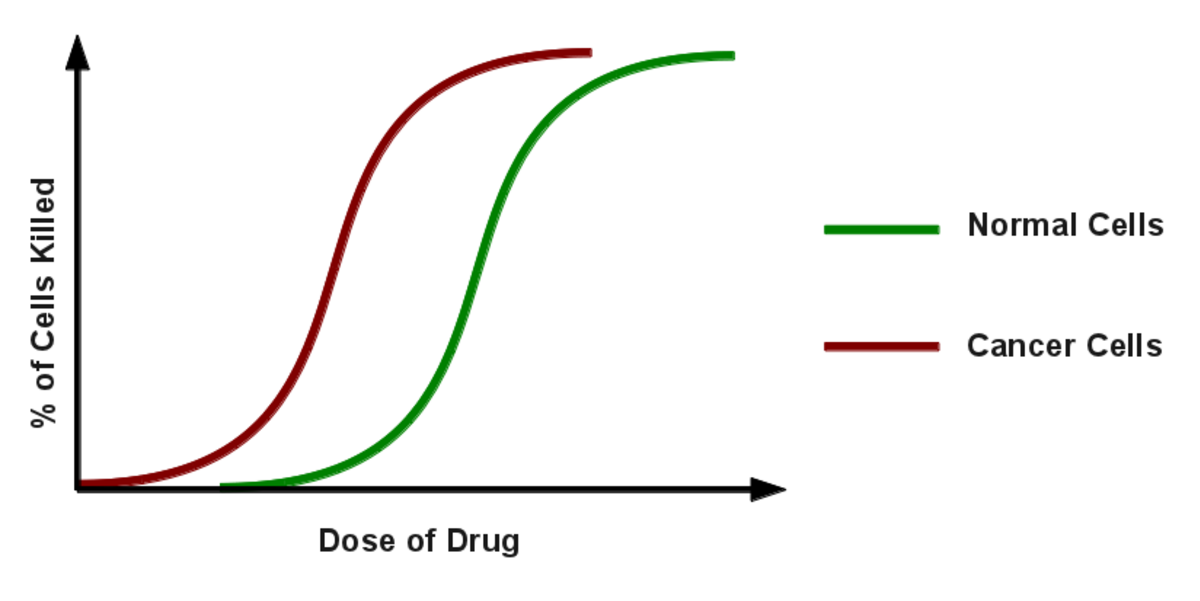
At high doses, chemotherapeutic drugs kill normal and cancer cells at similar rates, requiring doctors to choose dosages where tumor cell death exceeds healthy tissue damage. Simon Caulton, CC BY-SA 3.0, via Wikimedia Commons
Because these drugs circulate systemically in the bloodstream, they reach tumors anywhere in the body. However, they are non-specific poisons. They also damage healthy tissues that naturally divide at a rapid pace, such as hair follicles, the digestive tract lining, and bone marrow.
This non-specific damage explains the most common side effects: hair loss (alopecia), digestive tract inflammation (mucositis), and decreased blood cell production (myelosuppression). Because it suppresses immune cells like lymphocytes, doctors also use chemotherapy to treat autoimmune conditions like rheumatoid arthritis, systemic lupus erythematosus, and multiple sclerosis.
Treatment strategies and timing
Chemotherapy is rarely given as a single arbitrary dose; instead, doctors administer it in repeating cycles. Each round kills only a fraction of tumor cells (fractional kill), and spacing the treatments gives healthy cells time to recover from drug toxicity.
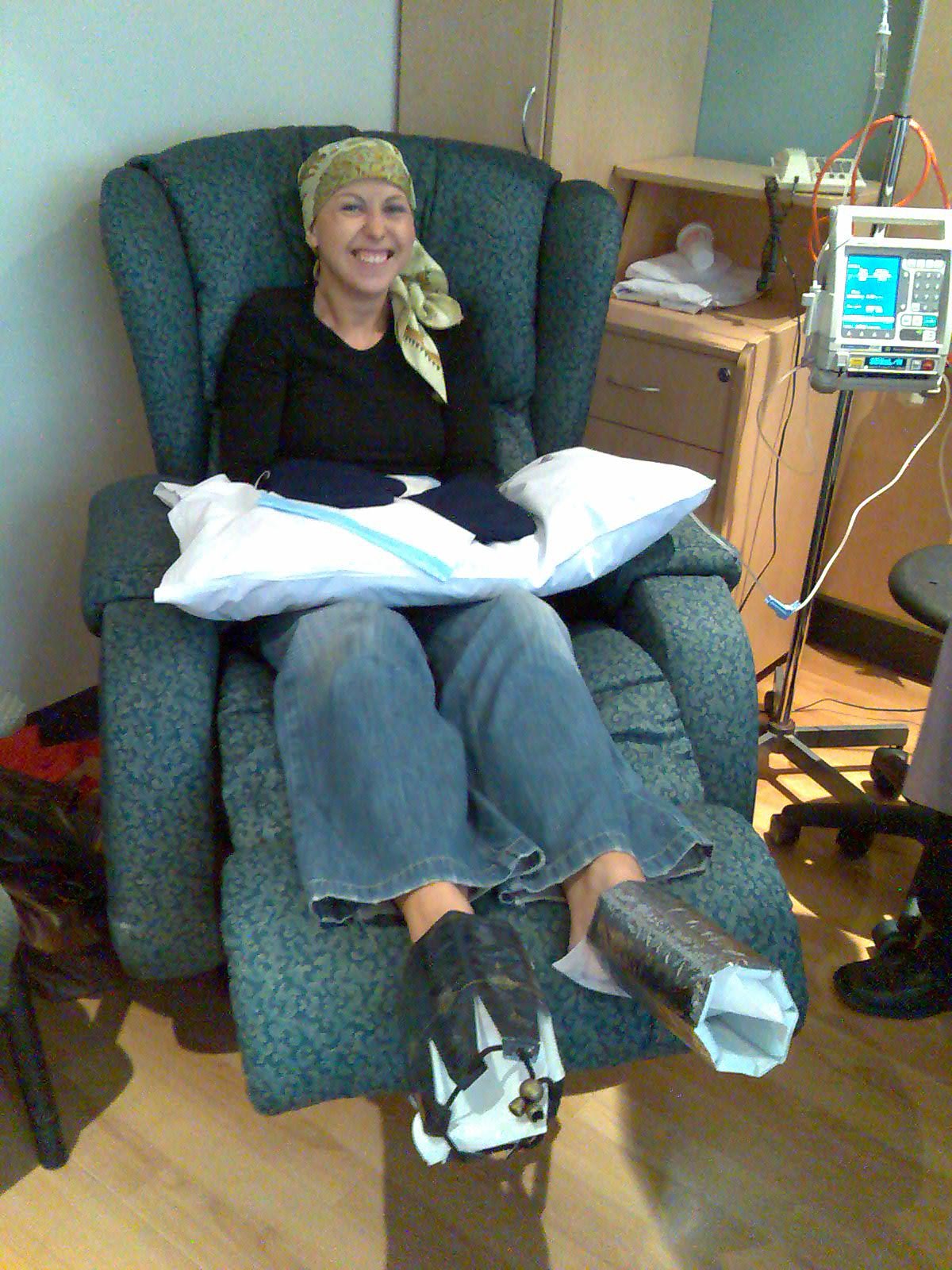
A patient receives intravenous chemotherapy in a clinical setting while using cooling methods on hands and feet to manage side effects. Jenny Mealing, CC BY 2.0, via Wikimedia Commons
The timing of chemotherapy depends on the clinical goal. Neoadjuvant chemotherapy is administered before surgery to shrink a primary tumor. Adjuvant chemotherapy is given after surgery or radiation to kill hidden microscopic deposits (micrometastases) and prevent cancer recurrence.
Doctors frequently combine multiple drugs at once. Combination chemotherapy reduces the chance that cancer cells develop resistance to a single agent, and it allows lower individual doses to keep toxicity manageable.
How dosages are calculated
Dosage balance is delicate: underdosing leaves cancer unchecked, while overdosing causes intolerable toxicity. The official medical standard calculates chemotherapy doses using body surface area (BSA), an estimate based on a patient's height and weight.
This standard formula traces back to a 1916 study that attempted to convert animal drug doses to human equivalents using only nine human subjects. It was adopted as the standard in the 1950s for lack of a better alternative.
Test yourself
Chemotherapy is exclusively used to cure cancer and cannot be used for palliative care.
False. Chemotherapy serves multiple goals, including curing cancer, slowing its growth, or simply managing symptoms to improve quality of life.
Chemotherapy drugs are often administered in cycles to allow the body's healthy cells to recover.
True. Treatment cycles alternate periods of drug administration with rest periods, helping the immune system and organs bounce back.
Most chemotherapy drugs work by targeting cells that are in a dormant, non-dividing state.
False. Chemo generally targets rapidly dividing cells, which is why it affects both tumors and fast-growing healthy tissue like hair.
Play the lesson in edgi and the card is yours. It lands on your Map next to the ideas it connects to, and turns from matte to foil to gold as you learn more around it.
What is the difference between chemotherapy and targeted therapy?
Chemotherapy uses non-specific cytotoxic drugs that disrupt cell division throughout the body. Targeted therapy blocks specific molecular signals, such as receptor tyrosine kinases, while hormonal therapy targets specific growth signals from hormones like estrogen and androgen.
Can chemotherapy cure cancer on its own?
Effectiveness depends on the cancer type and stage. Chemotherapy can be curative for conditions like certain leukemias, but it is ineffective for others, such as specific brain tumors, and unnecessary for most non-melanoma skin cancers.
What is palliative chemotherapy?
Palliative or salvage chemotherapy is administered without the expectation of curing the cancer. Its goal is strictly to reduce tumor burden, ease symptoms, and prolong life with a manageable level of drug toxicity.