Limerence is an overwhelming mental state of obsessive infatuation with someone when you do not know if they return your feelings. Instead of fostering a healthy bond, it traps you in intrusive thoughts and dramatic mood swings tied to every sign of hope or rejection. What surprises many is that limerence actually feeds on uncertainty and distance rather than real emotional intimacy.
By the edgi team We find the most surprising true thing about an idea and build a 60-second lesson around it.
In 1979, psychologist Dorothy Tennov coined the term limerence after interviewing hundreds of people. She found that for many, this state felt less like healthy love and more like a mental prison.
It involves a process she called crystallization, where you ignore a person's flaws and see only their idealized potential.
Close-up photograph of salt crystals formed on a stick or branch, showing their cubic structure. Elizaveta Kornilova, CC BY 4.0, via Wikimedia Commons
The mechanism
Unlike standard infatuation, limerence is fueled by uncertainty. Your brain becomes hooked on the highs and lows of wondering if your feelings are returned.
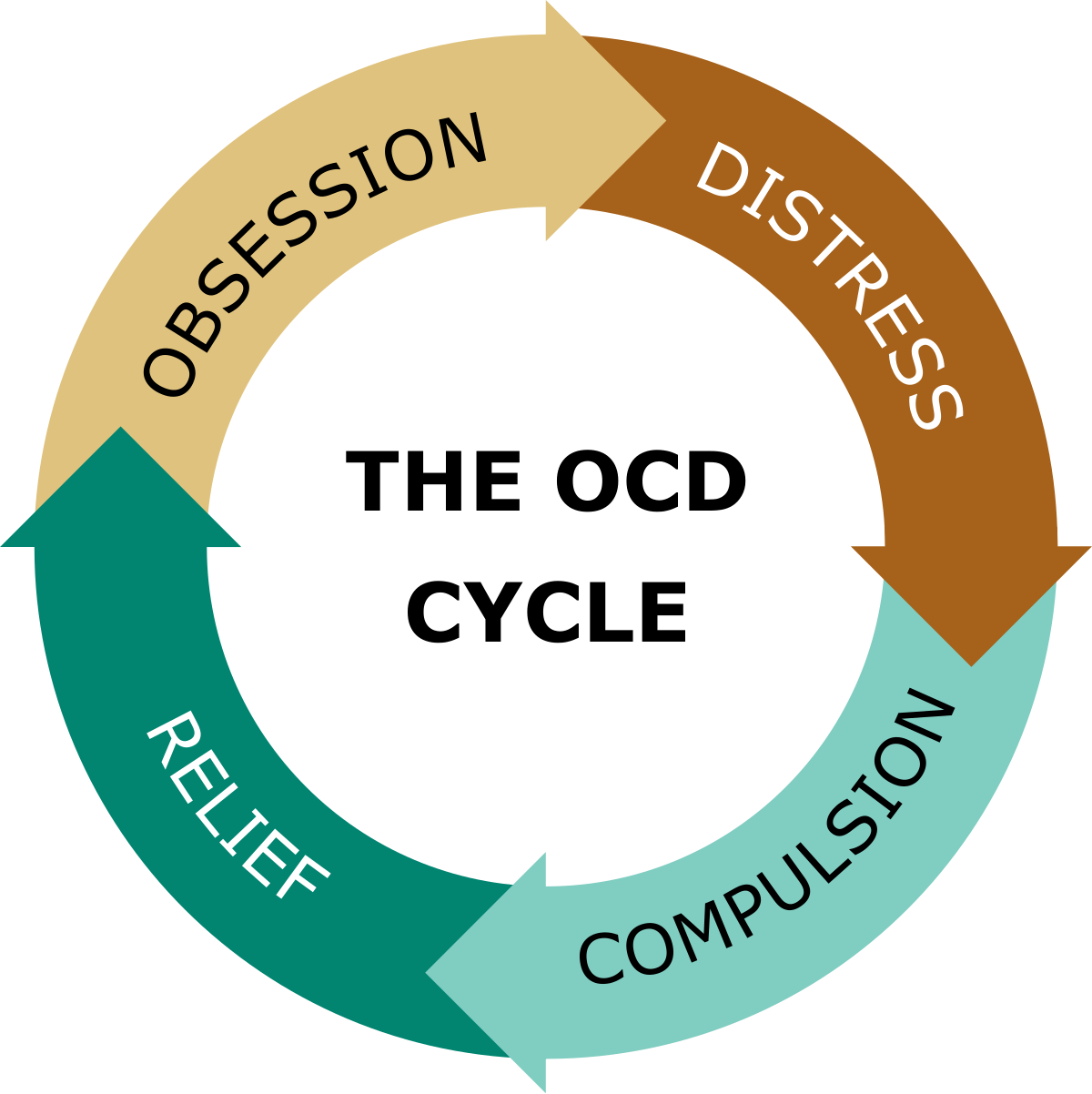
It shares symptoms with Obsessive-Compulsive Disorder, as intrusive thoughts consume your daily focus.
Diagram illustrating "THE OCD CYCLE" as a circular flow of four stages: Obsession, Distress, Compulsion, and Relief. M.Bitton, CC BY-SA 4.0, via Wikimedia Commons
The difference
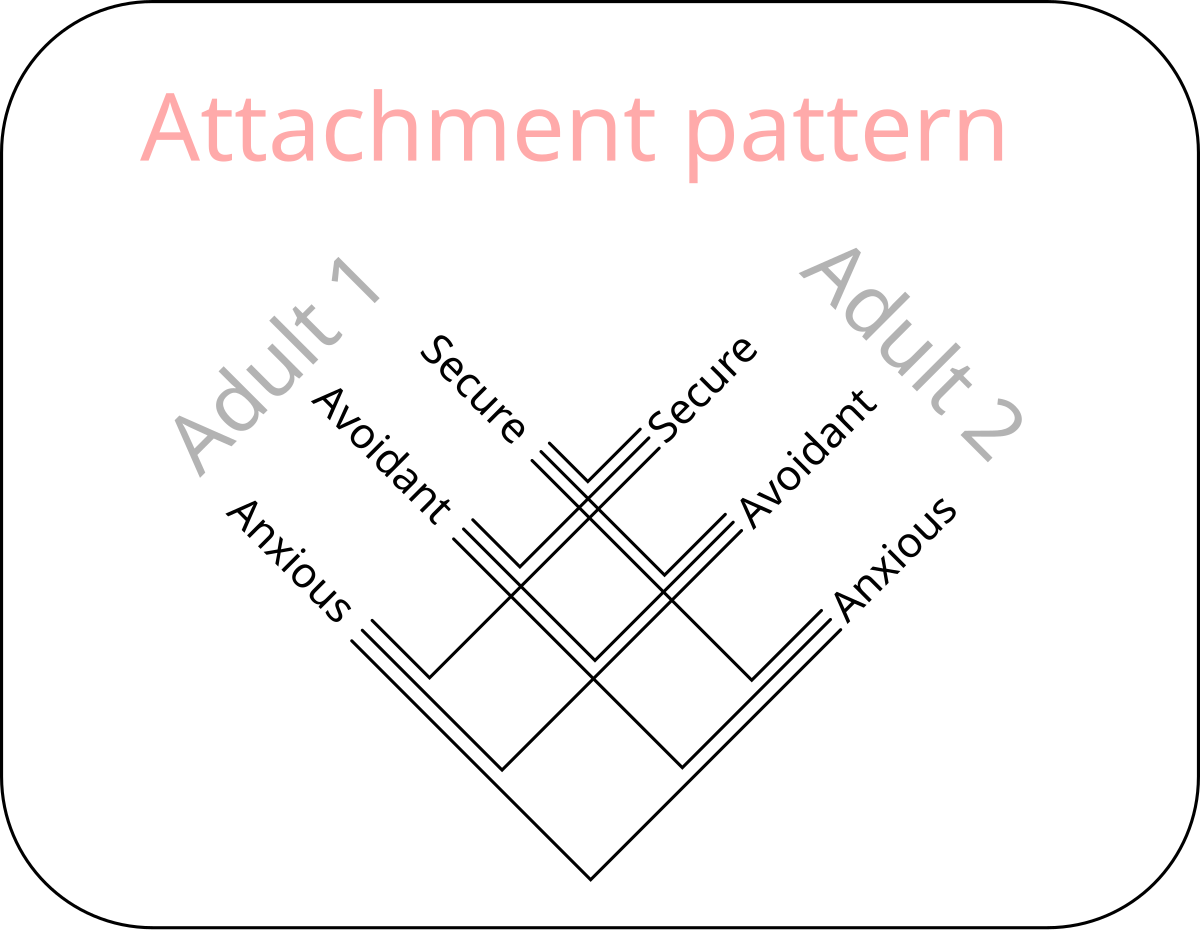
This state is often linked to insecure Attachment Styles, where the fear of rejection drives the obsession. Left unchecked, it can spiral into a form of love addiction, where you crave the uncertainty more than the person.
Diagram illustrating adult attachment patterns, showing the interaction between two adults' attachment styles. Nevit Dilmen (talk), CC BY-SA 3.0, via Wikimedia Commons
True love usually requires seeing the person clearly; limerence requires keeping them at a distance to maintain the fantasy.
How uncertainty fuels the obsession
Limerence requires doubt to survive. Psychologist Dorothy Tennov coined the term in 1979 after interviewing over 500 people, finding that the obsession intensifies when reciprocation is ambiguous. Mixed messages, social obstacles, or an unsuitable partner create intermittent reinforcement that keeps the mind hooked on highs and lows.
Henry Holiday's painting shows Beatrice ignoring Dante, a classic historical example of the deep despair caused by unrequited, obsessive longing. Henry Holiday (1839 - 1927) (British) Born in London, England. Died in London, England. Details on Google Art Project, Public domain, via Wikimedia Commons
This dynamic mirrors behavioral addiction and shares intrusive symptoms with obsessive-compulsive patterns. When reciprocation seems possible, you experience intense ecstasy; when rejection looms, you plummet into despair. The unobtainable nature of the goal makes the feeling all-consuming, preventing normal focus on daily life.
What is crystallization?
A defining feature of limerence is a psychological process Tennov called crystallization, borrowing a concept from the French writer Stendhal. People in this state do not fail to notice the flaws of their love interest; instead, they see those flaws clearly and actively reframe them as charming or uniquely attractive.
Tennov referred to the target of this obsession as the limerent object. Because crystallization distorts reality, you end up responding to your own idealized mental construct rather than who the person actually is. Genuine love requires seeing someone accurately, but limerence depends on maintaining this protective fantasy.
Test yourself
What makes limerence different from ordinary infatuation?
Uncertainty fuels intrusive fixation. In limerence, not knowing whether feelings are returned fuels intrusive thoughts and fixation, rather than simply producing a passing crush.
What role does uncertainty play in the state of limerence?
It actively fuels the obsession.. Limerence thrives on the highs and lows of wondering if feelings are returned. Unlike healthy love, which builds on clarity, limerence requires uncertainty to maintain the fantasy.
Play the lesson in edgi and the card is yours. It lands on your Map next to the ideas it connects to, and turns from matte to foil to gold as you learn more around it.
No, limerence is not a formal diagnosis and is not listed in the DSM. Tennov described it as a normal, though irrational and often distressing, human experience that affects a large portion of the population.
How does limerence differ from a normal crush?
A typical crush is a mild infatuation, whereas limerence is an all-absorbing obsessive passion that disrupts daily functioning. It involves continuous intrusive thoughts, severe emotional highs and lows, and a compulsive craving for reciprocation.
How common is limerence?
Surveys suggest that between 50% and 64% of people experience limerence at least once in their lives. For about a third of those who experience it, the emotional distress is severe enough to interfere with everyday enjoyment.