The mere-exposure effect is a psychological phenomenon where people develop a preference for things simply because they encounter them repeatedly. It works because your brain processes familiar things faster, misinterpreting that ease as safety or quality. This means you can grow fond of a song, an image, or a person without any rational argument or deliberate choice.
By the edgi team We find the most surprising true thing about an idea and build a 60-second lesson around it.
In the 1960s, psychologist Robert Zajonc placed made-up words like ikadit and biwojni in college newspapers. Some words appeared once, while others appeared twenty-five times without students ever consciously noticing.
A newspaper advertisement recruits "Male college students needed for psychological study of prison life." It offers "$15 per day for 1-2 weeks beginning Aug. Philip Zimbardo, CC BY-SA 4.0, via Wikimedia Commons
When asked to guess the meaning of the words, students consistently rated the most frequent ones much more positively.
Processing fluency
This phenomenon is called the mere-exposure effect. It happens because your brain processes familiar things faster, a shortcut known as processing fluency.
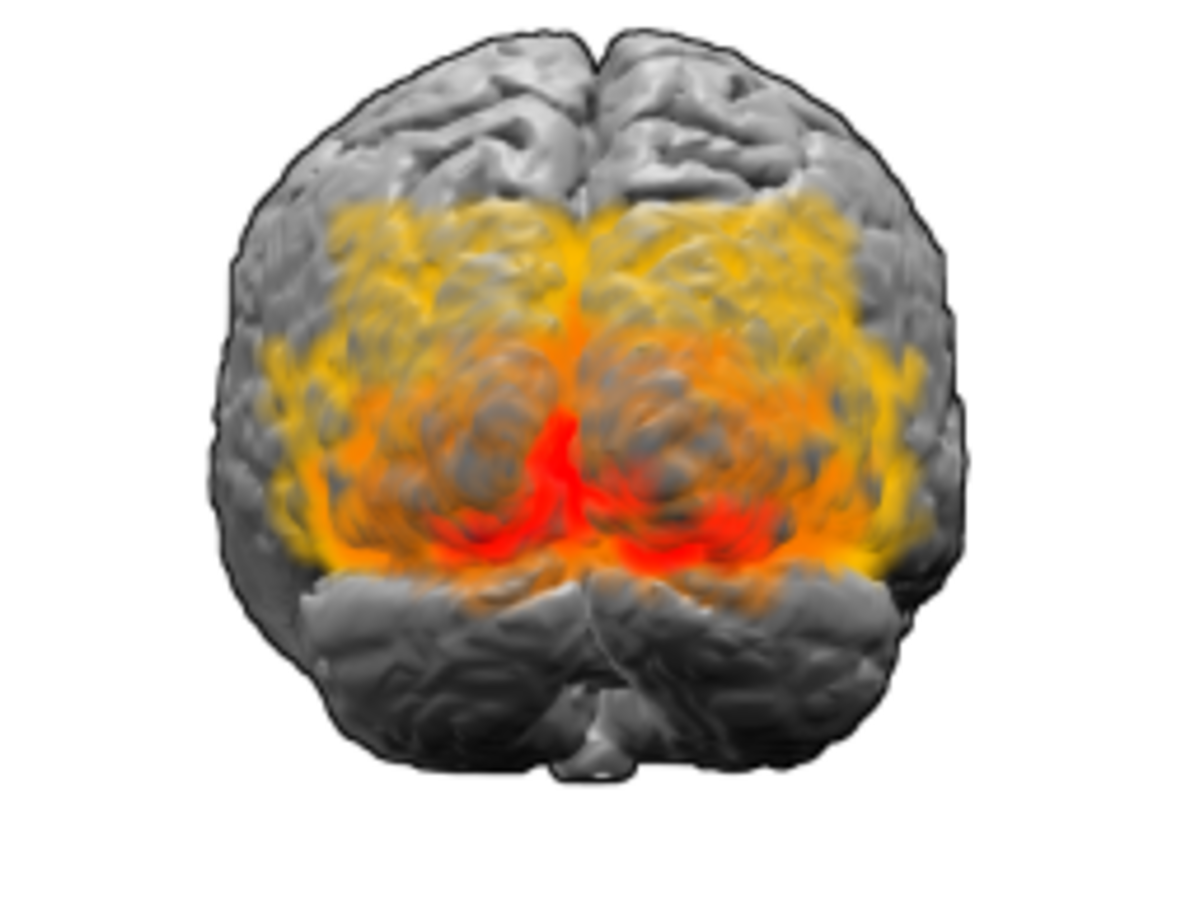
A 3D rendering of a human brain, viewed from the posterior, highlights the extrastriate cortex in shades of orange and red. The original uploader was Washington irving at English Wikipedia., CC BY-SA 3.0, via Wikimedia Commons
Your mind easily misinterprets that smooth mental processing as a sign that the thing itself is good or safe.
The catch
This bias explains why songs finally grow on you after a few radio plays and why political ads repeat slogans relentlessly. Sheer repetition builds affection without needing any rational argument or actual quality.
A Casio clock radio is shown with a digital display indicating the time "5:50" and an analog tuning dial for AM and FM radio frequencies. DRAGONBALLXYZ, CC BY-SA 3.0, via Wikimedia Commons
In the end, we often fall in love merely with the echo of what we already know.
How does mere exposure work?
Novel things trigger an instinctive fear or avoidance response in living organisms. With each subsequent encounter, that fear drops and interest grows, eventually turning into fondness. The brain processes familiar items with greater ease (processing fluency), and this smooth mental processing registers as a positive feeling.
Robert Zajonc showed that these emotional reactions happen faster than conscious thought. In his experiments, participants shown images so briefly that they could not consciously recognize them still preferred those repeated images over new ones. People form emotional preferences first and invent logical justifications later.
What things trigger the effect?
The effect works across almost every kind of stimulus tested: geometric figures, nonsense words, paintings, sounds, and foreign scripts like Chinese characters. In interpersonal attraction, the more often people see another person, the more likeable they rate them.
It even applies before birth. In one experiment, fertile chicken eggs were played specific audio tones. After hatching, the chicks consistently chose the tone played to them while still inside their shells.
In a 1968 classroom experiment at Oregon State University, a student attended class inside a large black bag with only his feet visible. His classmates initially treated the bag with hostility, but repeated exposure transformed that hostility into curiosity, and eventually friendship.
Play the lesson in edgi and the card is yours. It lands on your Map next to the ideas it connects to, and turns from matte to foil to gold as you learn more around it.
Gustav Fechner conducted the earliest known research on the phenomenon in 1876. Robert Zajonc later developed the modern theory and conducted the landmark experiments starting in the 1960s.
Does the effect require conscious memory?
No. Subliminal exposures on a tachistoscope produce the effect even when participants cannot consciously recall having seen the stimulus. In fact, unrecognized items often prompt faster liking responses than consciously seen items.
Can exposure affect mood overall?
Yes. In laboratory experiments where participants were repeatedly shown foreign characters, members of the group with repeated exposure reported being in better overall moods than those without.