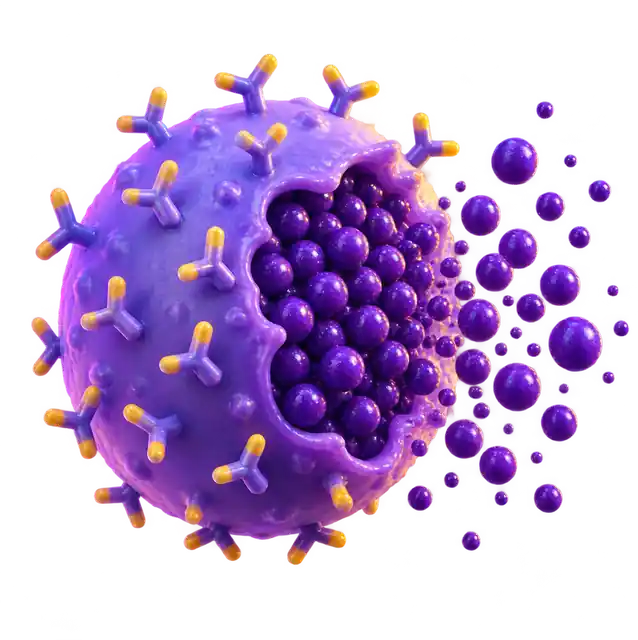
A mast cell is a specialized white blood cell that settles in connective and mucosal tissues throughout the body, packed with chemical granules like histamine. Rather than circulating constantly in the bloodstream, it acts as a stationary sentinel that detects parasites, bacteria, and other threats. While intended for defense and tissue repair, its sudden release of chemicals is also the direct cause of allergic reactions.
By the edgi team We find the most surprising true thing about an idea and build a 60-second lesson around it.
In 1877, the scientist Paul Ehrlich was staining tissues under a microscope and noticed cells packed full of dense granules. Assuming the granules were stored nutrients from a heavy diet, he named them Mastzellen from the German word for fattening livestock.
He was completely wrong. Those little packets weren't food at all, but a massive arsenal of chemical weapons.
The immune tripwire
Mast cells sit quietly in your connective tissue, acting as frontline sentries for the immune system. When an allergen triggers them, they undergo degranulation, dumping massive amounts of histamine into your tissues all at once.
Blood vessels suddenly leak and tissues swell, creating the classic misery of a runny nose or itchy eyes in an attempt to flush out invaders.
When it goes wrong
Normally, this rapid-fire inflammatory response defends against parasites, but misfiring mast cells cause dangerous problems. If they trigger all at once across the entire body, it results in life-threatening anaphylaxis.
In rare conditions like aquagenic urticaria, even plain water can set them off, breaking out the body in sudden hives.
How mast cells trigger defenses and allergies
Mast cells originated nearly 500 million years ago, making them one of the oldest parts of the immune system. They monitor their surroundings for bacteria, viruses, fungi, protozoa, and venoms. When they encounter a danger signal or an allergen, they dump their pre-stored granules directly into the surrounding tissue.
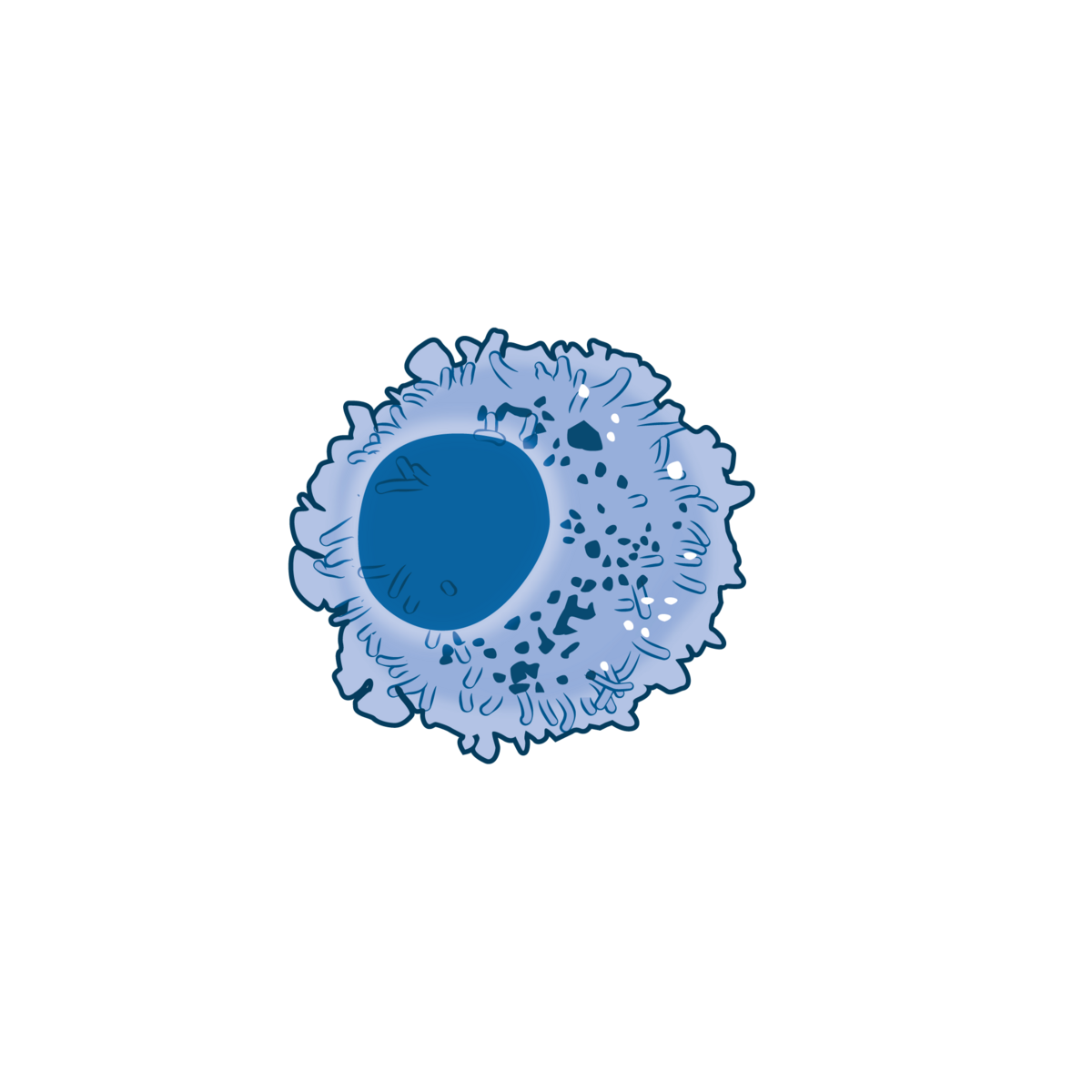
A mast cell showing its central nucleus surrounded by cytoplasm filled with chemical granules. Courtesy of NIAID Ryan Kissinger, Public domain, via Wikimedia Commons
These granules contain chemical mediators like histamine and heparin, alongside newly synthesized molecules. Histamine increases vascular permeability, causing blood vessels to leak fluid into nearby tissue. This process promotes wound healing, angiogenesis, and pathogen clearance, but it also causes the swelling, hives, and redness of an allergic flare-up.
Where mast cells come from and where they live
Unlike many white blood cells that mature entirely in bone marrow, mast cells leave the circulation as immature progenitors. They travel through the bloodstream and migrate into specific tissues, such as the skin, gut, lungs, heart, and brain, where they finish maturing and adapt to their local environment.
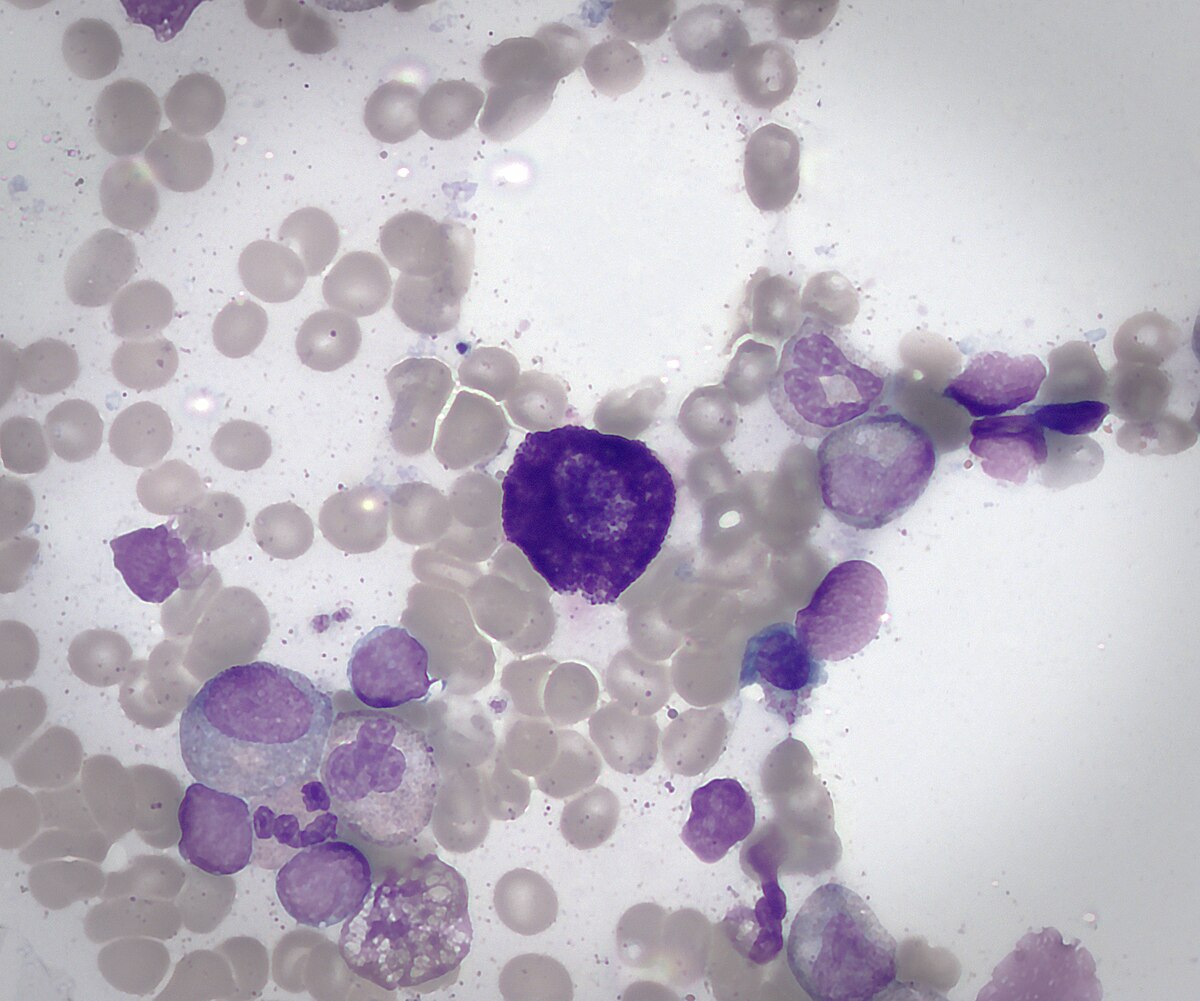
A mature mast cell with granular cytoplasm surrounded by smaller red blood cells. Makysm, CC0, via Wikimedia Commons
In humans, the earliest mast cells arise in the yolk sac just three weeks into embryonic development, long before adult blood-forming stem cells appear. Many of these fetal-derived mast cells persist in adult connective tissue for life, maintaining their own numbers independently of bone marrow.
Test yourself
Mast cells are involved in the process of wound healing and tissue repair.
True. By releasing growth factors and remodeling the extracellular matrix, these cells help transition the body from inflammation to repair.
Mast cells originate from lymphoid progenitor cells in the bone marrow.
False. Mast cells actually derive from myeloid stem cells, placing them in the same lineage as granulocytes like neutrophils.
The cytoplasm of a mast cell is densely packed with granules.
True. These cells are famous for their large, dark-staining granules which store chemical mediators for rapid release.
Play the lesson in edgi and the card is yours. It lands on your Map next to the ideas it connects to, and turns from matte to foil to gold as you learn more around it.
What is the difference between a mast cell progenitor and a mature mast cell?
Mast cell progenitors circulate in the blood as undifferentiated single-nucleus cells with few granules, resembling lymphocytes in size. Mature mast cells reside fixed within specific tissues and contain dense stores of chemical mediators.
Who first discovered mast cells?
Friedrich von Recklinghausen first described them in 1863. Paul Ehrlich later rediscovered and named them in 1877.