Adaptive immune systemHow your body rewrites its DNA
The adaptive immune system is the specialized part of your body's defenses that learns to recognize and destroy specific pathogens. While innate defenses attack broad categories of invaders, the adaptive system builds tailored weapons for individual threats. It also forms long-lasting memory cells, which protect you from getting sick from the same pathogen again.
By the edgi team We find the most surprising true thing about an idea and build a 60-second lesson around it.
Your innate immune system is a blunt instrument, attacking anything that looks wrong. The adaptive immune system is the sniper. It identifies the unique shape of a specific pathogen and builds a weapon just for it.
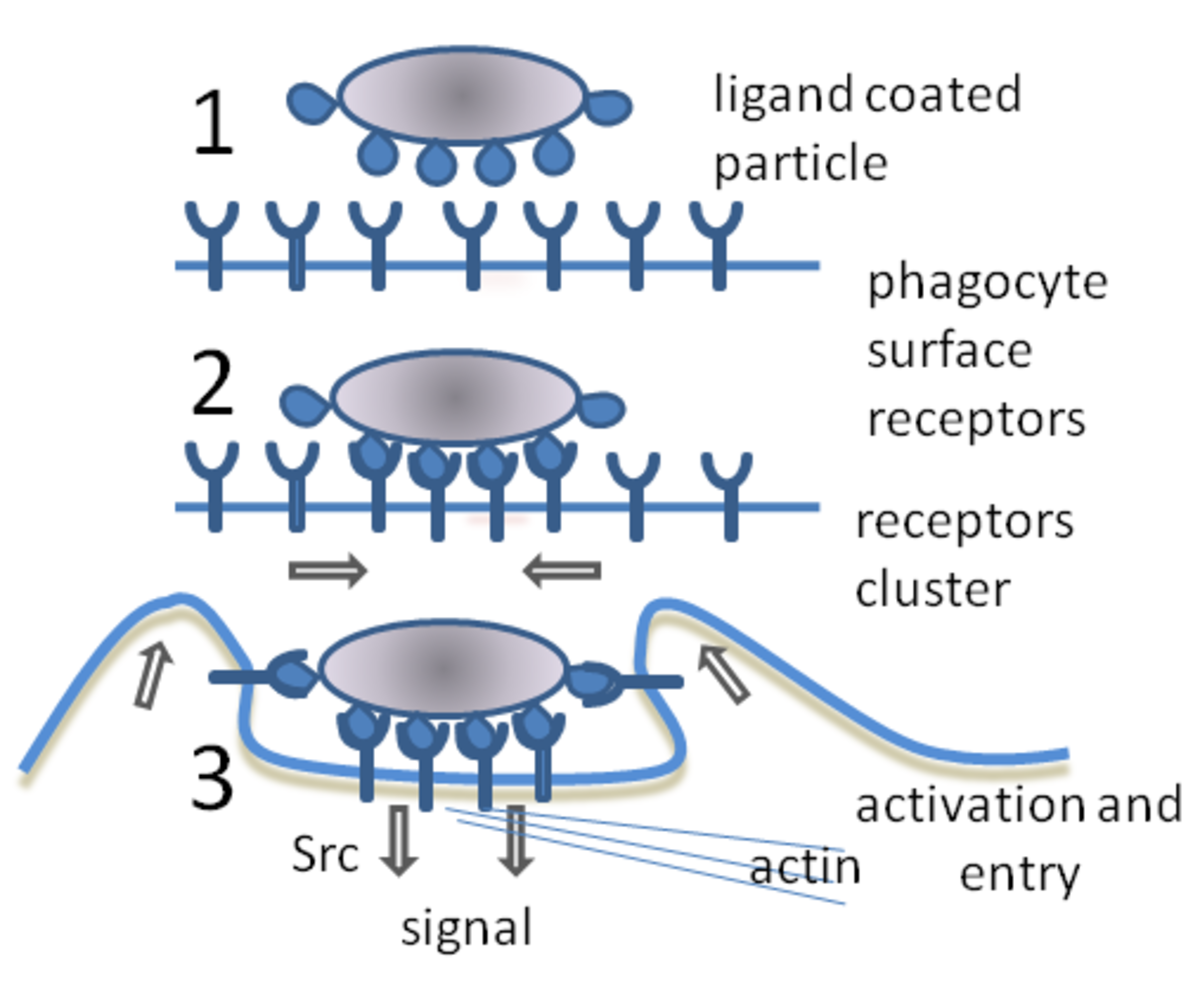
Diagram illustrating phagocytosis in three steps: 1) Unbound phagocyte surface receptors do not trigger phagocytosis of a ligand-coated particle. Graham Beards at English Wikipedia, CC BY-SA 3.0, via Wikimedia Commons
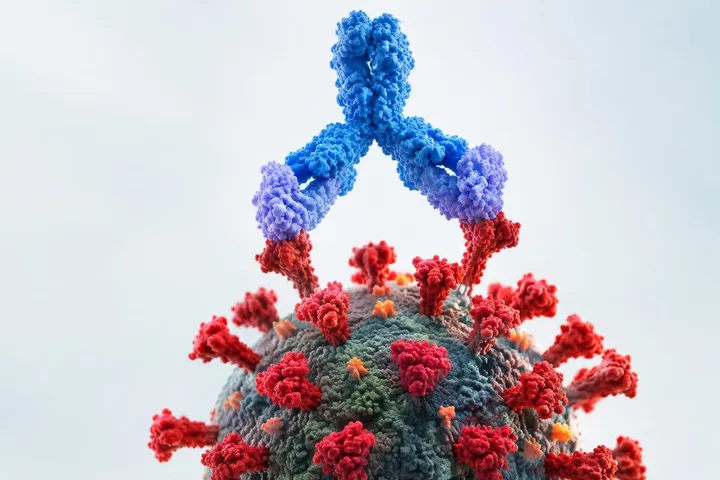
This weapon is an Antibody, a protein that locks onto the invader like a key in a lock, marking it for destruction.
The milkmaid discovery
In 1796, Edward Jenner noticed milkmaids who caught cowpox, a mild disease, seemed immune to the deadly smallpox. He hypothesized that the body could be trained. He scratched a boy with cowpox matter, effectively teaching the immune system to recognize the threat.
Portrait of Edward Jenner, painted by James Northcote. James Northcote, Public domain, via Wikimedia Commons
When exposed to smallpox later, the boy's body already had the wanted posters ready. This was the first successful Vaccination.
The memory bank
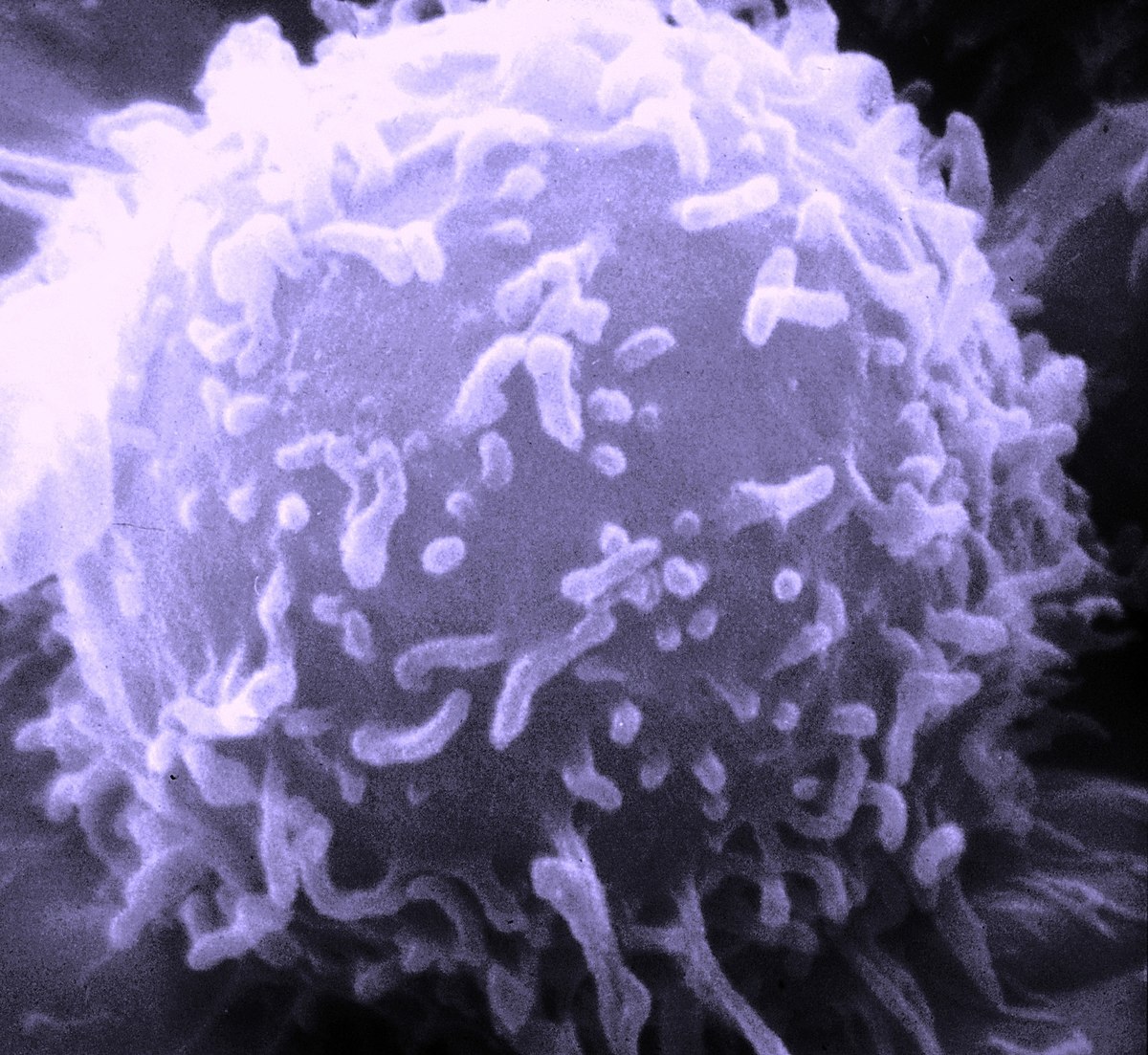
This is why you rarely catch the same cold twice. Your body keeps a permanent record of the pathogens it has defeated. These specialized T cells and B cells patrol your system for years, waiting to pounce.
It is the ultimate biological filing system: once a threat is cataloged, your body never forgets how to kill it.
How the adaptive immune system creates custom weapons
Your adaptive immune system physically cuts and rearranges its own DNA to invent new defenses during your lifetime. In a process called V(D)J recombination, developing lymphocytes randomly assemble three gene segments (variable, diversity, and joining) while discarding the rest. A small set of starter genes thereby produces a vast catalog of unique antigen receptors.
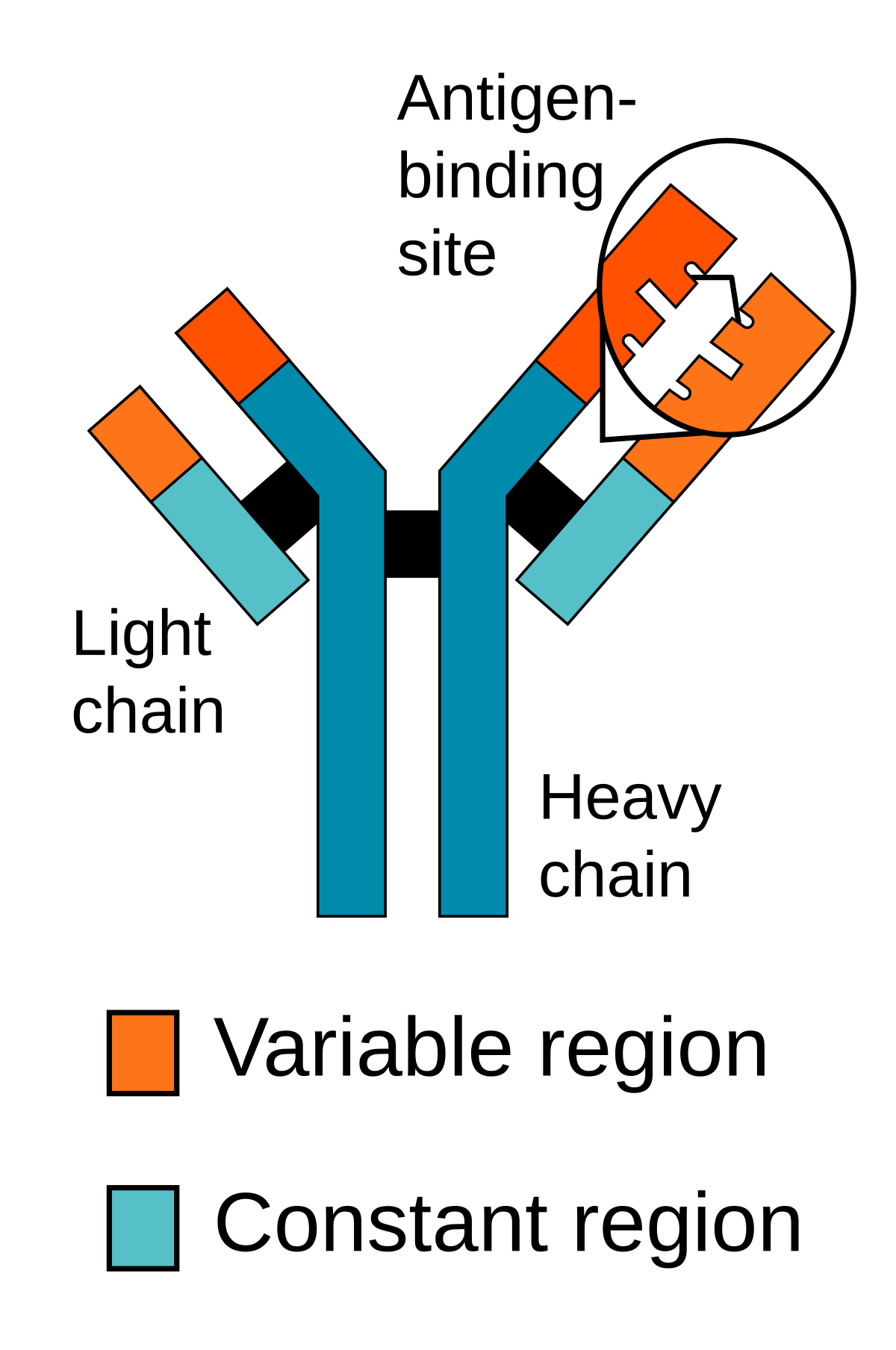
Notice how the unique variable regions at the tips of the antibody chains form a specific binding site for a matching foreign antigen. Fred the Oyster iThe source code of this SVG is valid. This vector image was created with Adobe Illustrator by v.Templat, Public domain, via Wikimedia Commons
Another mechanism, somatic hypermutation, introduces accelerated random genetic mutations into antibody genes to produce novel binding shapes. Because these genetic changes alter the cell's DNA irreversibly, all daughter cells inherit the exact same receptor blueprint. This irreversible code is passed directly to the memory B and T cells that protect you for years.
How B cells and T cells clear an infection
It takes four to seven days for the human adaptive immune system to launch a significant response against an unfamiliar pathogen. White blood cells called lymphocytes drive this counterattack through two distinct methods: antibody responses and cell-mediated responses.
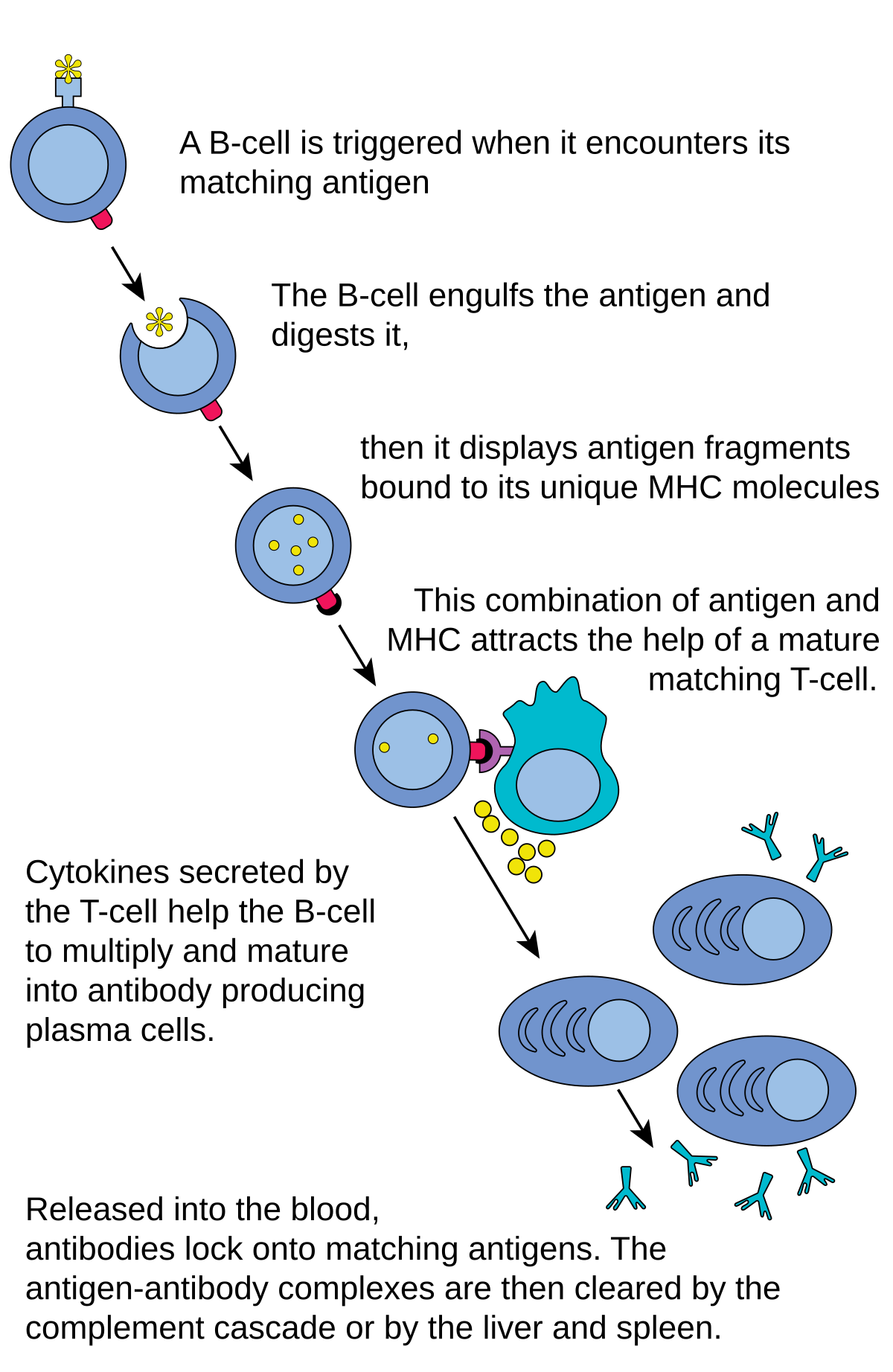
This pathway outlines how resting B cells activate and transform into antibody-secreting plasma cells to neutralize foreign invaders. Fred the Oyster, Public domain, via Wikimedia Commons
Activated B cells secrete proteins known as antibodies or immunoglobulins into the bloodstream. These antibodies bind to foreign antigens, blocking the invader from attaching to host cells and marking it for destruction. Meanwhile, specialized T cells carry out cell-mediated immune responses by targeting infected cells directly or directing the wider immune counterattack.
When specific immunity fails or misfires
Adaptive immunity does not provide lifetime protection against every disease. Recovering from measles confers lifelong immunity, but other infections, such as chickenpox, do not guarantee lifetime security.
The system can also misidentify its targets. When the adaptive immune system fails to distinguish harmless environmental molecules from harmful pathogens, it mounts an inappropriate attack. This failure produces conditions like hay fever, asthma, allergies, or autoimmune disorders.
Test yourself
How does the adaptive immune system handle a pathogen it has encountered before?
Deploys pre-made specialized defenses. Because the adaptive immune system retains memory cells from prior infections, it can instantly recognize the familiar threat and deploy tailored defenses without starting from scratch.
Does the adaptive immune system create unique defenses for every individual pathogen?
True. The adaptive immune system functions like a sniper, identifying the unique shape of a specific pathogen to craft a tailored antibody response.
Play the lesson in edgi and the card is yours. It lands on your Map next to the ideas it connects to, and turns from matte to foil to gold as you learn more around it.
What triggers the adaptive immune system to activate?
The adaptive system activates when a pathogen evades innate defenses, produces a threshold level of foreign antigen, and triggers warning signals that activate dendritic cells. It usually takes four to seven days to build a significant response.
Why is it called the adaptive immune system?
Robert Good introduced the term in 1964 as a synonym for acquired immunity, likely thinking of how antibodies could adapt to foreign shapes or how certain bacterial enzymes adapt to substrates. Today, textbooks treat adaptive and acquired immunity as interchangeable terms.