Autoimmunity is a state where an organism's immune defenses mistakenly target and attack its own healthy cells and tissues. While normal immune systems contain antibodies and T cells capable of reacting with self-proteins, disease develops only when this self-reactivity causes actual tissue damage. This occurs because the body loses immunological tolerance, which is the normal ability to distinguish its own cells from foreign invaders.
By the edgi team We find the most surprising true thing about an idea and build a 60-second lesson around it.
For decades, science operated on a rigid dogma called horror autotoxicus. Coined by immunologist Paul Ehrlich in 1900, it was the belief that the body was physically incapable of attacking its own tissues.
Black and white portrait of Paul Ehrlich, a German physician and scientist, depicted from the chest up, looking to the right with glasses and a beard. Harris & Ewing, Public domain, via Wikimedia Commons
We thought the immune system was simply too smart to make that kind of mistake.
The rabbit experiment
In the 1950s, researchers Noel Rose and Ernest Witebsky finally shattered that dogma. They injected rabbits with their own thyroid tissue.
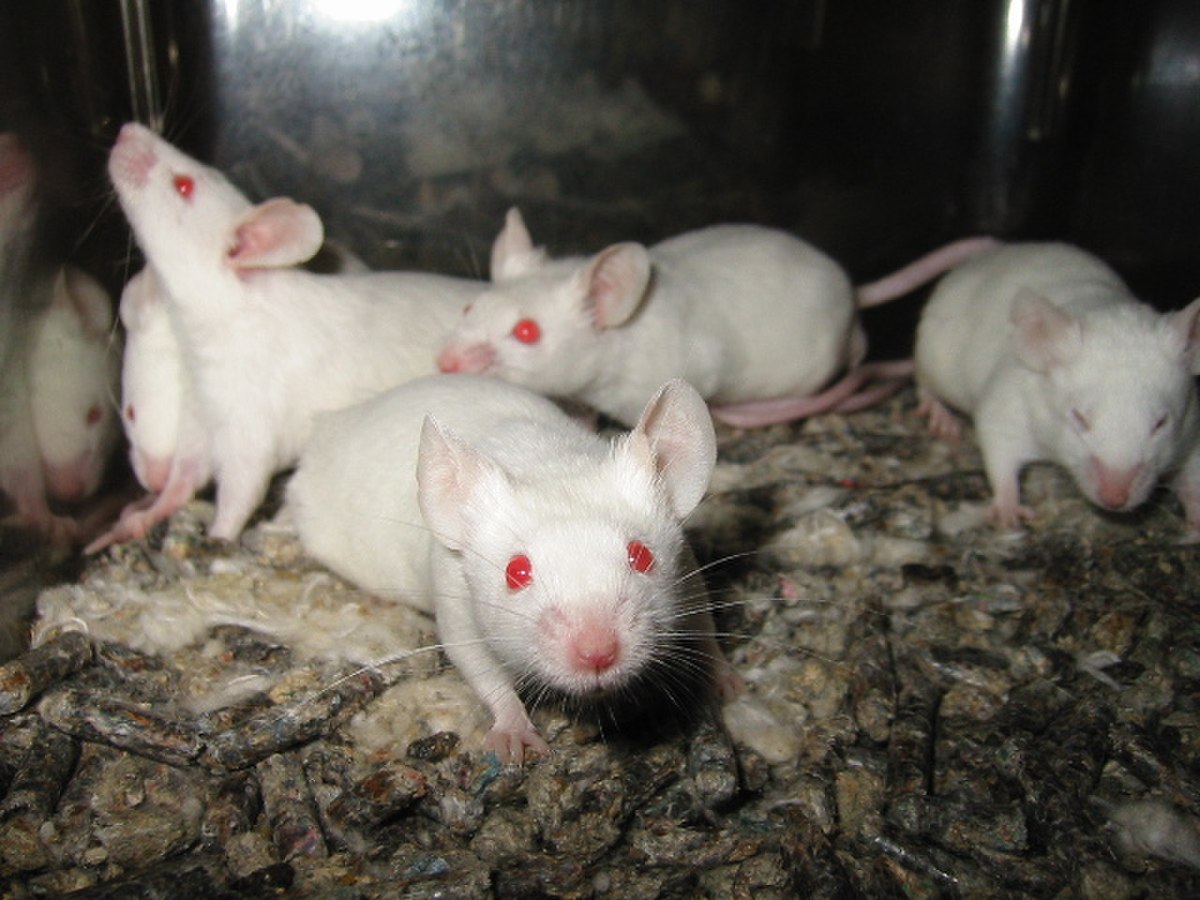
Several laboratory mice with white fur and red eyes are shown in an enclosure with bedding material. by Aaron Logan, CC BY 1.0, via Wikimedia Commons
To their shock, the rabbits' immune systems didn't just ignore the injection, they launched a full-scale, destructive assault on their own organs.
The training camp
Your body usually runs a rigorous training camp for immune cells in the thymus, a process called negative selection. Cells that react to your own tissue are identified and killed off before they enter the blood.
Autoimmunity happens when this training fails, or via molecular mimicry, where a virus looks so much like a human cell that the body accidentally learns to attack both.
How does the body maintain self-tolerance?
Every healthy individual produces immune cells that can bind to their own proteins. To prevent these cells from destroying healthy tissue, the body relies on mechanisms collectively known as immunological tolerance.
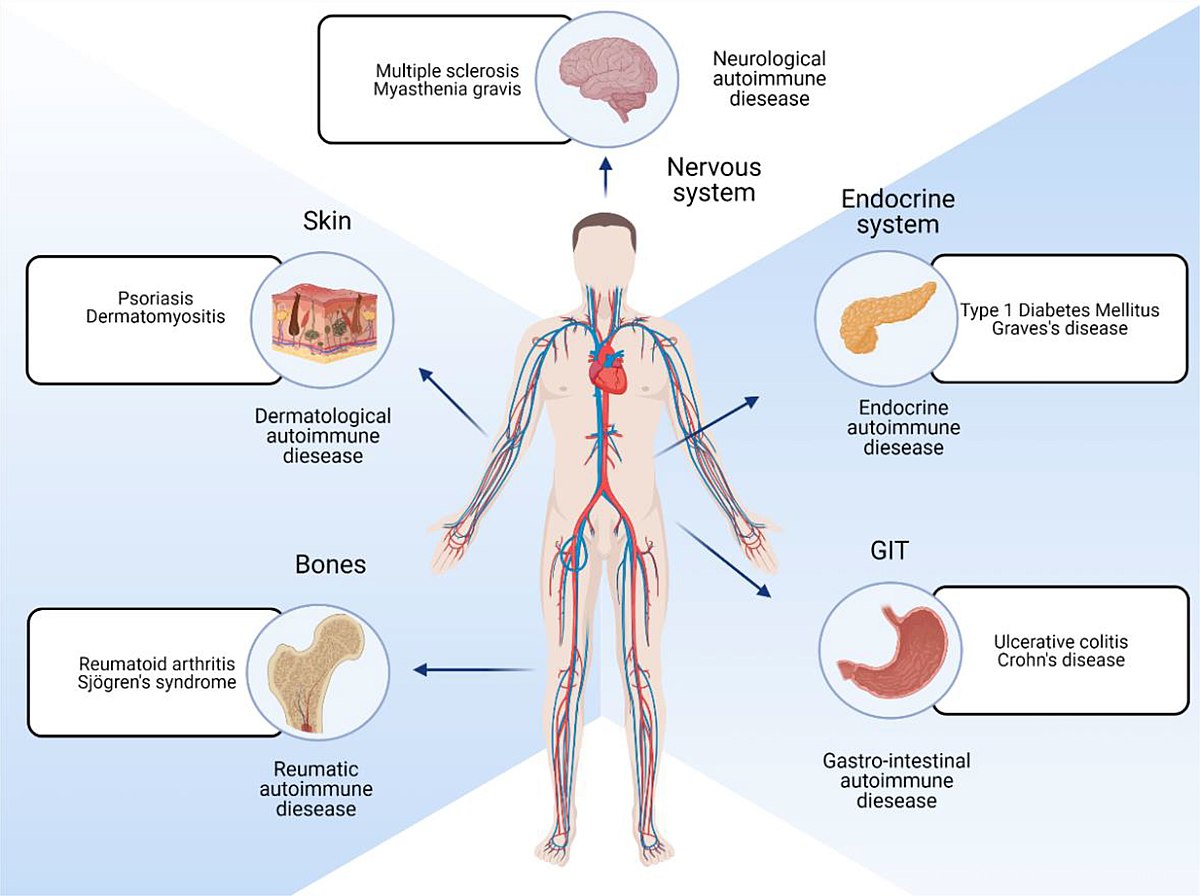
Autoimmune diseases can target specific organs or spread across multiple systems throughout the body. Katie Glover, Deepakkumar Mishra, and Thakur Raghu Raj Singh, CC BY 4.0, via Wikimedia Commons
Tolerance operates in two stages: central and peripheral. Central tolerance occurs in primary organs like the thymus and bone marrow, where self-reactive immune cells are destroyed during development through clonal deletion. Peripheral tolerance acts outside these training grounds. In peripheral tissues, self-reactive cells can be inactivated through clonal anergy, kept dormant because their targets are hidden or scarce (clonal ignorance), or actively held in check by regulatory T cells.
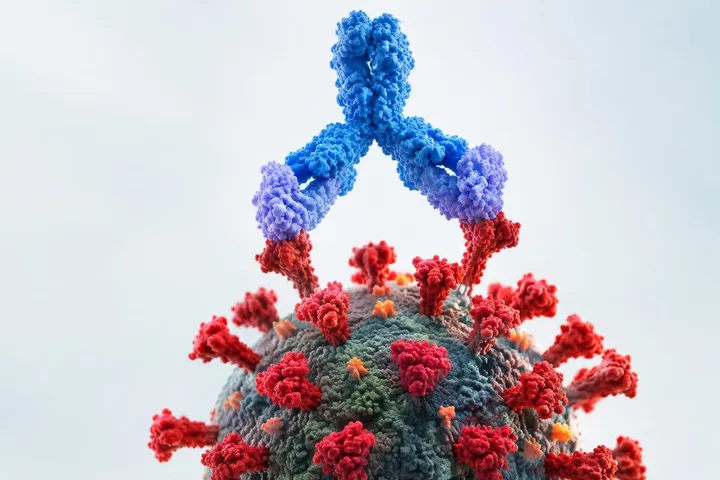
When these mechanisms fail, self-reactive B cells produce autoantibodies that attack the body. In diseases like rheumatoid arthritis, systemic lupus erythematosus, and celiac disease, this breakdown leads to sustained tissue inflammation and damage.
Why does low-level autoimmunity exist?
Autoimmune responses are a natural feature of vertebrate immune systems rather than purely harmful flaws. A baseline level of self-recognition helps maintain immune readiness when foreign pathogens are absent.
In a 2002 experiment, researchers temporarily blocked naive CD4+ T cells from interacting with self-molecules called Major Histocompatibility Complex (MHC) class II in mice. Within 36 hours, these isolated T cells lost much of their ability to respond to genuine foreign antigens. Interacting with the body's own tissues keeps naive immune cells alert and ready to respond quickly during the early stages of an infection.
Play the lesson in edgi and the card is yours. It lands on your Map next to the ideas it connects to, and turns from matte to foil to gold as you learn more around it.
What is the difference between autoimmunity and alloimmunity?
Autoimmunity occurs when the immune system reacts against an individual's own body tissues. Alloimmunity is an immune response directed against tissues from another individual of the same species, such as a transplanted organ.
How are autoimmune diseases commonly treated?
Autoimmune conditions are very often treated with steroids to suppress immune activity and reduce inflammation. Treatment targets the harmful self-reactive immune response to limit organ and tissue damage.
What is molecular mimicry?
Molecular mimicry happens when a foreign virus or pathogen closely resembles human proteins. When the immune system creates weapons against the pathogen, it accidentally learns to attack matching healthy cells as well.