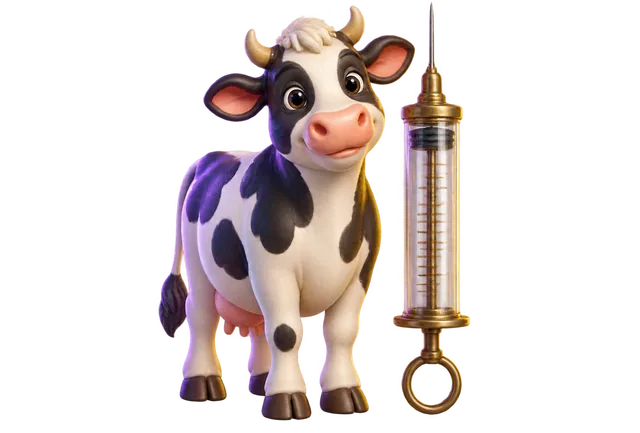
Vaccination is the practice of giving someone a weakened pathogen, killed virus, or harmless protein to train their immune system against disease. This exposure prompts the body to build defense cells without causing the full illness, establishing protection that lasts for years. By doing this across entire communities, vaccination can eliminate deadly diseases entirely, as it did with smallpox.
By the edgi team We find the most surprising true thing about an idea and build a 60-second lesson around it.
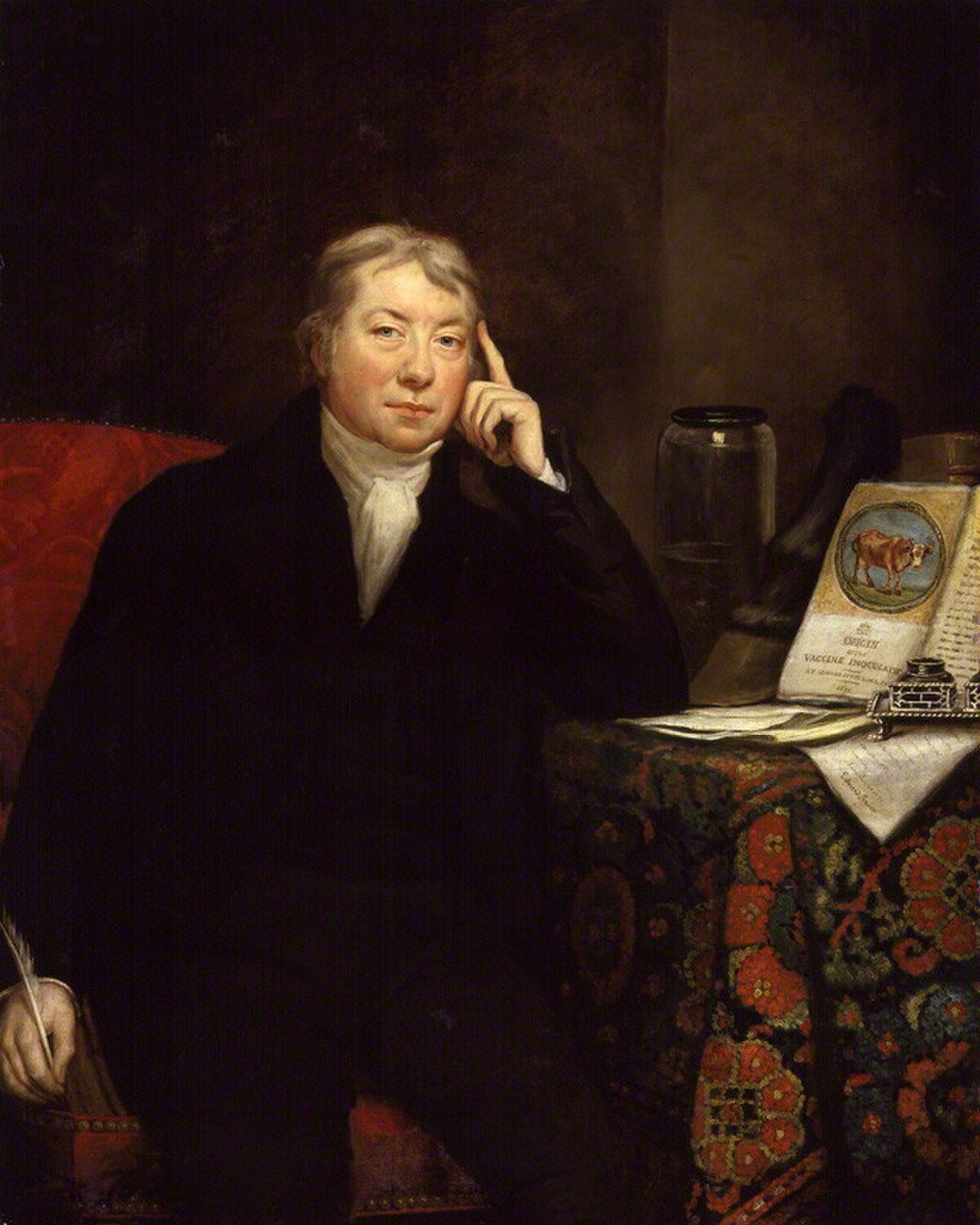
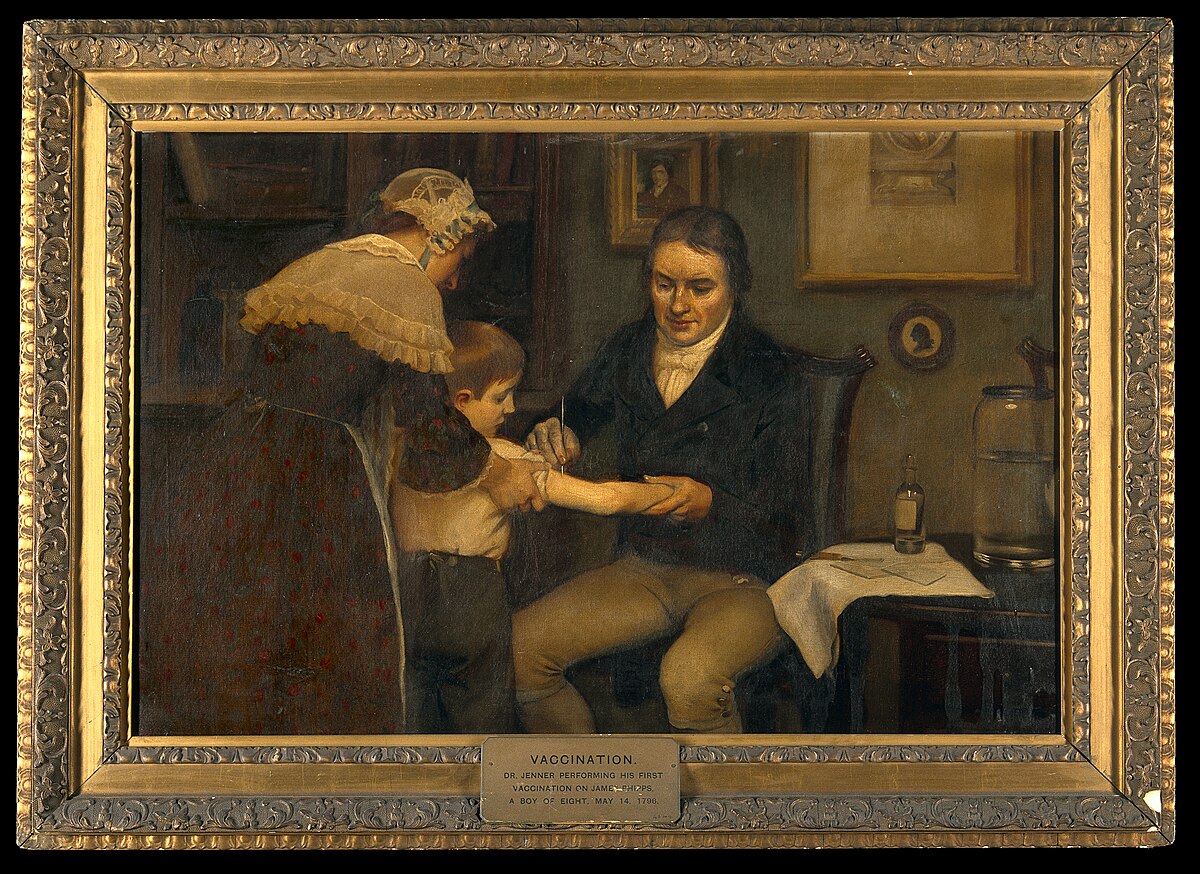
In 1796, Edward Jenner noticed milkmaids were curiously immune to smallpox. They had already been exposed to cowpox, a much milder virus. Jenner took a massive risk. He scratched pus from a cowpox blister into an 8-year-old boy's arm to see if it would create protection. It worked.
Portrait of Edward Jenner, painted by James Northcote. James Northcote, Public domain, via Wikimedia Commons
Teaching the body
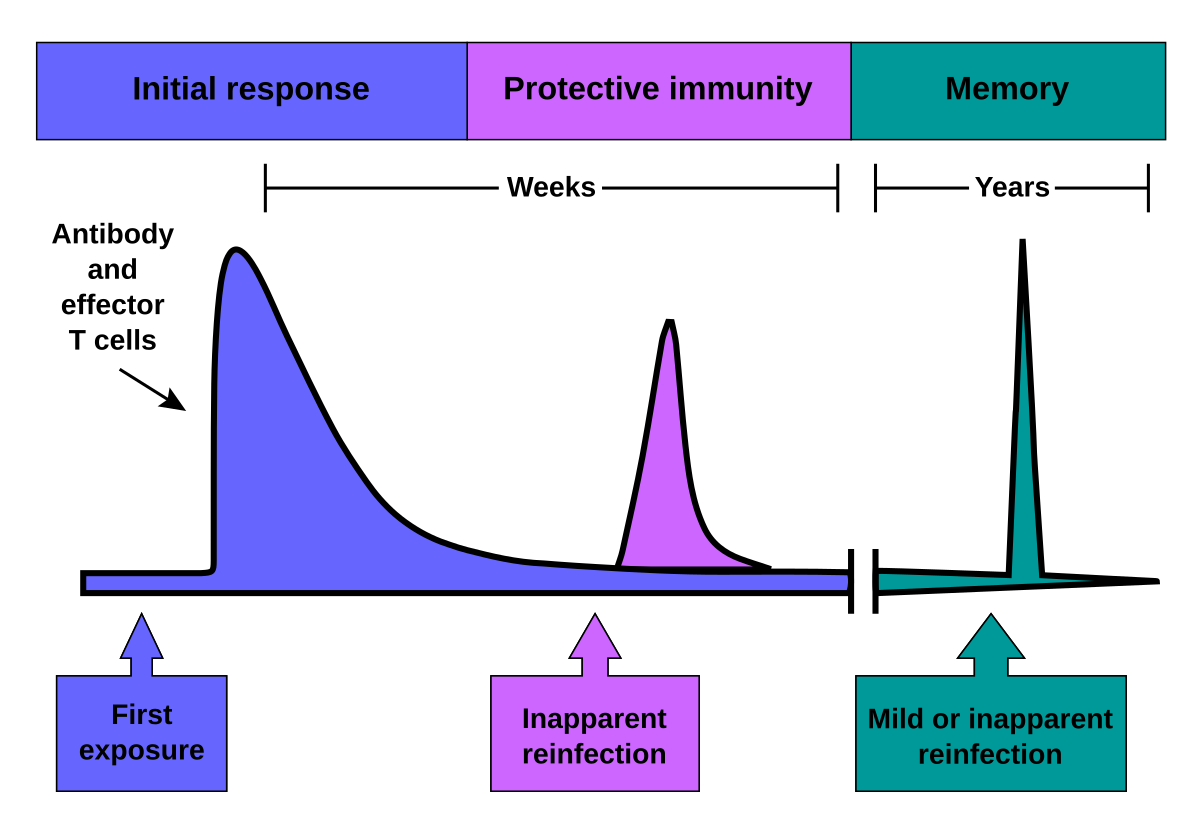
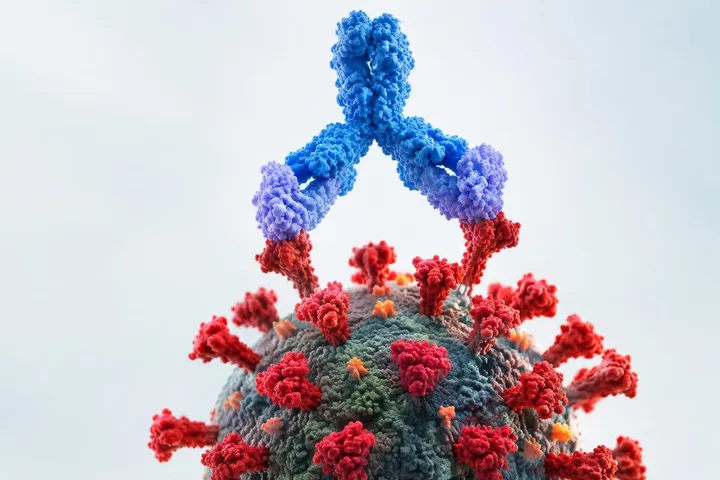
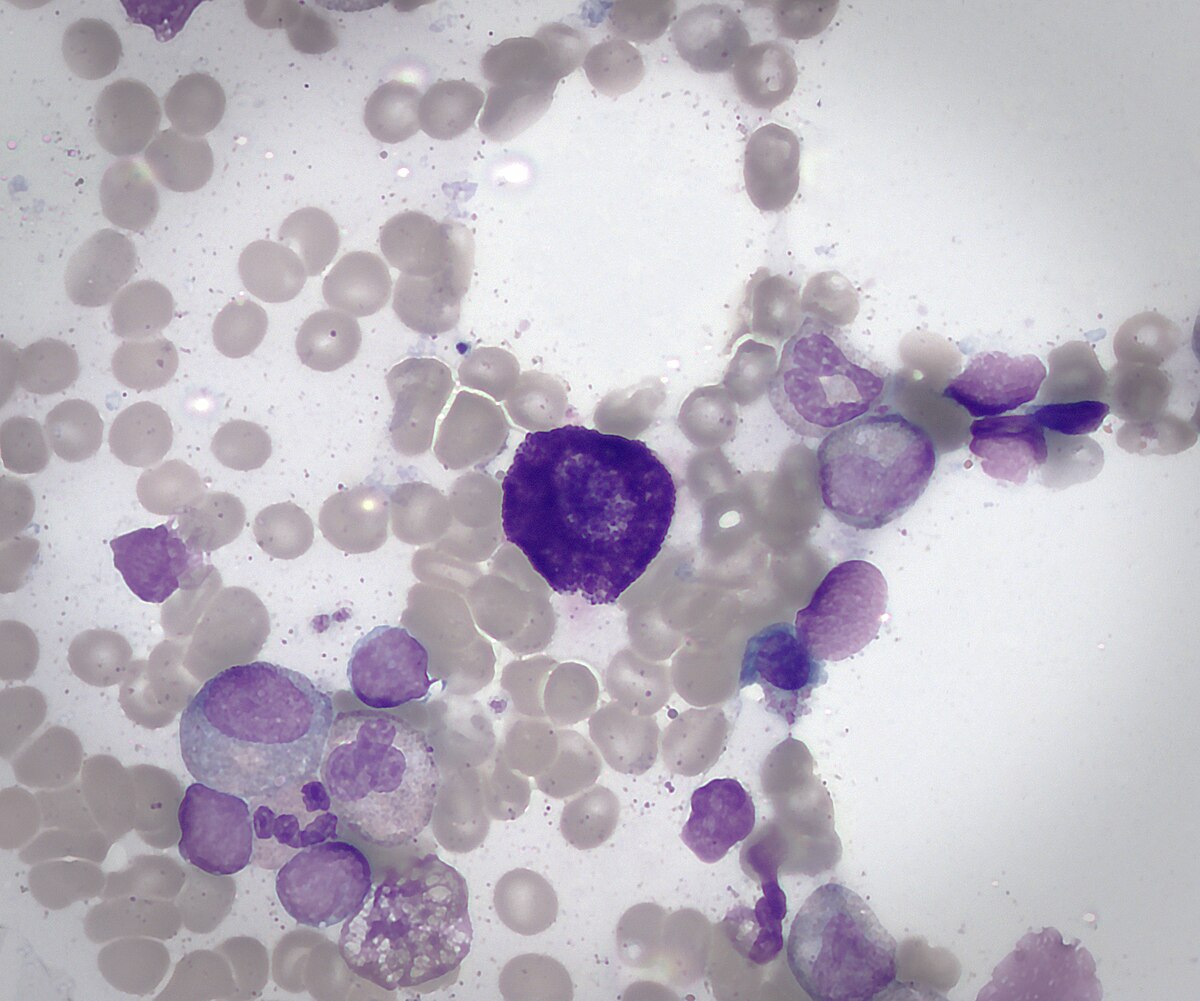
A vaccine doesn't cure an active infection. Instead, it tricks your adaptive immune system into fighting a ghost of the real monster. By introducing a harmless version of a pathogen, your body creates memory cells. These cells stay on guard for decades, ready to kill the real threat instantly.
Graph illustrating the time course of an immune response, showing the initial response, protective immunity, and memory phases over weeks and years. Webridge, CC BY-SA 4.0, via Wikimedia Commons
The shield
Vaccination isn't just about the individual. When enough people are immune, you create herd immunity. This biological shield protects the vulnerable, those who cannot be vaccinated, by stopping the virus from finding a host to travel through.
How vaccines train the immune system
Vaccines work by introducing an immunogen, which is a harmless biological trigger such as a killed virus, a weakened live pathogen, or isolated microbial toxins. When injected or swallowed, this material prompts adaptive immunity. Your body generates specific memory cells and antibodies that recognize the pathogen, usually taking several weeks to develop full protection.
Unlike passive immunity, such as the direct transfer of antibodies through breastfeeding, vaccination forces the body to build its own lasting defense. While most shots are given before exposure, a few work afterward. Louis Pasteur demonstrated this by successfully vaccinating a child after a bite from a rabid dog, triggering protective antibodies faster than the rabies virus could cause fatal harm.
How vaccination defeated smallpox
The word vaccination comes from vacca, the Latin word for cow. In 1796, English physician Edward Jenner developed the first vaccine by using cowpox, a mild cattle virus, to protect against smallpox. This replaced variolation, an older technique dating back to 16th-century China that used unweakened, live smallpox scabs and often caused severe illness.
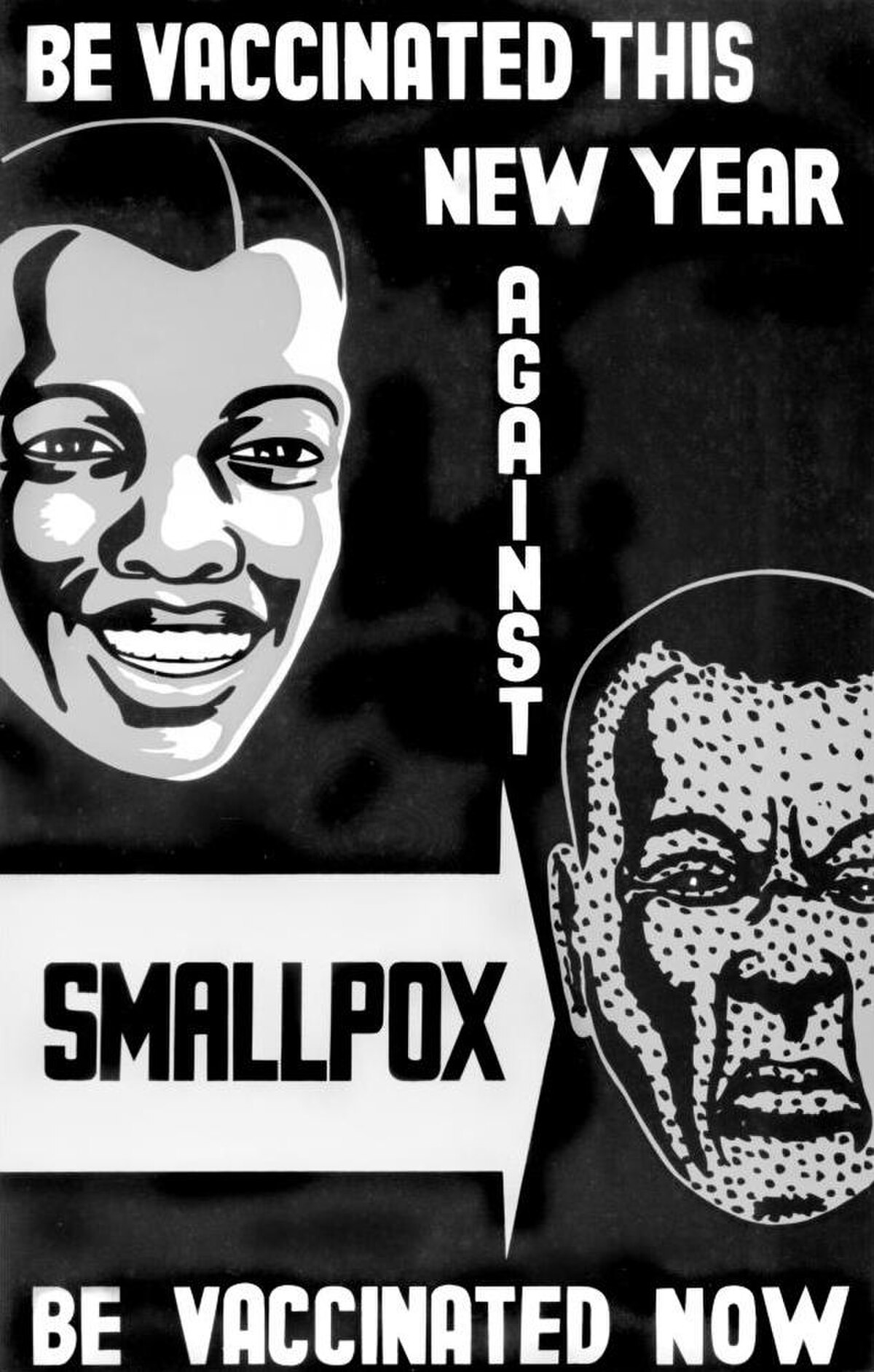
A 1979 public health poster from Lagos, Nigeria, marking the global eradication of smallpox. Public domain, via Wikimedia Commons
Smallpox was a brutal killer, taking the lives of up to 60 percent of infected adults and over 80 percent of infected children. Mass vaccination campaigns eventually achieved complete worldwide eradication of smallpox in 1979, ending a virus that had killed 300 to 500 million people in the 20th century alone.
Herd immunity and saving lives
Vaccination is the single most effective method for stopping infectious diseases worldwide. The World Health Organization estimates that vaccines prevent 3.5 to 5 million deaths each year, having saved roughly 154 million lives between 1974 and 2024, mostly among young children.
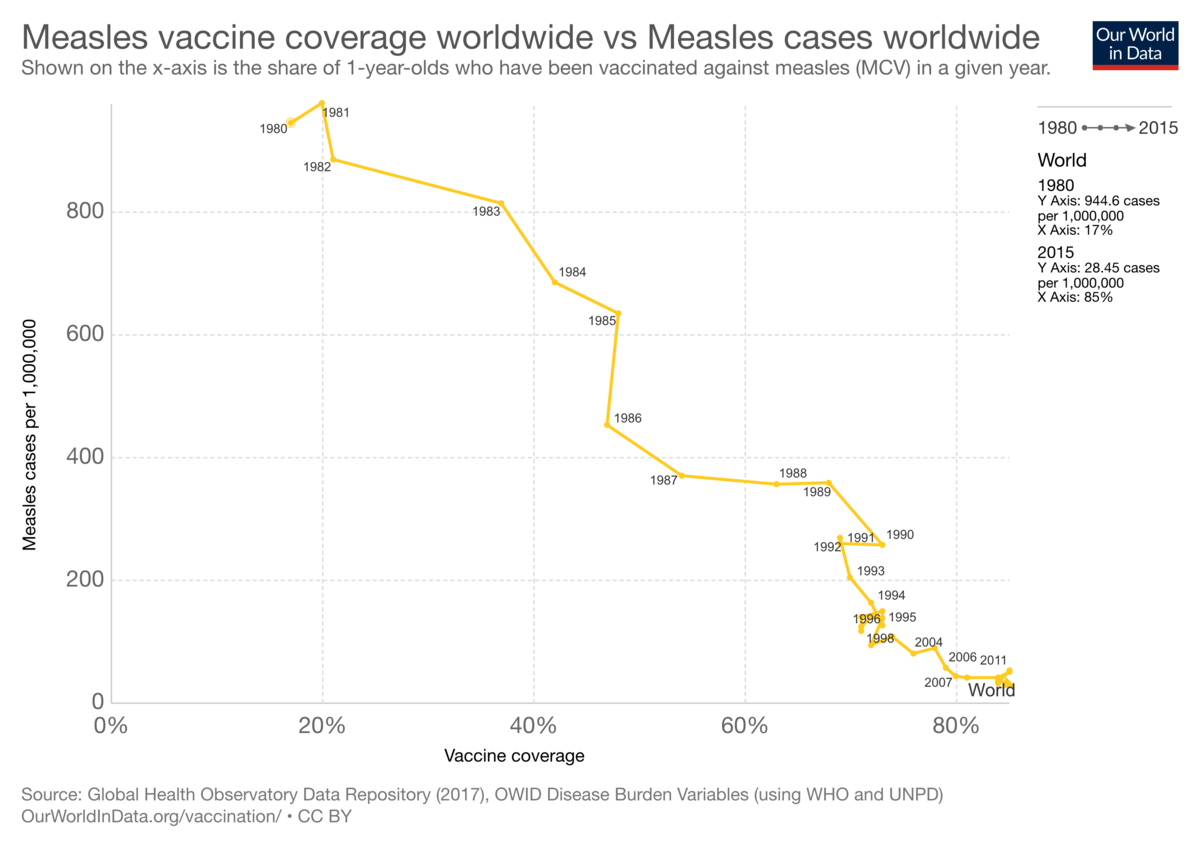
A graph tracking measles infection rates dropping as global vaccination coverage expands. WHO’s Global Health Observatory, CC BY 4.0, via Wikimedia Commons
When a high percentage of a population gets vaccinated, herd immunity stops pathogens from finding new hosts. This collective shield protects immunocompromised individuals who cannot safely receive live vaccines. However, when vaccination rates drop due to vaccine hesitancy, preventable diseases can return.
Test yourself
How does vaccination protect the body against future infections?
By creating memory cells for defense. Vaccines do not cure active infections. Instead, they train the adaptive immune system to build long-lasting memory cells.
True or false: Vaccination cures an active infection by training the immune system.
False. Vaccines prevent disease by creating memory cells before infection occurs, but they cannot treat or cure a person who is currently sick.
Play the lesson in edgi and the card is yours. It lands on your Map next to the ideas it connects to, and turns from matte to foil to gold as you learn more around it.
What is the difference between vaccination and inoculation?
Vaccination uses a weakened or killed pathogen, or parts of one, to trigger a safe immune response. Inoculation, specifically variolation, involved introducing an unweakened, live pathogen from a patient's scab or pustule directly into the skin, which carried a high risk of causing the full disease.
Why are some vaccines given as oral drops instead of shots?
Most vaccines require injection because they are not absorbed reliably through the digestive system. However, specific live attenuated vaccines, such as those for rotavirus, polio, and certain cholera strains, are swallowed to generate localized immunity directly in the bowel.
What causes a vaccine failure?
Vaccine failure occurs when someone catches a disease despite receiving the vaccine. Primary failure happens when an individual's immune system fails to produce antibodies after the initial dose, which is usually caused by natural variations in human biology rather than a defective vaccine product.