Natural killer cells: the innate hunters targeting missing ID tags
A natural killer cell is a specialized white blood cell that attacks virus-infected cells and tumors without needing prior exposure to them. While typical immune cells require a specific target label to trigger an attack, natural killer cells strike whenever a cell is missing its normal healthy markers. They act as an immediate defense system, destroying dangerous targets that other immune cells miss.
By the edgi team We find the most surprising true thing about an idea and build a 60-second lesson around it.
Most immune cells need a chemical wanted poster before they attack an invader. Natural killer cells operate differently, patrolling the body looking for a specific ID tag that healthy cells always carry.
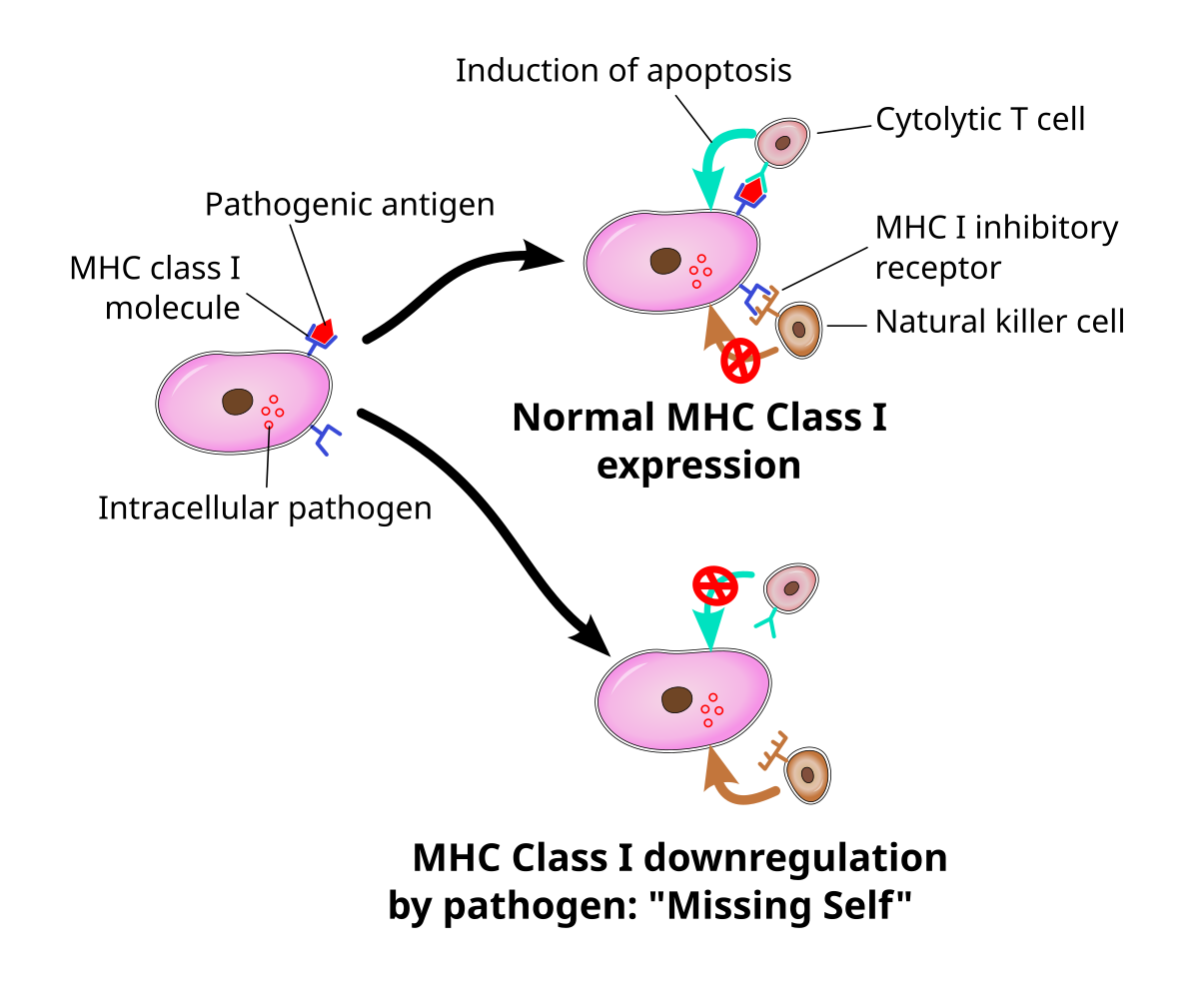
Schematic diagram illustrating the "Missing Self" hypothesis, showing the complementary activities of cytotoxic T cells and natural killer cells in response to MHC Class I expression. Cacofonie, CC BY-SA 3.0, via Wikimedia Commons
If a virus-infected or cancerous cell drops that tag to hide, the missing signal marks it for execution.
Built to kill
In the 1970s, researchers noticed untrained immune cells killing tumors in mice, defying the existing rules of biology. They realized these were a unique type of lymphocyte that did not need prior instruction to strike.
They were named natural killers because their lethal ability is an inherent, built-in feature rather than an acquired skill.
The strike
Once an NK cell identifies a rogue target, it injects lethal enzymes that trigger apoptosis. This process forces the doomed cell to cleanly dismantle itself from the inside out.
A single NK cell can terminate several targets in a row, acting as an autonomous predator within the innate immune system.
How natural killer cells recognize targets
Cytotoxic T cells need to see an antigen presented on major histocompatibility complex class I (MHC class I) molecules to launch an attack. Many viruses and tumor cells evolve to drop these MHC class I markers to evade detection. Natural killer cells exploit that exact evasion tactic by destroying cells that lack those self-identifying markers.
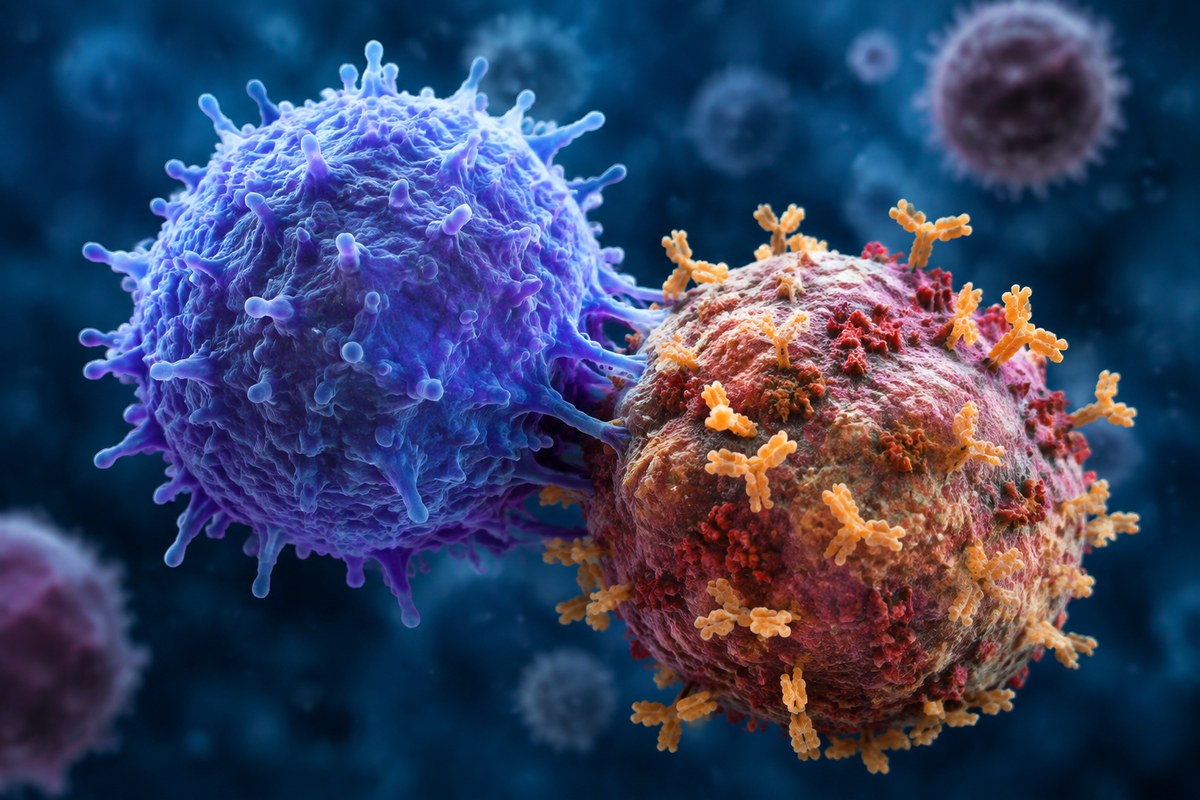
A natural killer cell balances activating and inhibitory signals on its surface. When it contacts a cell that carries normal MHC class I molecules, inhibitory receptors stop the attack. If a target cell lacks these protective tags or shows signs of stress, activating signals take over and trigger cell destruction.
Structure and subtypes of natural killer cells
Natural killer cells make up 5 to 20 percent of all circulating lymphocytes in humans. Under a microscope, they appear as large granular lymphocytes and are identified by the presence of the surface protein CD56 and the complete absence of the T-cell marker CD3. They develop from progenitor cells in the bone marrow, lymph nodes, spleen, tonsils, and thymus before circulating through the body.
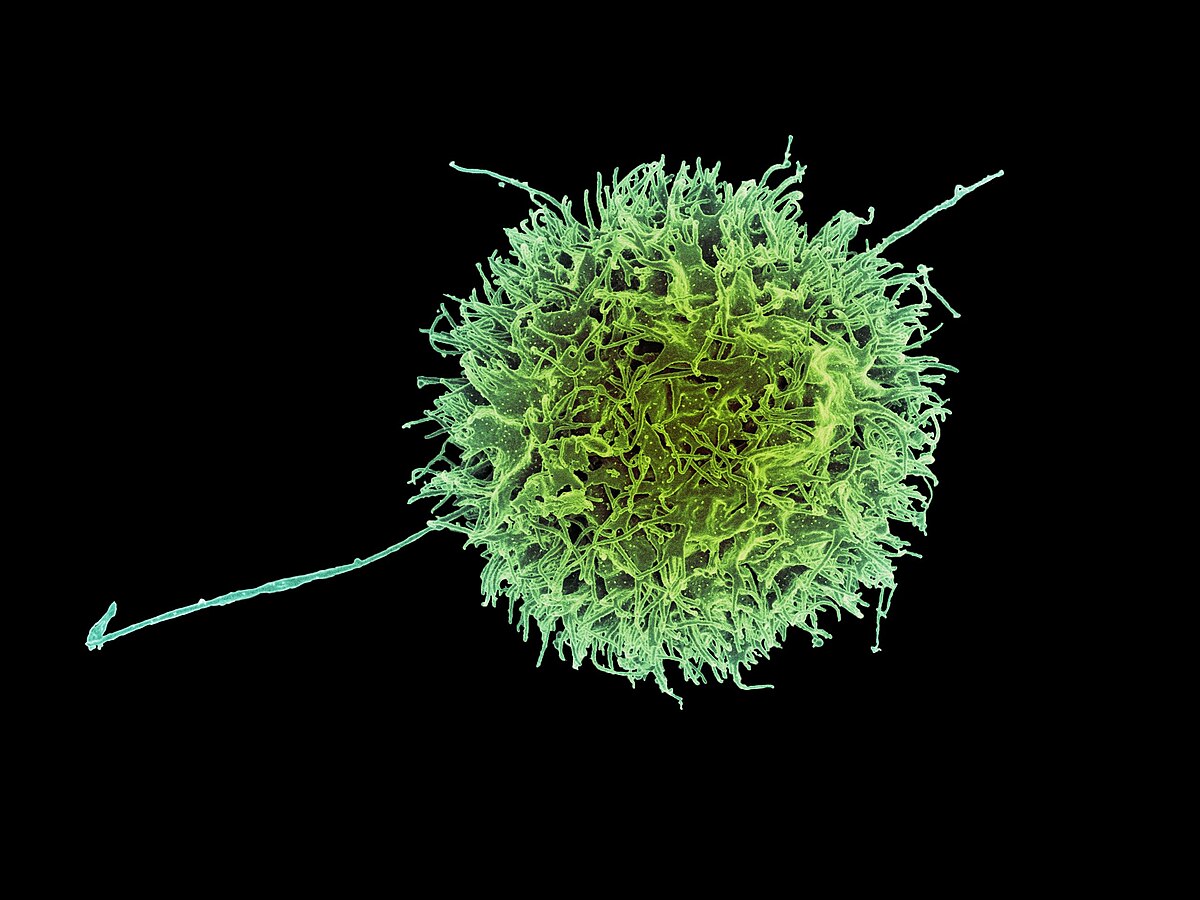
A scanning electron micrograph reveals the spherical shape and dense surface projections characteristic of a human natural killer cell. NIAID, CC BY 2.0, via Wikimedia Commons
These cells split into two main functional groups based on the density of CD56 on their surface. CD56bright cells primarily release signaling proteins called cytokines in tissues like the liver, skin, and secondary lymphoid organs. CD56dim cells patrol peripheral blood, express the CD16 receptor, and carry out direct target destruction.
Test yourself
How do natural killer cells determine which cells to execute?
By identifying cells missing an ID tag.. Natural killer cells look for the presence of a healthy ID tag; they do not require a chemical wanted poster like other immune cells.
Play the lesson in edgi and the card is yours. It lands on your Map next to the ideas it connects to, and turns from matte to foil to gold as you learn more around it.
How do natural killer cells differ from natural killer T cells?
Natural killer cells do not express T-cell antigen receptors or the CD3 marker, whereas natural killer T cells possess T-cell receptors. Natural killer T cells also often release interferon gamma to promote the activity of natural killer cells.
How were natural killer cells discovered?
Researchers in the 1960s and 1970s noticed that lymphoid cells from mice and humans could kill tumor cells without previous immunization. This spontaneous killing contradicted the established belief that lymphocytes required prior priming, leading to the isolation of natural killer cells as a distinct cell type.
Do natural killer cells have immunological memory?
Yes. Experiments show that natural killer cells can adapt to their environment and generate antigen-specific immunological memory, allowing them to mount secondary responses against repeat infections.