The prairie vole is a small, burrowing rodent native to the grasslands of North America. Unlike most mammals, it forms lifelong social pair bonds where males and females share nests and raise young together. This rare behavior made it a primary model in neuroscience for studying how hormones and brain receptors drive social attachment.
By the edgi team We find the most surprising true thing about an idea and build a 60-second lesson around it.
In 1971 Lowell Getz started trapping rodents in the fields around Urbana, Illinois, to study population cycles. Mating was not what he was after. His traps kept closing on an adult male and an adult female prairie vole at the same time, and the same pairs turned up months later.
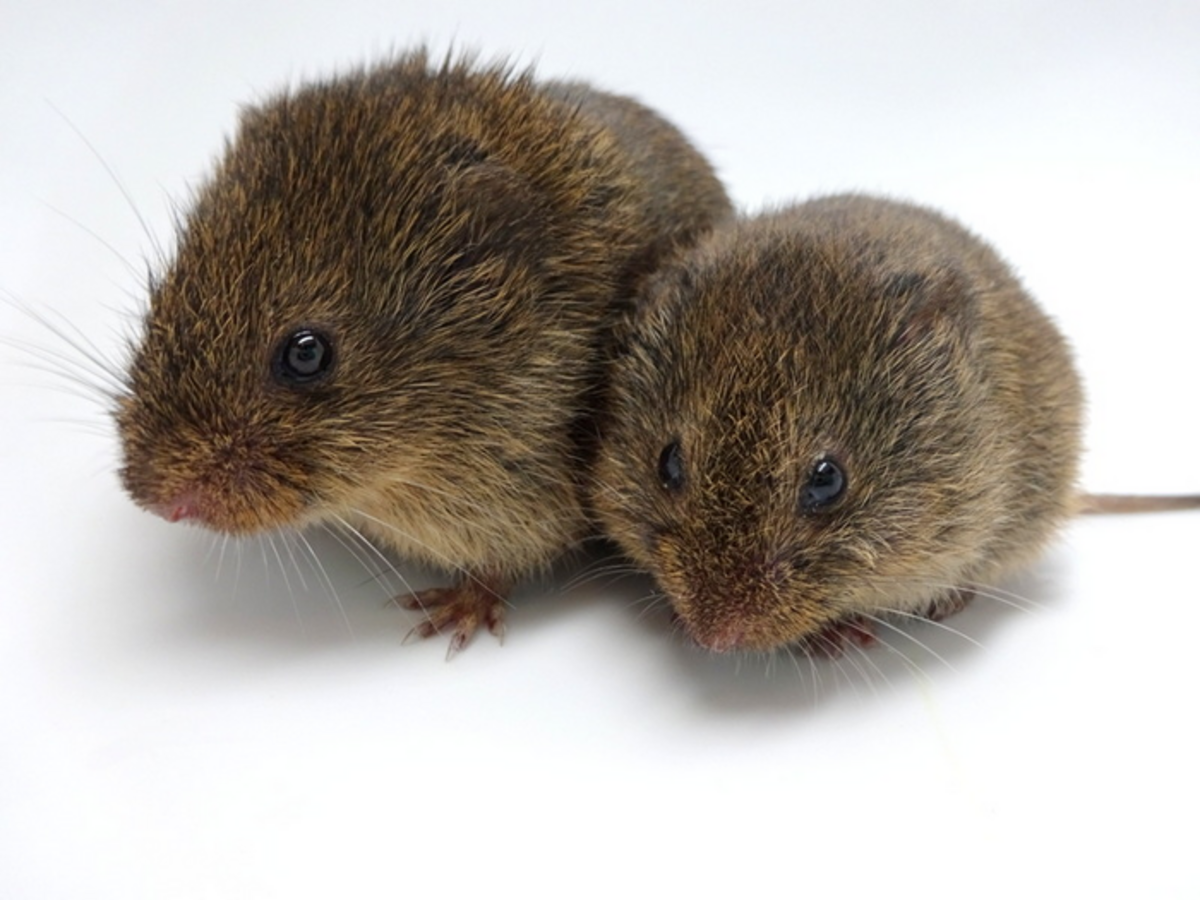
Two prairie voles, small brown rodents with short tails and small ears, are shown close up against a white background. Nastacia Goodwin, CC BY-SA 4.0, via Wikimedia Commons
Radio tracking confirmed it: one underground nest, one shared range, pups raised by both, and paired males attacking strange voles on sight. The pairs are not faithful, though. Genetic tests on wild litters regularly turn up pups fathered by another male. The pair shares a nest and a territory, not a bed.
Where the receptors sit
The meadow vole in the next field never pairs at all. Same fields, close relative, and both species make the same two signaling hormones, oxytocin and vasopressin, in the same amounts. What differs is where the receptors sit. Prairie voles carry them packed into the reward circuitry, the part that handles wanting things. In meadow voles they sit outside it, on circuits doing other work.
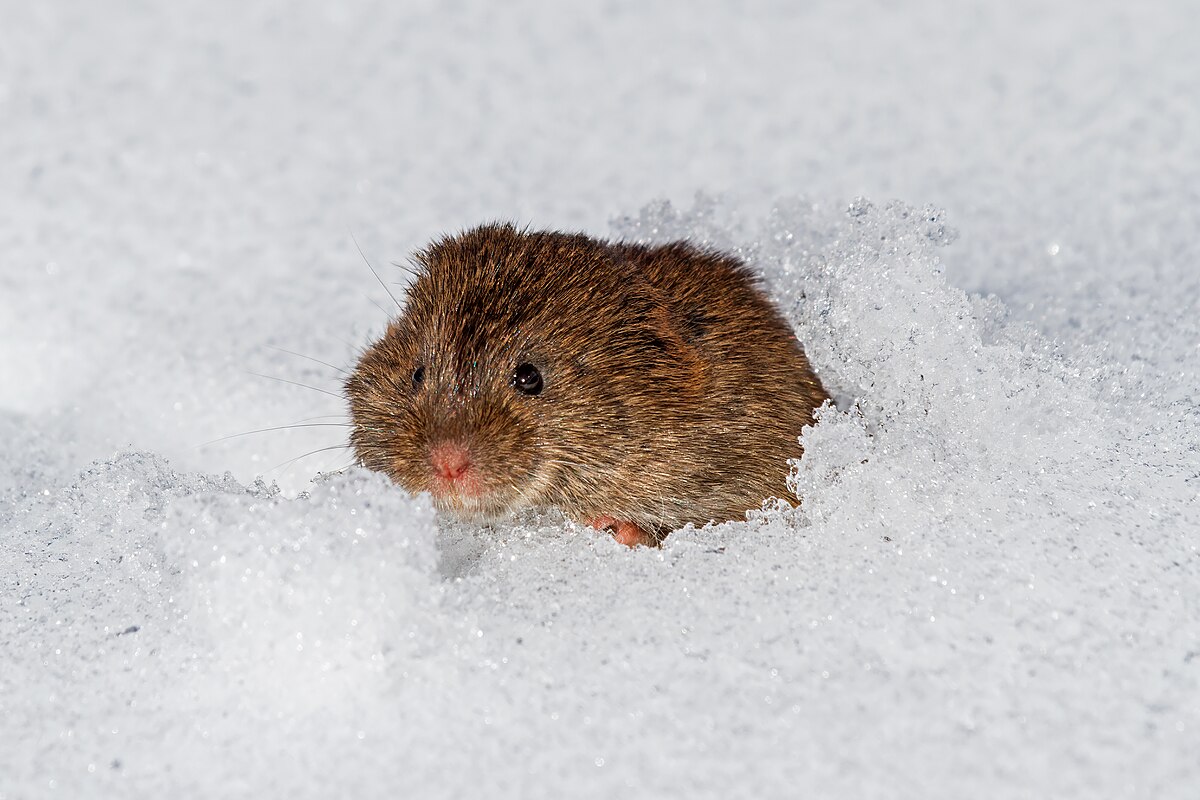
An Eastern meadow vole (Microtus pennsylvanicus) emerges from a runway in the snow in Kennebunk, Maine, USA. Chuck Homler d/b/a Focus On Wildlife, CC BY-SA 4.0, via Wikimedia Commons
So when a prairie vole mates, its reward circuitry fires. That same circuitry is registering the partner's smell at the same moment. Afterwards the partner is the thing its brain wants.
The story got too neat
Blocking the oxytocin receptor with a drug stopped voles forming a partner preference. For thirty years that was the headline: oxytocin is the bonding molecule. In 2023 a team went further and used CRISPR to delete the receptor gene, so the voles grew up with no working oxytocin receptor at all.
They bonded anyway. Partner preferences formed, pairs nested, parents raised pups. The mothers made less milk, since squeezing milk out is a job oxytocin does directly, but the bond held. Take the obvious part out and something else covers the job.
Why do prairie voles form pair bonds?
A prairie vole's brain connects social bonding directly to reward. While closely related species like meadow voles have oxytocin and vasopressin receptors located outside their reward circuits, female prairie voles carry dense oxytocin receptors inside them. In males, the gene for the vasopressin receptor contains a longer segment than that of non-bonding relatives.
When prairie voles mate, this reward circuitry fires while processing the specific partner's scent, creating an enduring preference for that individual. Paired males will groom, huddle with, and defend their mate, staying together for life. If a female dies, her male partner does not seek out a new mate.
Where do prairie voles live and nest?
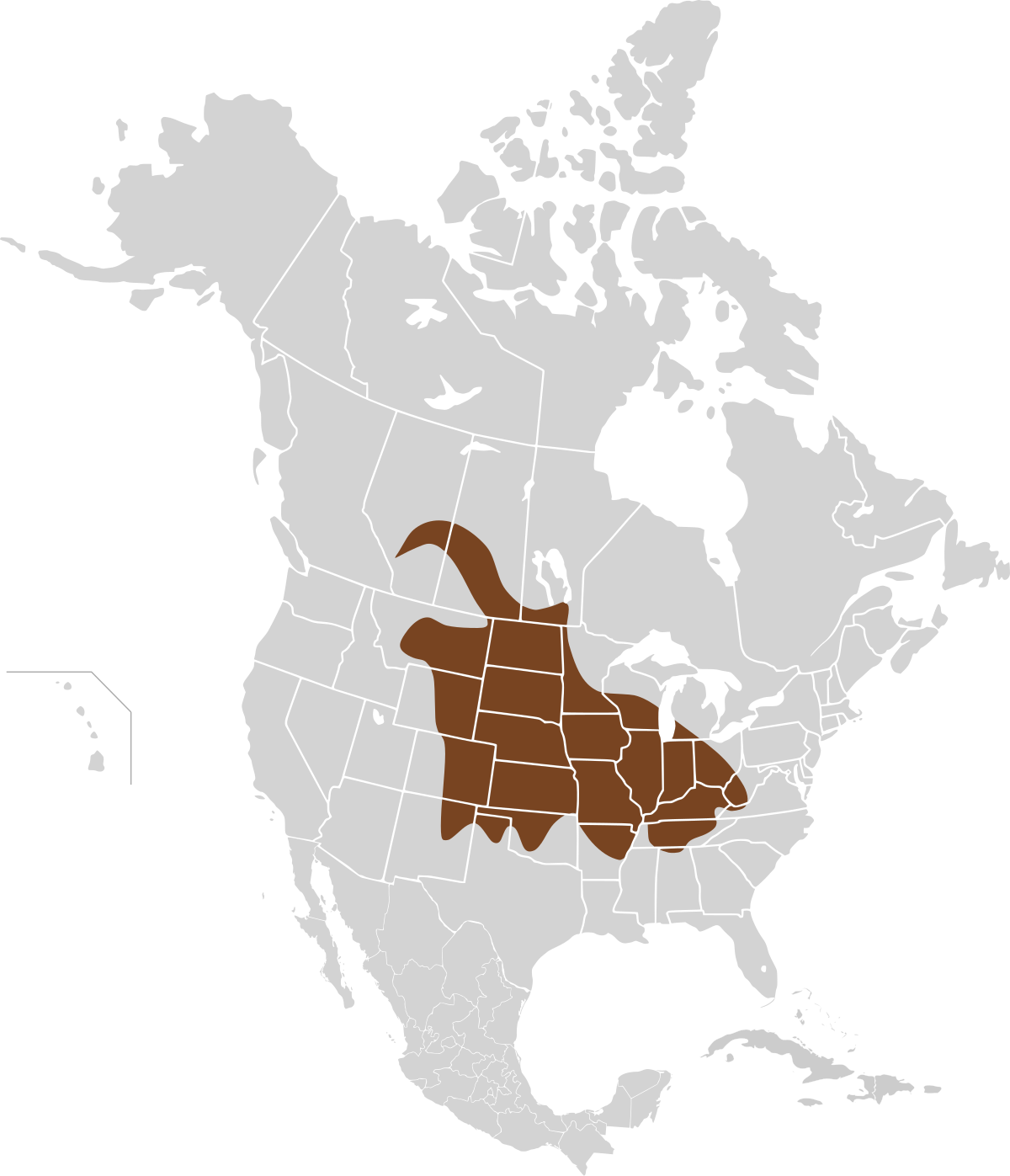
Prairie voles inhabit dry grasslands, fallow fields, and hay meadows across the central United States and southern Canada, stretching from the Rocky Mountains to West Virginia. They construct shallow underground burrows and clear surface runways through thick weeds and grass, which they use to escape predators and forage for roots, fruit, seeds, and bark.
A map showing the central North American range of the prairie vole across grasslands from the eastern Rocky Mountains to West Virginia. Cephas, CC BY-SA 4.0, via Wikimedia Commons
During mating seasons in the spring and fall, a bonded pair marks an individual territory with urine and secretions. Both parents raise the litters of two to seven pups, which open their eyes after eight days and feed themselves within two weeks. Although pairs remain socially attached for life, genetic tests show they are not strictly faithful sexually, occasionally mating with other voles outside the bond.
Test yourself
What explains why prairie voles form close pair bonds while closely related meadow voles do not?
Receptor placement in brain reward circuits. Both species produce the same hormones, but prairie voles have receptors densely packed into their brain reward circuitry, linking partner presence with desire.
Does a prairie vole pair share a nest and territory while remaining genetically unfaithful?
Yes, they share homes but not fidelity. Prairie voles form stable social pairs to share nests and raise pups together, yet genetic tests show that litters frequently include pups fathered by other males.
In prairie voles, knocking out a gene thought essential for pair bonding leaves them bonding anyway. Most likely why?
Something else covers the job during development. Anything an animal's offspring depend on tends to have more than one route to it. Take a component out of an adult and the function breaks; take it out of an embryo and development often routes around it. The two experiments answer different questions.
Play the lesson in edgi and the card is yours. It lands on your Map next to the ideas it connects to, and turns from matte to foil to gold as you learn more around it.
Prairie voles are heavily preyed upon by hawks, owls, foxes, coyotes, and prairie rattlesnakes. Because of heavy predation and other environmental factors, they rarely live longer than one or two years in the wild.
What viruses do prairie voles carry?
Prairie voles in Missouri have been found carrying Bloodland Lake virus, a type of hantavirus. Although hantaviruses can cause severe pulmonary and renal illnesses in humans, no human cases of Bloodland Lake virus have been reported.