Oxytocin is a peptide hormone, a small chemical messenger made of amino acids, produced in the brain's hypothalamus. It triggers physical muscle contractions during childbirth and nursing, while also acting as a brain signal that focuses attention on social cues and familiar bonds. Despite its popular reputation as a pure love chemical, it was originally discovered and named for its direct mechanical role in speeding up labor.
By the edgi team We find the most surprising true thing about an idea and build a 60-second lesson around it.
Milk sits in tiny sacs deep in the breast, each one wrapped in a layer of muscle. It does not flow on its own. So milk coming down is not a mood. It is that muscle layer contracting.
The signal that makes it contract comes from the baby. Suckling, or just crying, sends it up to the hypothalamus, which releases oxytocin into the blood, and the muscle squeezes.
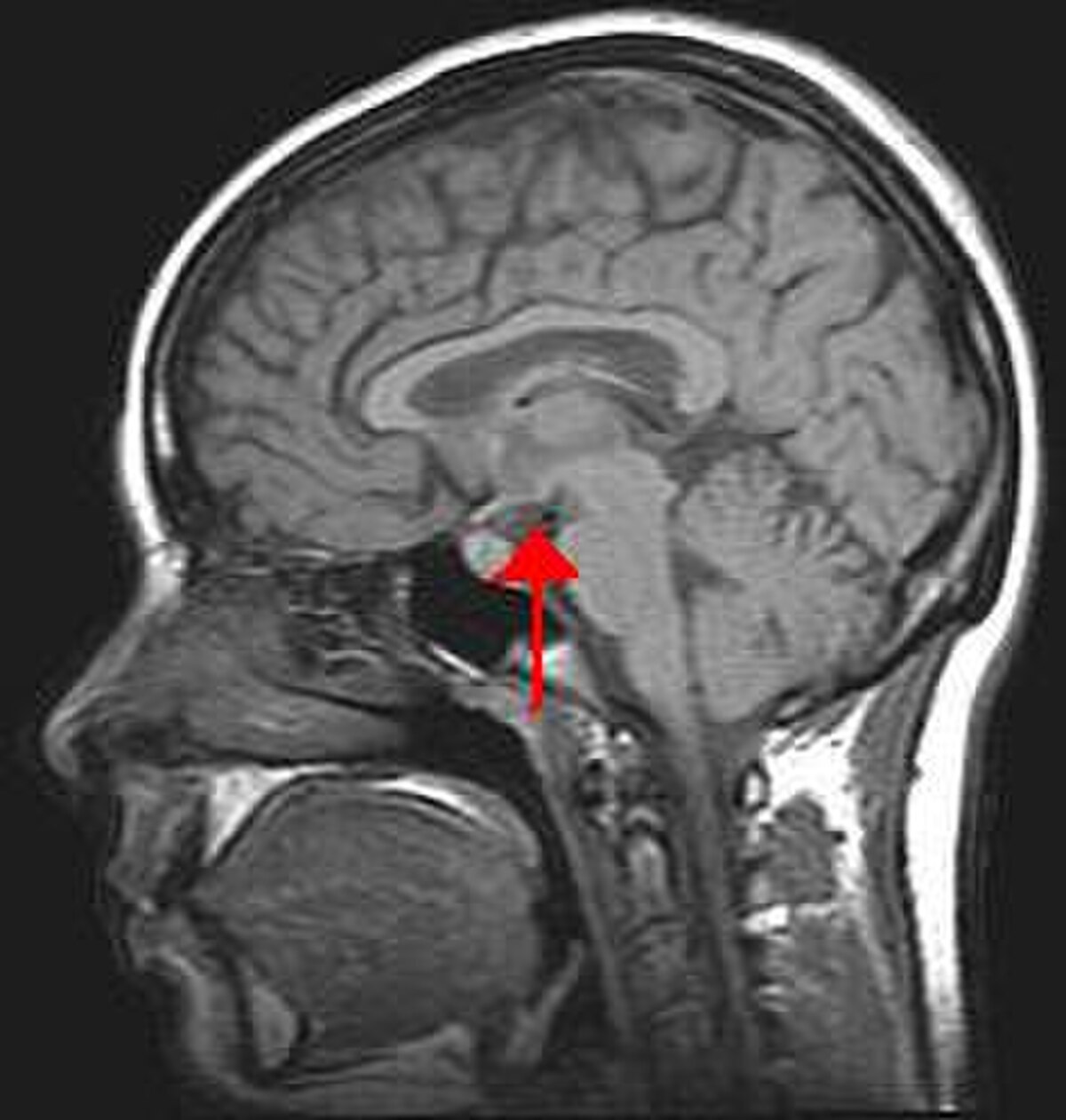
A sagittal MRI scan of a human head highlights the hypothalamus with a red arrow. Public domain, via Wikimedia Commons
What it was named for
Birth is the same squeeze on a different muscle, with a loop on top. The baby's head presses the cervix, the pressure calls for oxytocin, the uterus contracts and presses the head down harder. That loop is why labor speeds up as it goes instead of running at one pace.
Oxytocin was named for that job and nothing else. It is Greek for swift birth, and it got the name in 1906, decades before anyone called it a love hormone.
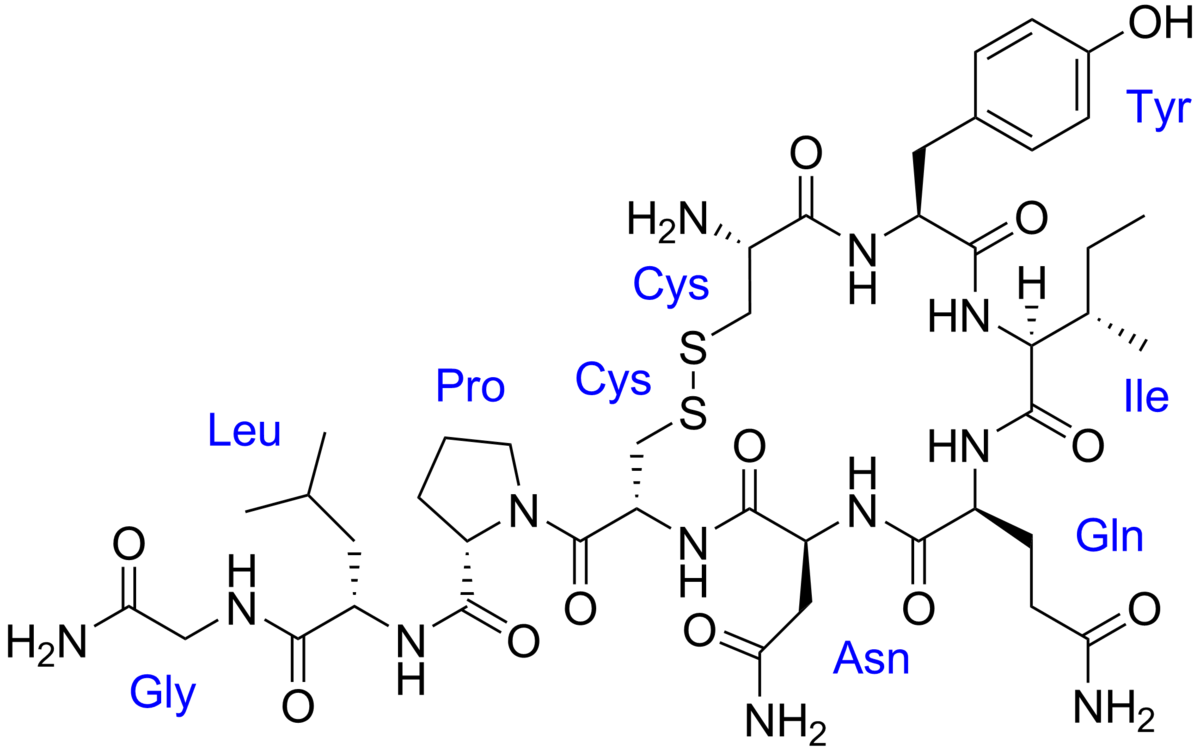
A 2D chemical structure diagram of oxytocin, with each amino acid residue labeled in blue. Edgar181, Public domain, via Wikimedia Commons
The second exit
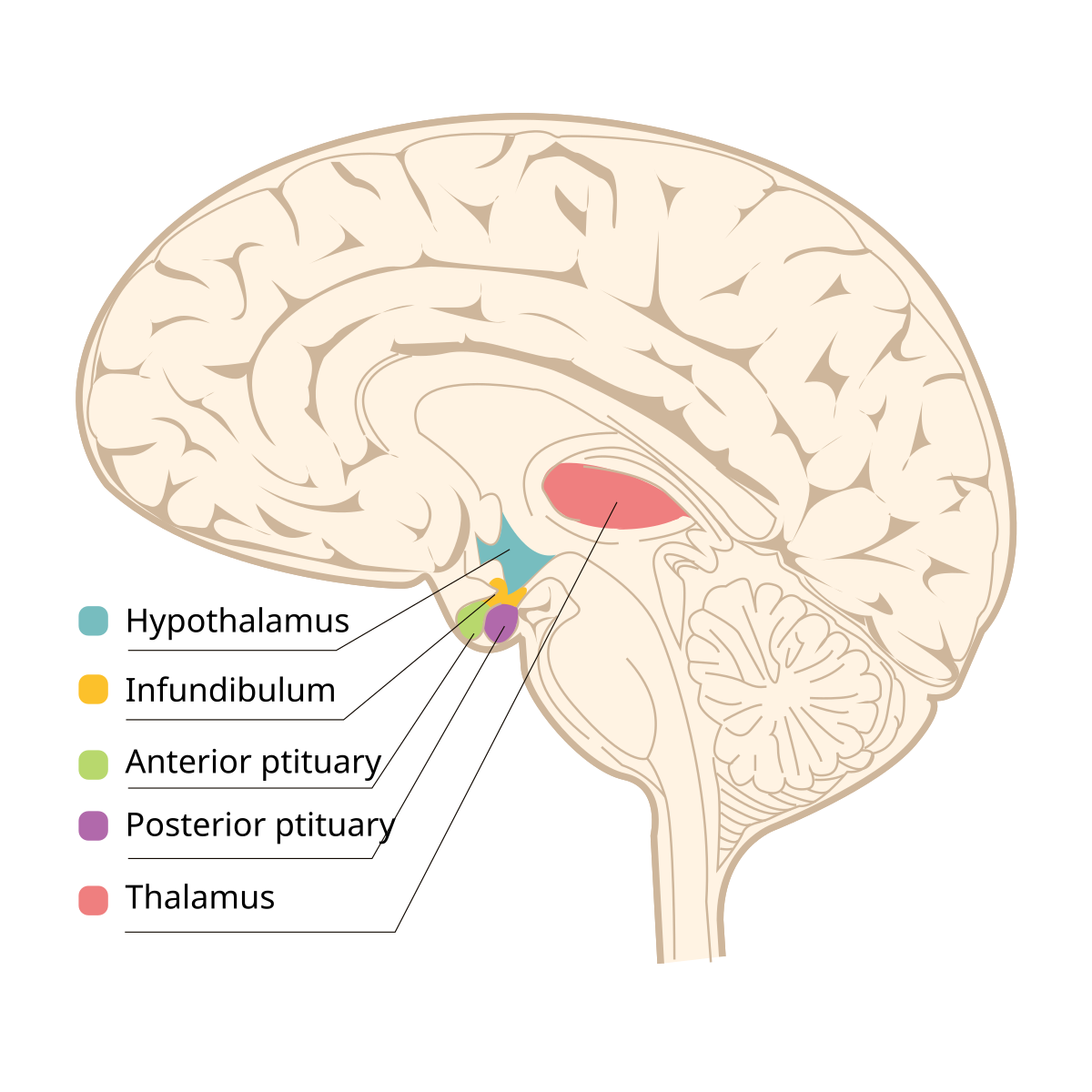
The hypothalamus sends oxytocin two ways. Out into the blood, where it finds muscle, and sideways into the brain itself, where it finds nerve cells. The brain route is the one the nickname is about, and touch is what opens it: warmth, skin contact, being close to someone familiar.
Diagram of the human brain highlighting the hypothalamus, pituitary gland, and surrounding structures. Hariadhi, CC BY-SA 4.0, via Wikimedia Commons
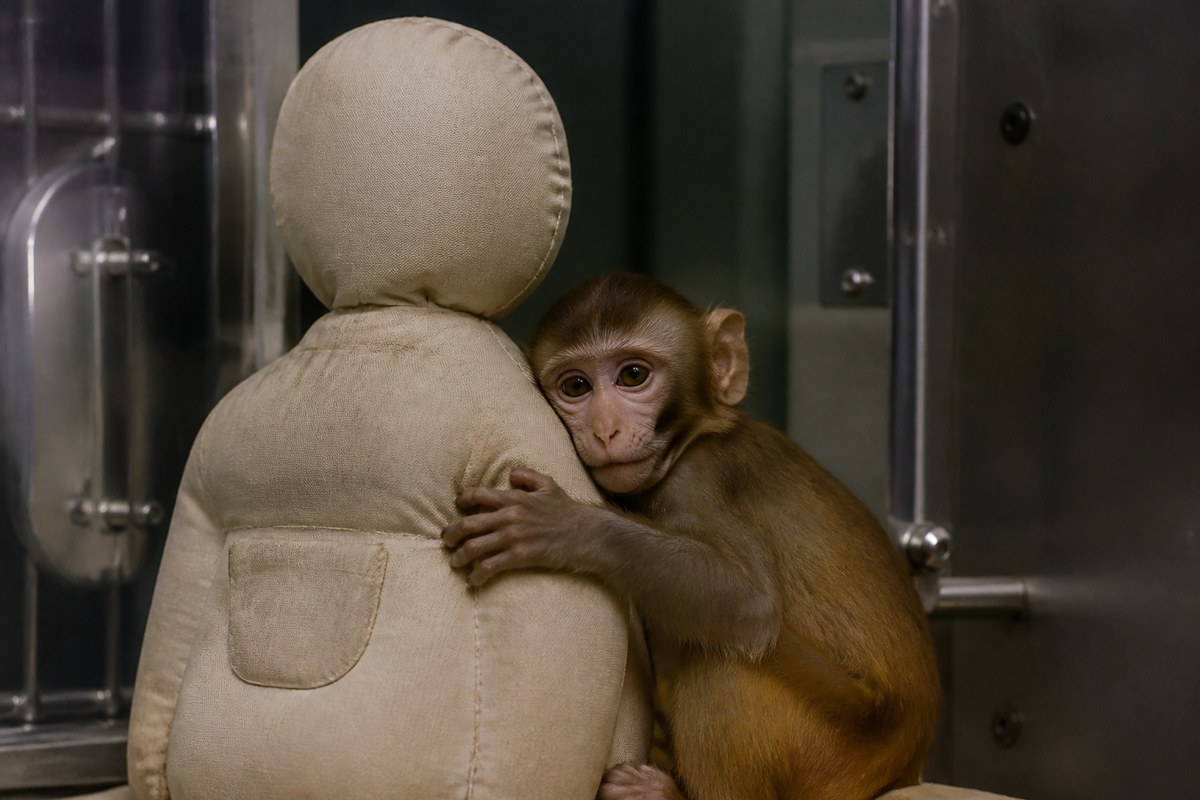
Watch a new mother and there is a set of things she does without deciding to. The particular song. The particular way of bathing him. Checking on him twice more than she needs to. Measure oxytocin across pregnancy and after birth, and the mothers with more of it do more of exactly that: more gazing, more touching, more of the small private routines.
What the nickname oversells
What the brain route changes is not the feeling. It changes how much attention the other person gets: a face, a voice, a cry pulls harder than it otherwise would. The nickname promises the feeling itself, in a dose. Sprayed up the nose, oxytocin was supposed to make strangers trust each other with money, and that result has failed several large replications.
There is a lever that reliably raises oxytocin, and it is touch. It is the one a new mother pulls all day without knowing it is there.
How does oxytocin work in the body?
Oxytocin operates on a self-reinforcing feedback loop. During childbirth, pressure against the cervix triggers the hypothalamus to send oxytocin into the bloodstream through the posterior pituitary gland. That surge contracts the uterus, driving the baby downward and increasing cervical pressure, which in turn demands an even larger surge of oxytocin.
A matching contraction occurs during nursing. When a baby suckles or cries, nerve signals prompt the hypothalamus to release oxytocin into the blood. The hormone travels to the breast, where it binds to muscle layers surrounding tiny milk sacs and forces them to contract, ejecting the milk.
The hormone itself is a chain of nine amino acids split from an inactive precursor protein encoded by the OXT gene. In 1953, biochemist Vincent du Vigneaud synthesized this nine-amino-acid structure, making oxytocin the first polypeptide hormone ever sequenced and artificially produced.
Where does oxytocin go in the brain?
The hypothalamus releases oxytocin along two distinct pathways. While one path empties into the bloodstream to target peripheral muscles, nerve fibers also distribute the peptide sideways into brain regions like the nucleus accumbens and amygdala.
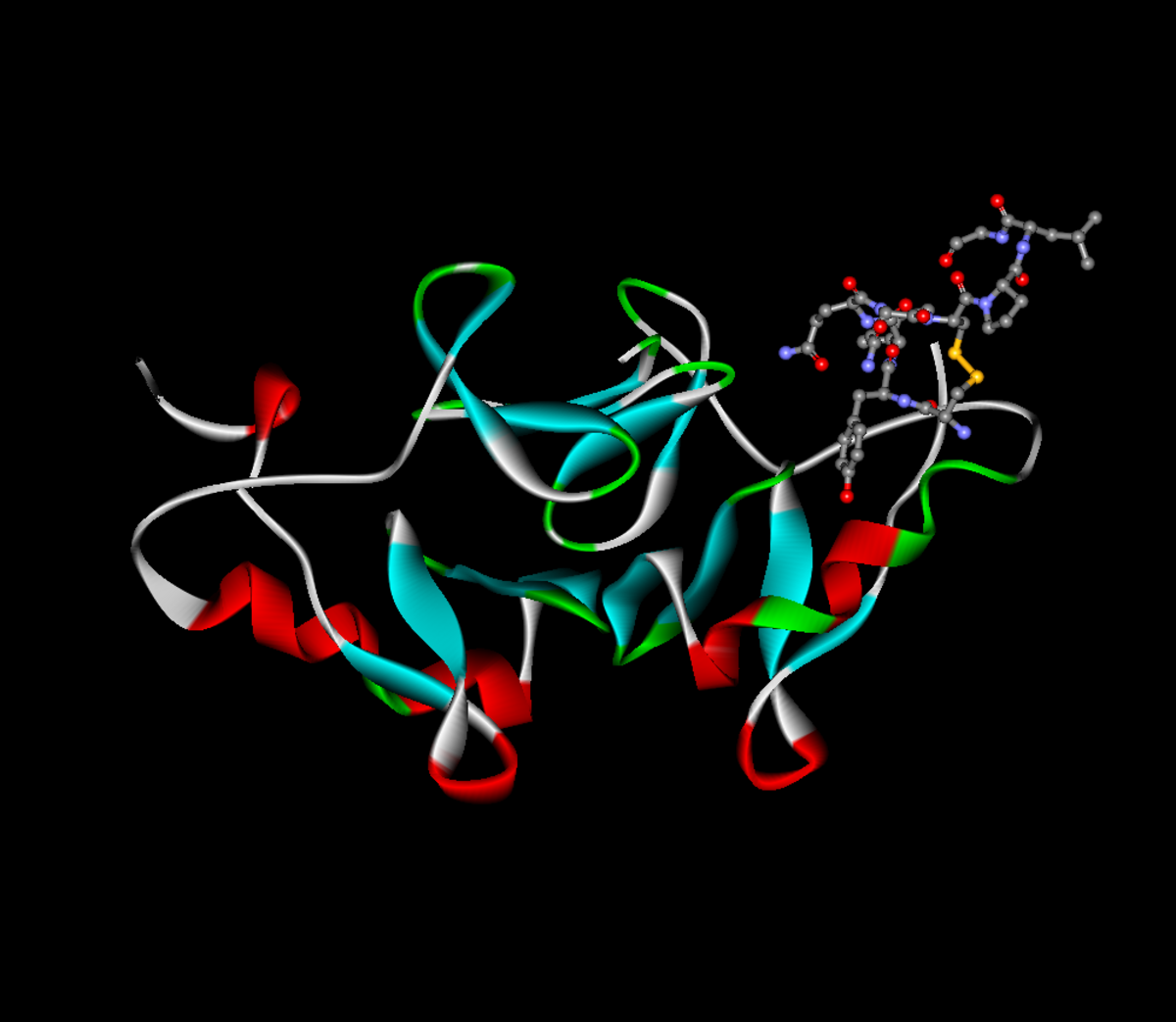
Oxytocin is packaged inside brain cells attached to its carrier protein, neurophysin, before it is released. Edgar181, Public domain, via Wikimedia Commons
This brain pathway responds directly to physical touch, skin contact, and warmth from familiar individuals. In new mothers, higher natural levels of oxytocin correlate with spontaneous bonding behaviors, including steady eye contact, gentle touch, and protective care routines.
Inside the brain, oxytocin does not instantly generate affection on demand. Instead, it amplifies sensory attention, causing familiar faces, voices, and cries to pull focus far more sharply than they otherwise would.
Test yourself
Which hormone released during a kiss builds emotional trust and bonding?
Oxytocin. Dopamine drives the immediate thrill and desire, while oxytocin dampens threat perception to build emotional attachment.
Why does physical touch like hugging help calm an anxious person?
Oxytocin calms the brain's threat center. Touch triggers the release of oxytocin, which reduces activity in the amygdala and lowers circulating cortisol.
How does oxytocin acting within the brain typically alter social behavior?
It heightens attention to social cues. Oxytocin does not supply an artificial emotional dose; instead, it sharpens focus and salience toward familiar faces, voices, and touch.
Play the lesson in edgi and the card is yours. It lands on your Map next to the ideas it connects to, and turns from matte to foil to gold as you learn more around it.
British pharmacologist Henry Hallett Dale named the compound in 1906 from the Greek words oxys, meaning swift, and tokos, meaning childbirth. The name reflects its ability to stimulate uterine contractions and accelerate delivery.
Can oxytocin nasal sprays make people trust strangers?
Early claims suggested inhaling oxytocin would directly make strangers trust each other with money. However, several large scientific replication studies failed to reproduce those results.
What nutrients are involved in making oxytocin?
The final enzymatic step that creates active oxytocin requires the enzyme peptidylglycine alpha-amidating monooxygenase (PAM). This enzyme depends on vitamin C as a necessary cofactor to produce the hormone.