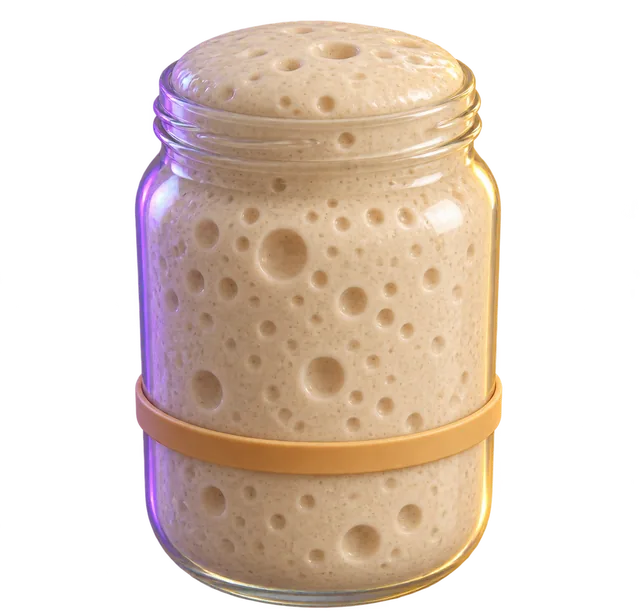
Sourdough is bread raised with a live starter of flour and water that hosts wild yeast and lactic acid bacteria instead of packaged yeast. The bacteria produce lactic acid as they ferment starches, which gives the bread its tart flavor and helps it stay fresh longer. Because the fermentation breaks down gluten and phytic acid, the bread is also easier to digest.
By the edgi team We find the most surprising true thing about an idea and build a 60-second lesson around it.
Sourdough is bread leavened by a wild, living ecosystem rather than commercial yeast. You create a starter by mixing flour and water, then letting it catch local spores from the air and the flour itself.
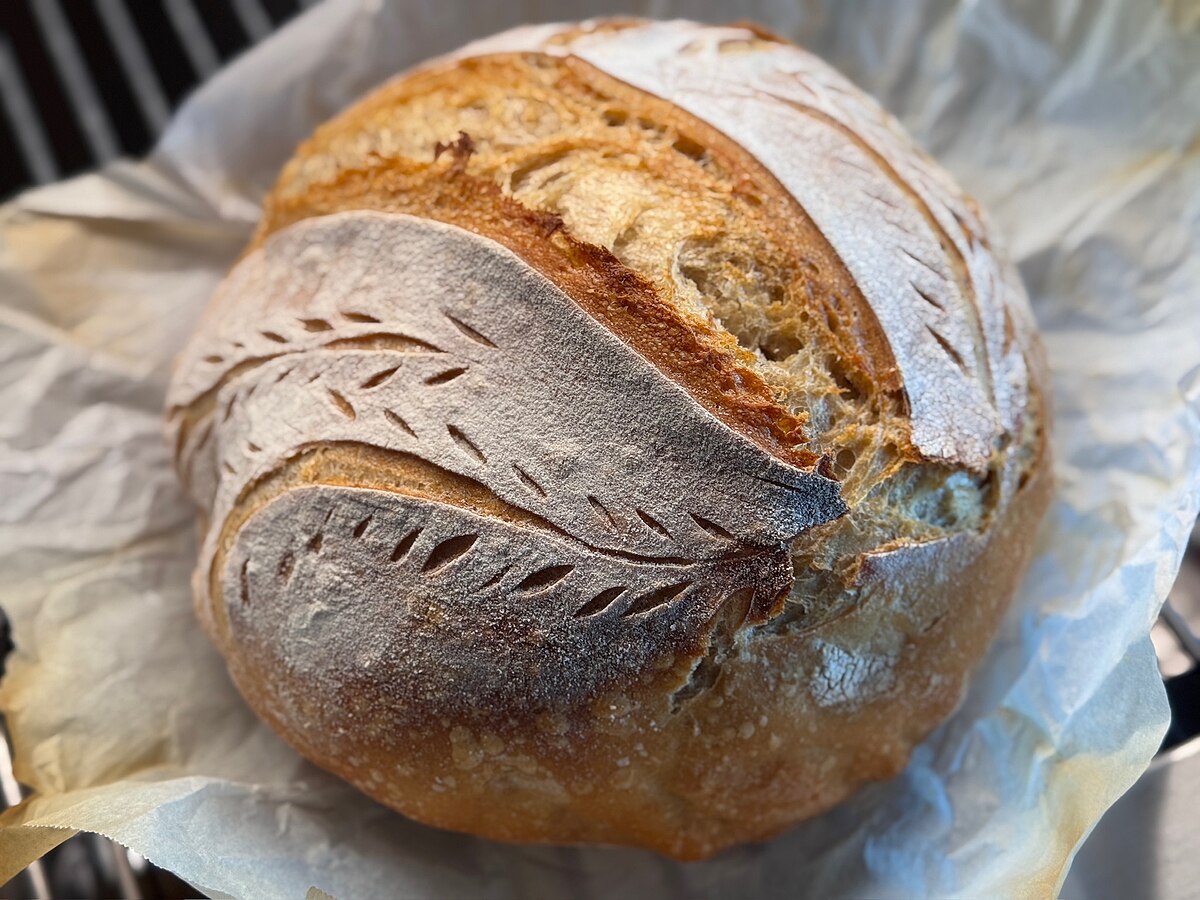
A round loaf of sourdough bread, baked to a golden-brown crust, features intricate decorative scores on its surface. SueRostvold, CC BY 4.0, via Wikimedia Commons
It is a symbiotic colony of wild yeast and Lactobacillus bacteria.
The gold rush connection
During the Gold Rush, sourdough was essential. Miners carried their starters across rugged terrain to ensure they could always make fresh bread. On freezing nights, they famously tucked the jars into their sleeping bags, keeping the culture warm with their own body heat.
This dedication earned the miners themselves the nickname Sourdoughs.
Why it tastes better
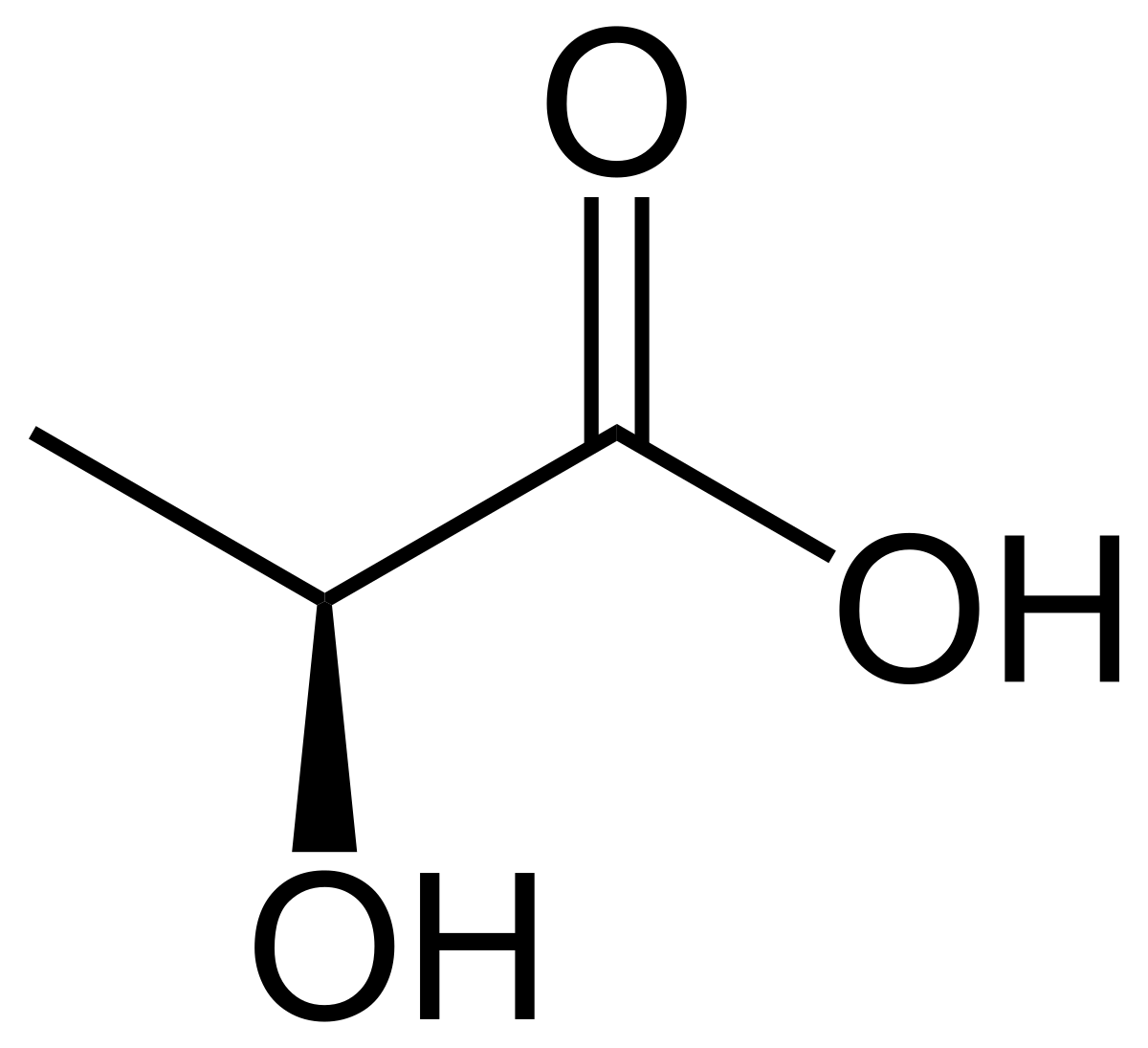
The distinct tang comes from the Lactobacillus bacteria, which produces lactic acid as it feeds. This process breaks down gluten and phytic acid, making the bread easier to digest and giving it a longer shelf life.
Skeletal formula of L-lactic acid, showing a central carbon atom bonded to a methyl group (CH3), a carboxyl group (COOH), a hydrogen atom, and a hydroxyl group (OH), with the hydroxyl group on a… NEUROtiker, Public domain, via Wikimedia Commons
Some starters are centuries old, passed down as heirlooms that carry the microbial history of the kitchens they have lived in.
How does a sourdough starter work?
A starter begins as a simple blend of flour and water left to capture wild microbes from the flour and air. When flour meets water, naturally occurring amylase enzymes break down flour starch into simpler sugars like glucose and maltose.
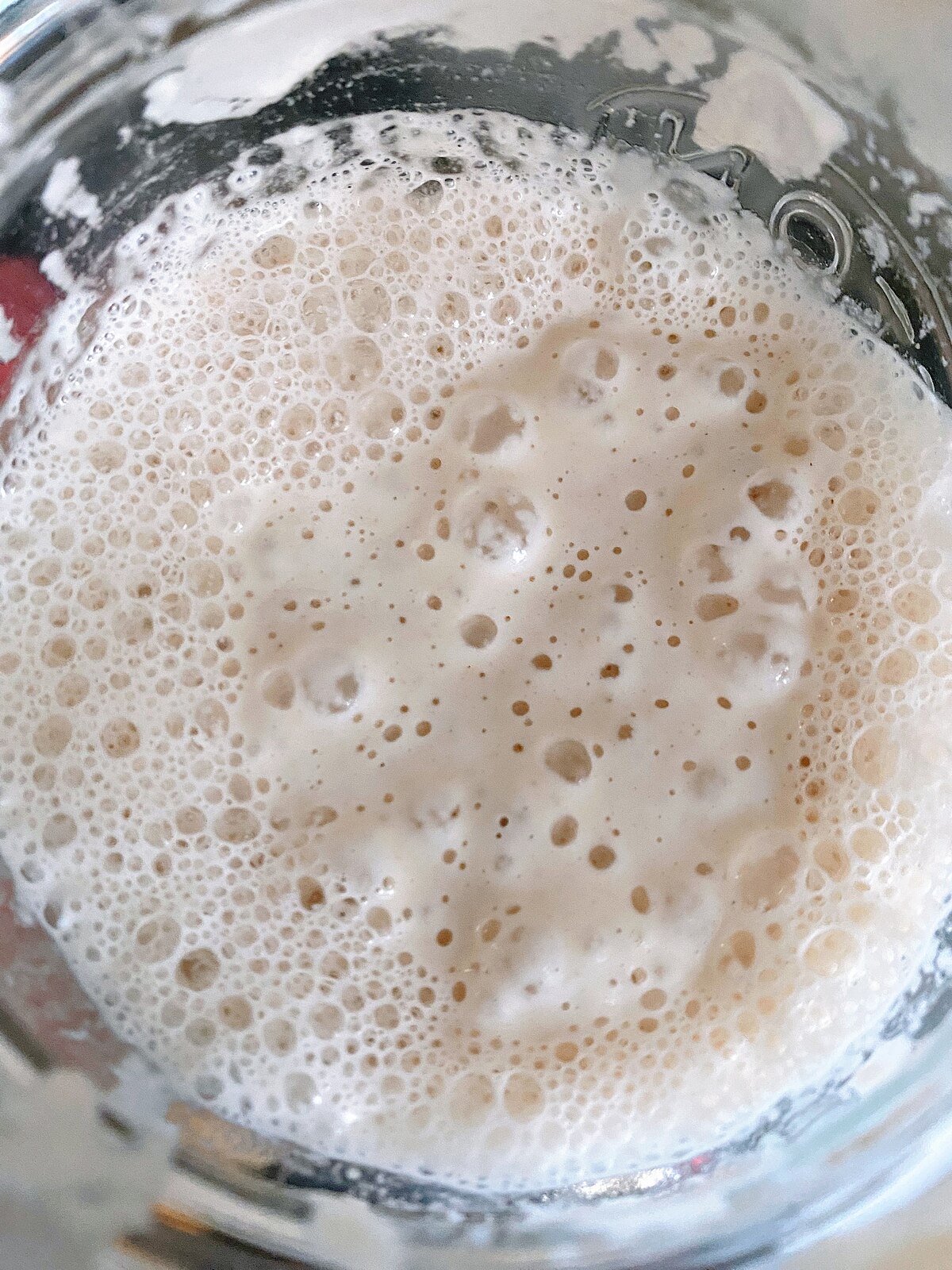
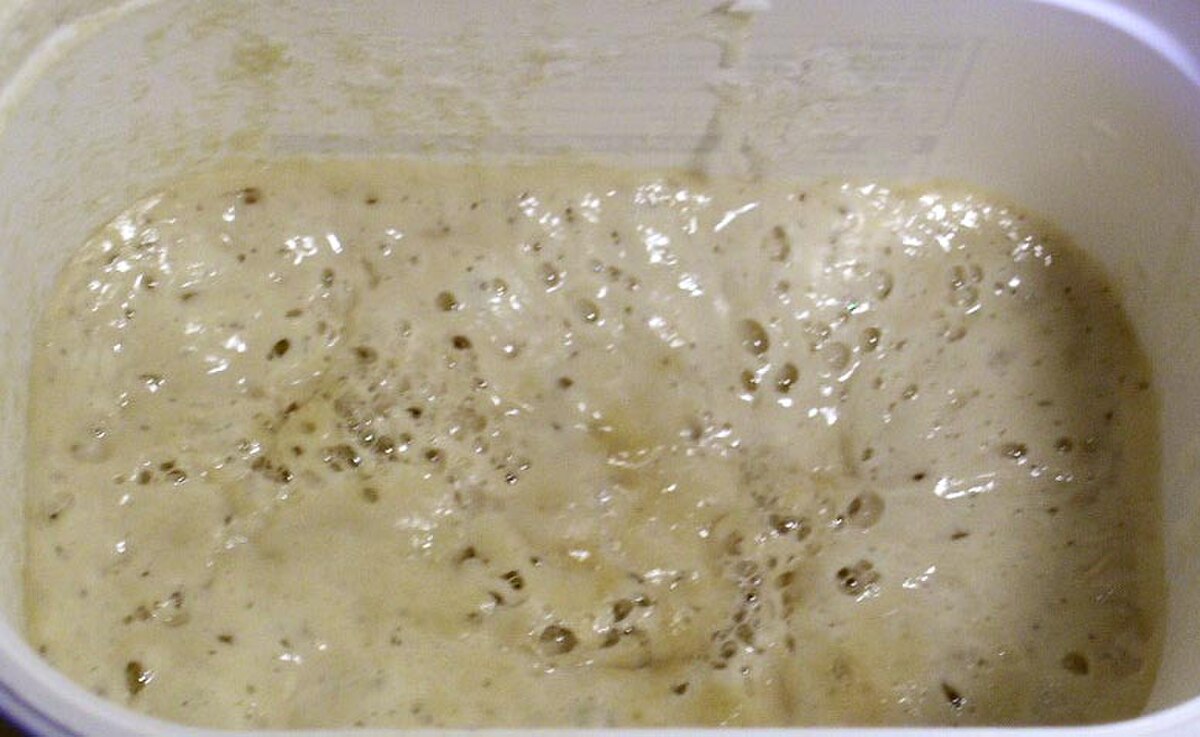
Gas bubbles throughout the starter show that the yeast is actively fermenting sugars and producing carbon dioxide. Val237468368, CC BY-SA 4.0, via Wikimedia Commons
The bacteria and yeast divide the work. The bacteria ferment starches the yeast cannot process, leaving behind maltose. The yeast metabolizes that maltose and releases carbon dioxide gas, which fills the dough with bubbles and forces it to rise.
Maintaining and feeding the culture
Keep a starter alive by regularly feeding it fresh flour and water. The balance between existing starter and fresh flour, known as the refreshment ratio, dictates the culture's stability and acid level.
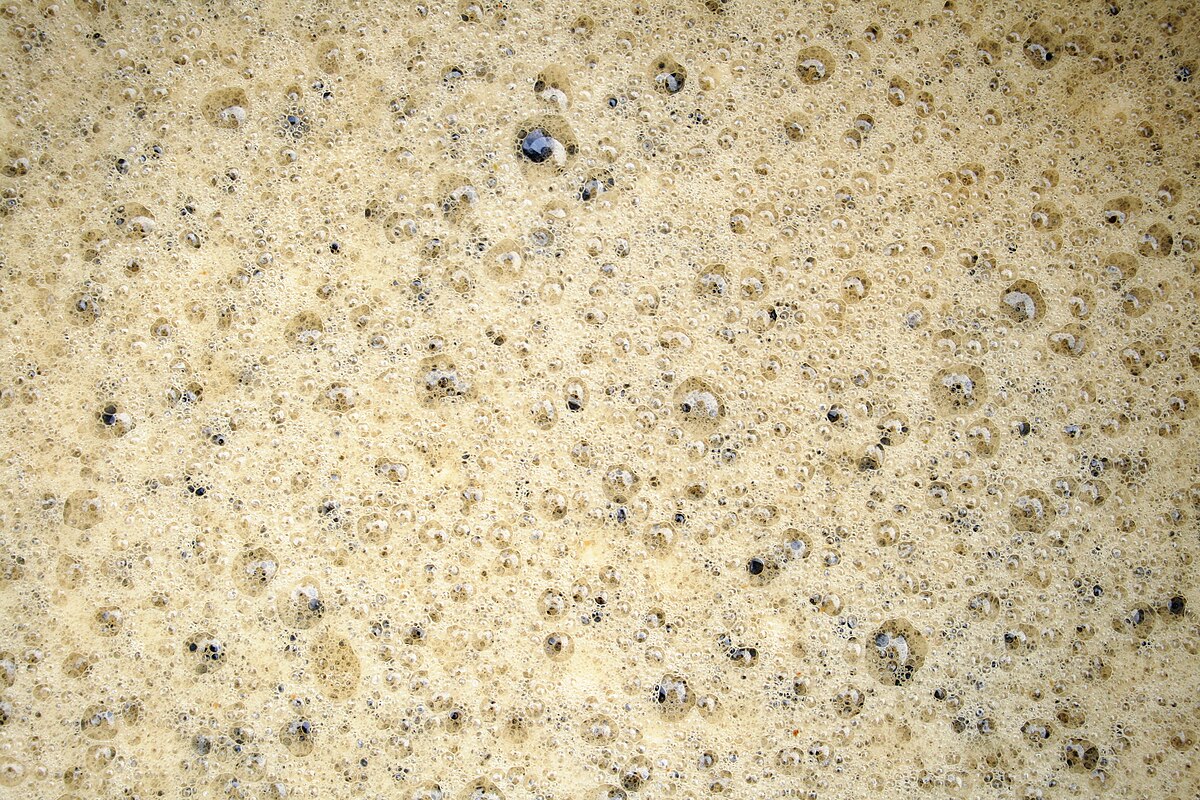
A starter maintained with periodic additions of flour and liquid develops an active microbial ecosystem. No machine-readable author provided. Ibancito~commonswiki assumed (based on copyright claims)., Public domain, via Wikimedia Commons
Temperature and moisture alter the starter's flavor profile. Drier, cooler starters suppress bacterial growth in favor of yeast, yielding more sharp acetic acid. Warmer, wetter starters encourage bacteria to generate milder lactic acid.
The ancient history behind the loaf
Sourdough was the standard way humans baked bread for thousands of years until the Middle Ages, when brewers' barm took over. One excavated loaf in Switzerland dates back to 3700 BC, and early baking traces even further back to Egypt and the Fertile Crescent.
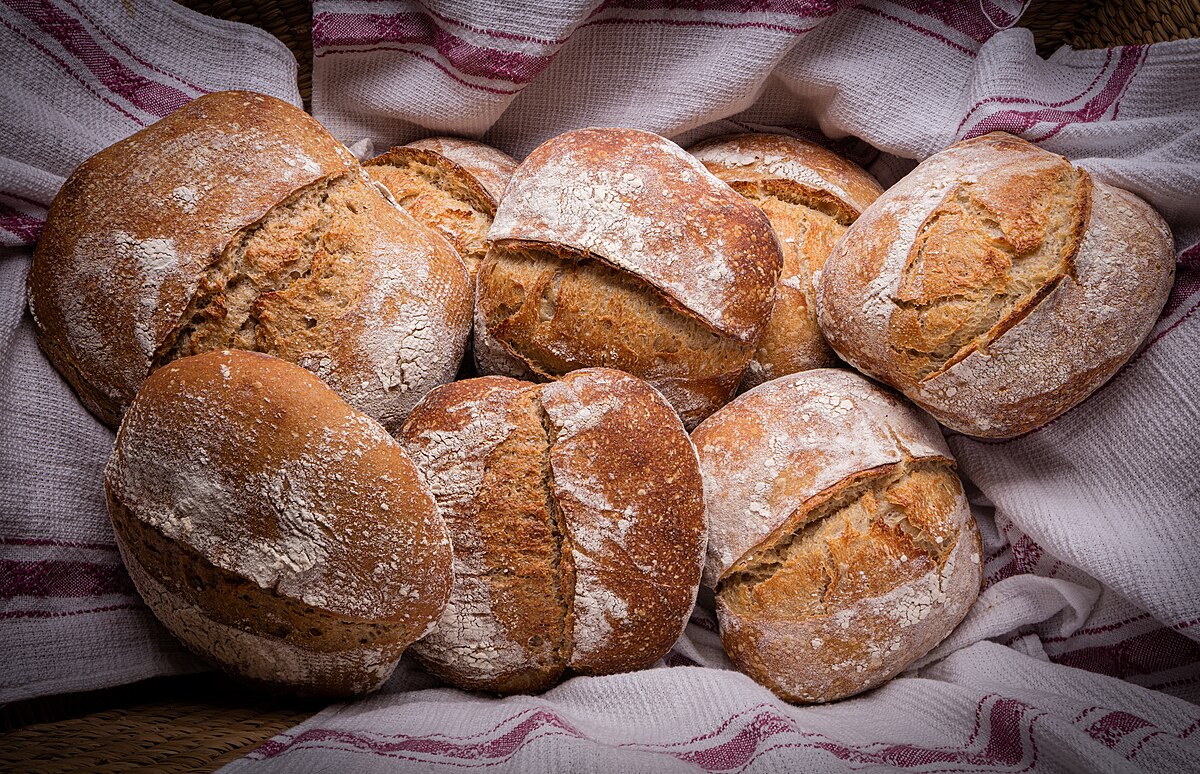
Traditional round sourdough loaves show the scored crusts created during baking. Tomascastelazo, CC BY-SA 4.0, via Wikimedia Commons
Industrial baker's yeast replaced natural starters only in the late 19th century. During the 1898 Klondike Gold Rush, prospectors carried starter pouches around their necks because commercial yeast failed in freezing conditions, cementing their historic nickname as sourdoughs.
Test yourself
A baker wants sourdough starter to stay active on a cold trip. What helps most?
Keeping the starter warm. The starter is a living culture, so warmth helps keep its yeast and bacteria active in the cold.
Sourdough rises because its starter contains which living partners?
Wild yeast and bacteria. Wild yeast and bacteria work together in the starter; sourdough is not leavened by yeast alone.
What primarily gives sourdough bread its distinctive sour flavor?
Lactic acid produced by bacteria. Lactobacillus bacteria produce lactic acid while feeding, which creates the signature tang of sourdough rather than the yeast itself.
Play the lesson in edgi and the card is yours. It lands on your Map next to the ideas it connects to, and turns from matte to foil to gold as you learn more around it.
No, freezing does not kill the culture. Excessive heat is what destroys the wild yeasts and bacteria in a starter.
What is sourfaux?
Sourfaux is a term used for breads marketed as sourdough that rely on commercial baker's yeast or chemical raising agents like baking powder instead of a live, active starter culture.
Which specific microbes live in San Francisco sourdough?
San Francisco sourdough starter cultures notably contain the bacterium Fructilactobacillus sanfranciscensis and the acid-tolerant sourdough yeast Kasachstania humilis.