Behavioral addiction is a compulsion to repeat a rewarding activity despite severe negative effects on a person's life, even though no physical drug is involved. Brain scans show that non-chemical experiences activate the exact same reward circuitry and neural adaptations as substance use. This shared biology is why medical manuals reclassified certain compulsive actions alongside drug disorders.
By the edgi team We find the most surprising true thing about an idea and build a 60-second lesson around it.
For most of the last century addiction meant a substance. A chemical goes in, the body adjusts around it, and taking it away produces a physical crisis. That definition had a problem, and the problem was gamblers. They showed the whole pattern: bigger bets for the same effect, restlessness on stopping, lying about it, chasing losses.
Nothing had entered their bodies. The tolerance and the drug withdrawal signs were there anyway. So either the definition was wrong or the gamblers were a coincidence, and the coincidence got harder to believe every decade.
The manual moved
Psychiatry keeps a manual, and where a disorder is filed says something real about it. Until 2013 pathological gambling sat under impulse control disorder, alongside compulsive stealing and fire-setting. The theory was a failure of restraint, not an addiction.
Then the DSM-5 moved it into the addictions chapter. The evidence: same brain circuitry as a substance addiction, same course over a life, same treatments. Gambling is still the only one in that chapter. Behavioral addiction is a real category with exactly one member.
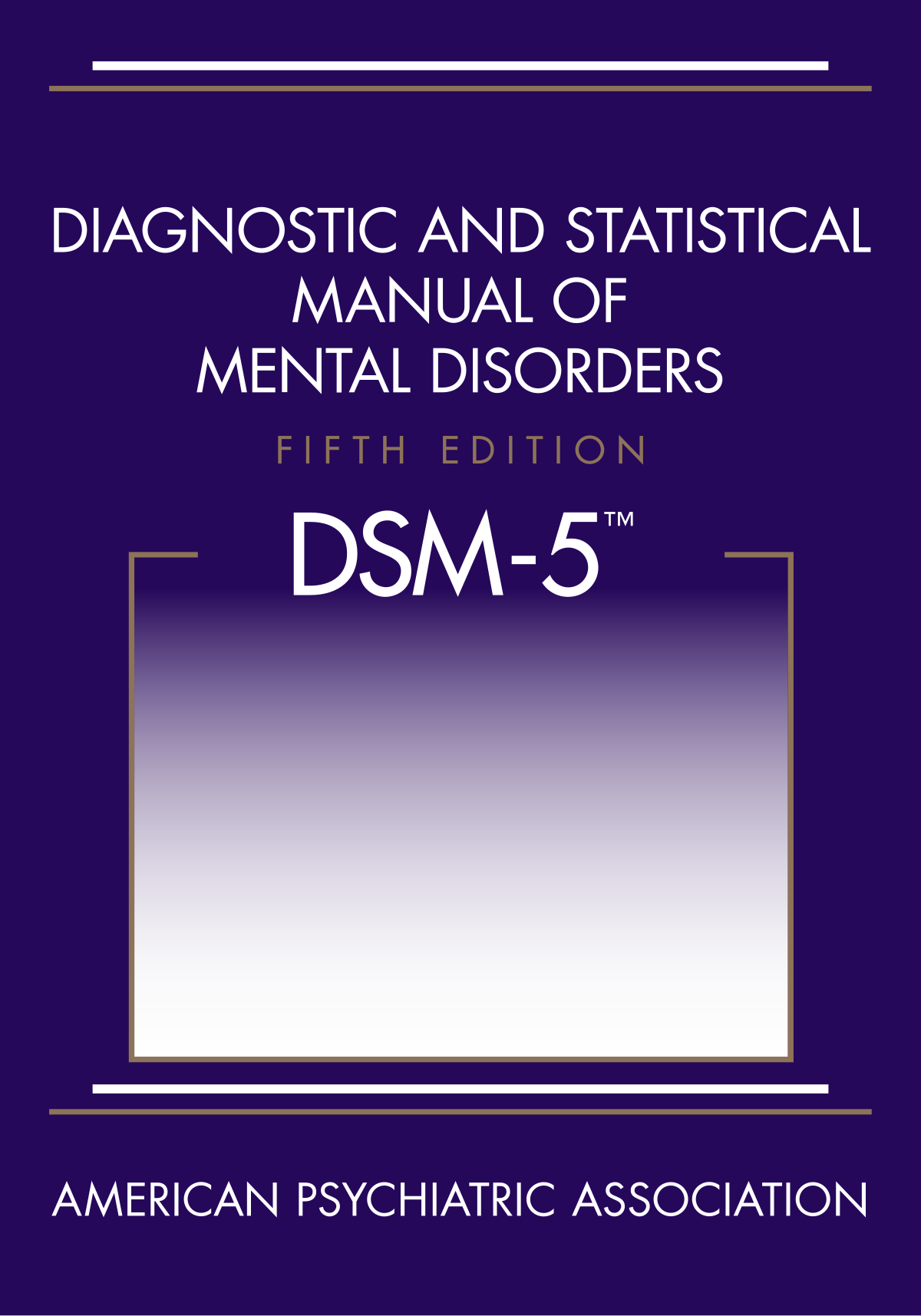
Cover of the "Diagnostic and Statistical Manual of Mental Disorders, Fifth Edition," abbreviated as DSM-5. American Psychiatric Association, Public domain, via Wikimedia Commons
Where the line is drawn
Only one more has been admitted anywhere. The World Health Organization added gaming disorder in 2019, in force worldwide since 2022, and that is the entire list. What keeps the list short is the bar. Not hours, not how bad it feels: impaired control, the activity outranking everything else, and carrying on while it visibly wrecks things.
Shopping, exercise, sex and social media have all been argued for and none has cleared it. The American manual keeps gaming itself in an appendix for things that still need study. Which is why "I'm addicted to my phone" nearly always describes a habit, not a diagnosis. Worth keeping apart: one you can design your way around, the other needs treating.
How does an action change the brain?
In the brain's reward system, experiences and chemical drugs trigger identical reactions. A gene transcription factor called DeltaFosB acts as a necessary common protein involved in both behavioral and substance addictions. This protein leads to the same set of long-term neural adaptations, leaving the brain vulnerable to repetitive compulsions.
This shared biological mechanism separates behavioral addictions from disorders driven by fear. Conditions like obsessive-compulsive disorder arise from misplaced danger signals, whereas problem gambling and drug abuse both stem from behaviors that directly activate the reward system.
Which behaviors count as official diagnoses?
Medical manuals maintain strict criteria for what qualifies as an addictive disorder. The DSM-5 lists gambling disorder as the sole non-substance-related disorder in its substance chapter. The World Health Organization's ICD-11 recognizes both gambling disorder and gaming disorder under its category for addictive behaviors.
Other proposed categories lack sufficient scientific proof to become standard clinical diagnoses. Researchers have studied compulsive buying, social media use, pornography, exercise, and food, but these remain outside official diagnostic lists. Clinicians evaluate impaired control, escalation, and ongoing harm rather than simple frequency or time spent.
Test yourself
Why did pathological gambling prompt psychiatry to reclassify behavioral addiction in the DSM-5?
It produced tolerance and withdrawal without chemicals. Gamblers showed the complete addiction pattern, tolerance, withdrawal, and craving, despite no substance ever entering the body, breaking the old chemical definition.
What separates behavioral addiction from a heavy habit like phone use?
Impaired control despite visible wreckage. Behavioral addiction requires impaired control and persistence despite visible life wreckage, not just heavy use or how bad it feels.
What settles whether a behavior counts as an addiction?
Losing control of it. Hours are the intuitive test and they do not work; plenty of people spend six hours on something with no impairment at all. What the manuals ask is whether the person can stop and whether it is wrecking things.
Play the lesson in edgi and the card is yours. It lands on your Map next to the ideas it connects to, and turns from matte to foil to gold as you learn more around it.
Why does the DSM-5 prefer the term disorder over addiction?
The DSM-5 uses the term disorder in clinical contexts to avoid uncertain definitions. This language also helps avoid the negative social connotations often attached to the word addiction.
What is the global prevalence of problem gambling?
Estimates indicate that problem gambling affects between 0.1% and 6% of the global population. It frequently co-occurs alongside other conditions, showing high comorbidity with alcohol problems.
What makes exercise addiction distinct from healthy exercise?
Addictive exercise involves severe physical dependence, leading to withdrawal symptoms when exercise stops. People with the condition continue exercising through physical injuries and sustain clear damage to their personal and work lives.