Doomscrolling is the practice of spending excessive time consuming digital content that triggers negative emotions, such as disaster reports or political unrest. It persists because the human brain interprets reading bad news as preparing for danger, which feels productive even when the threat cannot be acted on. Because online feeds never provide a resolution that signals safety, the scanning behavior traps the user in a continuous loop.
By the edgi team We find the most surprising true thing about an idea and build a 60-second lesson around it.
Thirty good reviews and one bad one, and a week later you can quote the bad one. Psychologists call this negativity bias, and it is among the steadiest findings in the field. The asymmetry is in the cost of being wrong. Be wrong about a good thing and you miss out once. Be wrong about a bad thing once and there is no second experiment.
It has been measured. A study across 17 countries wired people up while they watched real news, and on average the negative stories produced more physical arousal than the positive ones. So a recommender system that sorts by what people stop for will float the bad news upward. Your own attention wrote that ranking.
The scan that never closes
Attention to a threat is supposed to be a loop with an ending. You hear a noise, you scan, you find the cause, you act or you stand down. The scanning stops because it resolved. Every part of that works except the ending. You scan, you find the threat, and it is a flood two thousand miles away or a number on a chart. There is nothing to do and nothing to close.
A brown boxer dog and a tabby cat are in a standoff on a paved surface. Peretz Partensky from San Francisco, USA, CC BY-SA 2.0, via Wikimedia Commons
So the loop restarts. The fight-or-flight response that should have been spent on acting is still sitting there, and the only move your body knows for it is to look again. That is doomscrolling. You are hunting for the thing that would let you stand down, on a surface built so that it never arrives.
The part that feels like work
The word is younger than the behavior. It surfaced on Twitter around 2018 and went everywhere in 2020, carried partly by a reporter, Karen Ho, posting the same line nightly: go to bed. The behavior needed a name because the scan feels productive. Reading about a disaster registers as preparing for one, so it passes for staying informed.
The researchers who built the first proper measure of it heard the same descriptions repeatedly: losing track of time, and an active urge to go find more bad news rather than less. So here is the check you can run tonight. Ask what would have to appear on the screen for you to put the phone down satisfied. Usually there is no such thing, and that is the answer.
Why the brain seeks negative news
Human attention evolved with a strong negativity bias, meaning people react more intensely to threats than to positive events. A study across 17 countries demonstrated that negative news stories produce higher physical arousal in viewers than positive ones. This asymmetry exists because failing to notice a real danger carries far greater consequences than missing an opportunity.
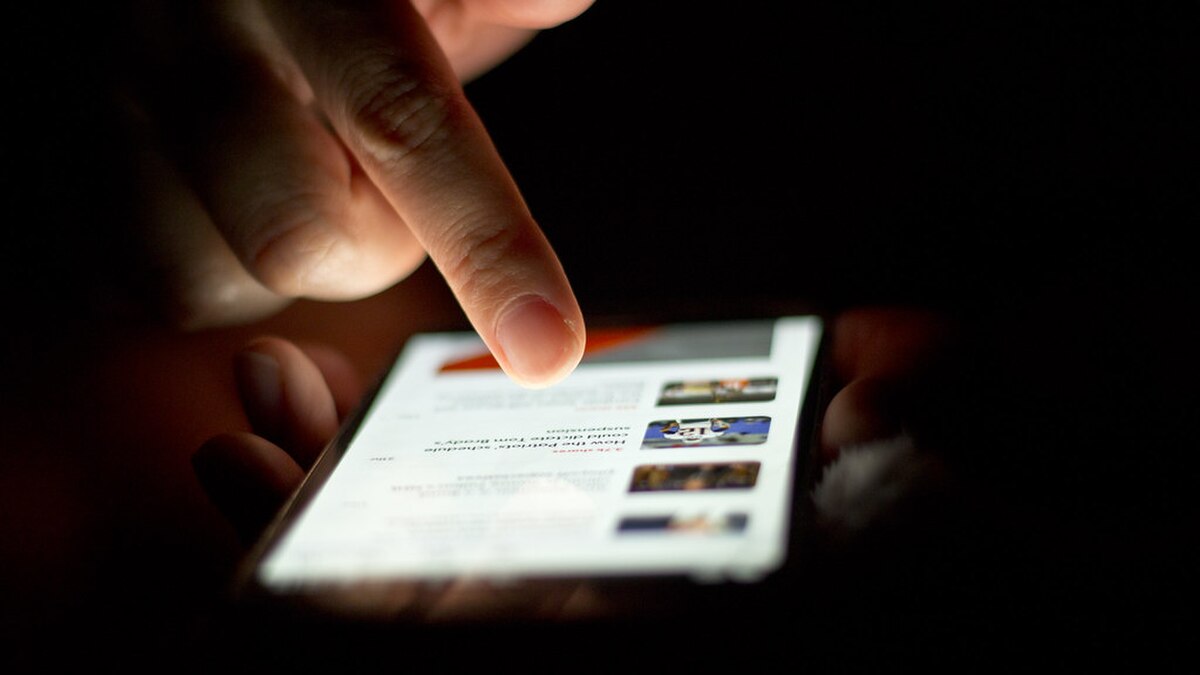
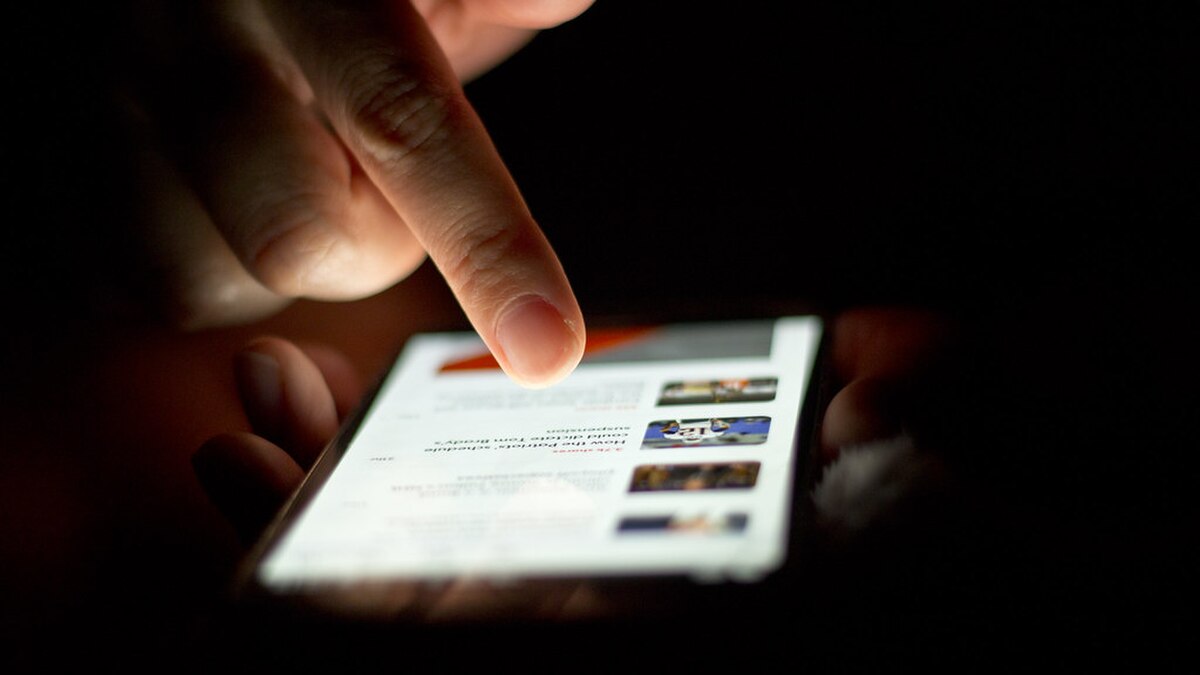
A person reviewing news feeds on a smartphone, illustrating the continuous digital consumption of distressing content. Japanexperterna.se, CC BY-SA 2.0, via Wikimedia Commons
Online, this survival instinct misfires. When a person encounters distressing news, the body triggers a fight-or-flight response intended to prompt action. Because online crises like distant floods or economic data offer nothing immediate to act upon, the body cannot resolve the alarm. Instead, it attempts to gain control over uncertainty by seeking out more information, creating a self-perpetuating cycle.
How feed design drives the behavior
The software architecture of modern social platforms actively removes natural stopping cues. Interfaces rely on infinite scrolling, an approach that loads new material continuously as the reader moves down the page. Aza Raskin, who helped introduce the feature, later described it as designed deliberately to keep people online as long as possible.
Social media algorithms maximize engagement by promoting emotionally charged headlines. Because users linger longer on alarming updates, recommendation engines float negative content to the top. This dynamic produces prolonged sessions of repetitive verification, trapping audiences in a cycle of consuming distressing news while platforms serve advertisements.
Origins and demographics
The behavior resembles the mean world syndrome identified in the 1970s, where long-term exposure to television violence led people to view the world as far more dangerous than it was. The word itself appeared on Twitter around 2018, often linked to Ashik Siddique, before spreading widely during the 2020 COVID-19 pandemic.
A 2024 Morning Consult survey found that 31% of American adults doomscroll regularly. The habit is most frequent among younger groups, reaching 46% of millennials and 51% of Gen Z, as well as among males and individuals who closely follow political events.
Test yourself
Why does doomscrolling create an endless loop of searching for more negative content?
The threat scan finds no action to resolve it. Our threat response expects an action to close the loop, but distant news offers nothing to do, leaving the body searching again.
What drives a recommender system to float negative news upward?
People naturally pause longer for bad news. Because negative news triggers stronger physiological arousal, people naturally stop to look, which algorithms interpret as engagement.
Forty minutes of bad news later. What were you actually looking for?
Something that would let you stop. Information was available in the first two minutes. What kept the scrolling going was a threat response waiting to be discharged, and a distant story gives it nothing to act on, so the search restarts.
Play the lesson in edgi and the card is yours. It lands on your Map next to the ideas it connects to, and turns from matte to foil to gold as you learn more around it.
A 2019 study by the National Academy of Sciences linked the habit to declines in both mental and physical health. It is also recognized by researchers as a form of internet addiction disorder driven by heightened anxiety.
When did doomscrolling become an official word?
Merriam-Webster added doomscrolling to its dictionary in September 2023 after keeping it on its watch list for three years. In 2020, Australia's Macquarie Dictionary named it the Committee's Choice Word of the Year.
Why do people doomscroll even when they know it feels bad?
Reading distressing news feels like staying informed and gaining control over unpredictable events. Because the brain treats this research as self-defense, users actively seek more negative reports even as their stress increases.