Cato the YoungerThe senator who tore himself apart
Cato the Younger was an influential, uncompromising Roman senator and Stoic philosopher during the fall of the Roman Republic. He built his career on absolute moral austerity and legal obstruction to resist powerful military commanders like Julius Caesar and Pompey. His stubborn refusal to accept Caesar's pardon eventually led him to take his own life, turning him into an enduring martyr for republican liberty.
By the edgi team We find the most surprising true thing about an idea and build a 60-second lesson around it.
Cato the Younger was the only man in Rome who treated Julius Caesar’s rise not just as a political defeat, but as a moral collapse. He was so relentlessly rigid that Romans used the phrase we can't all be Catos as a shorthand excuse for their own moral compromises.
He stood in the Senate for hours, filibustering laws to block the First Triumvirate, refusing to let the Roman Republic dissolve into a dictatorship without a fight.
The final defiance
In 46 BC, after his forces lost the Battle of Thapsus, Cato fled to Utica, knowing Caesar would eventually arrive to offer him a pardon. To Cato, accepting mercy from a tyrant was the ultimate indignity. He viewed his own death as the only way to remain truly free.
He spent his final night reading Plato on the immortality of the soul, then stabbed himself with his sword.
A gruesome martyr
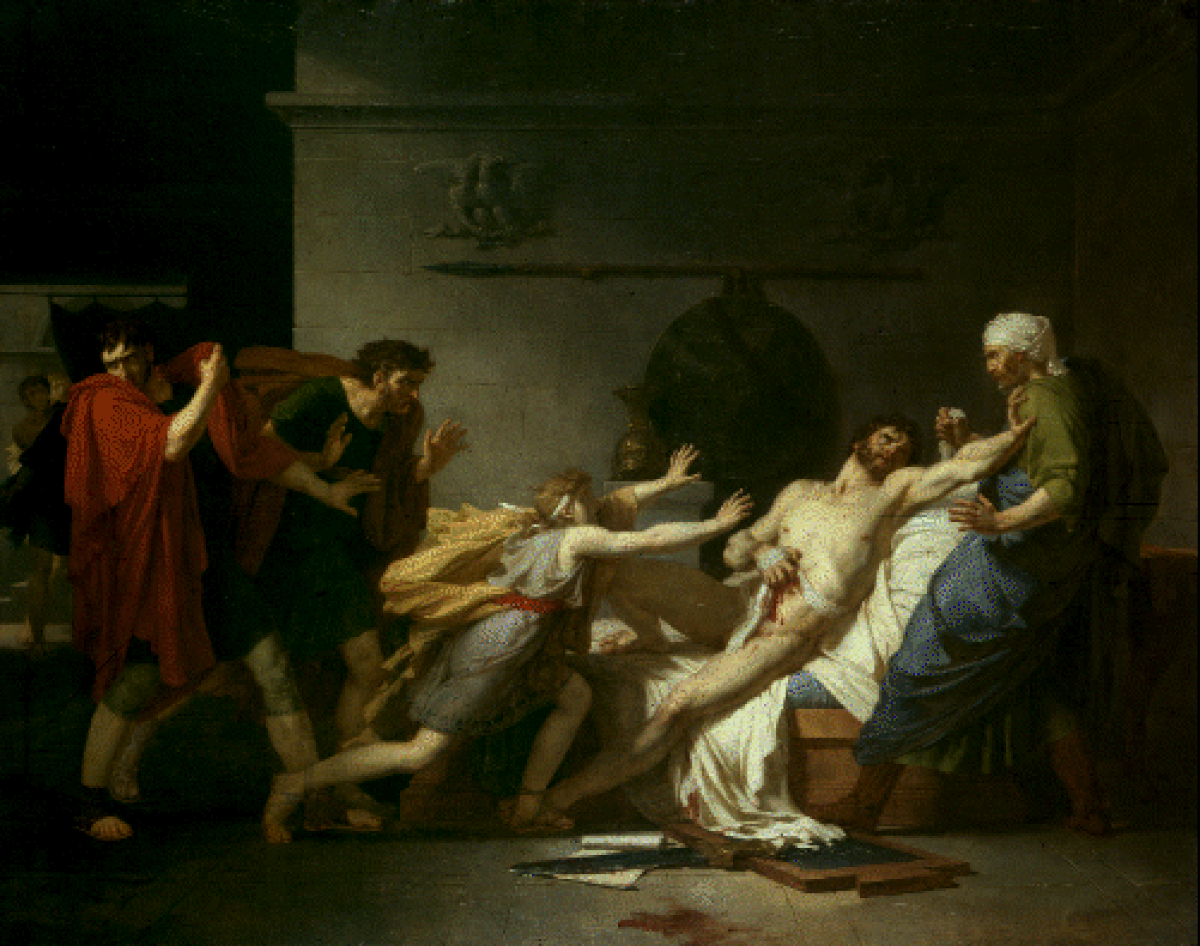
When his physician tried to sew the wound shut to save him, Cato pushed the doctor away. He manually tore his own intestines out to ensure he would not survive to be forgiven by his enemy.
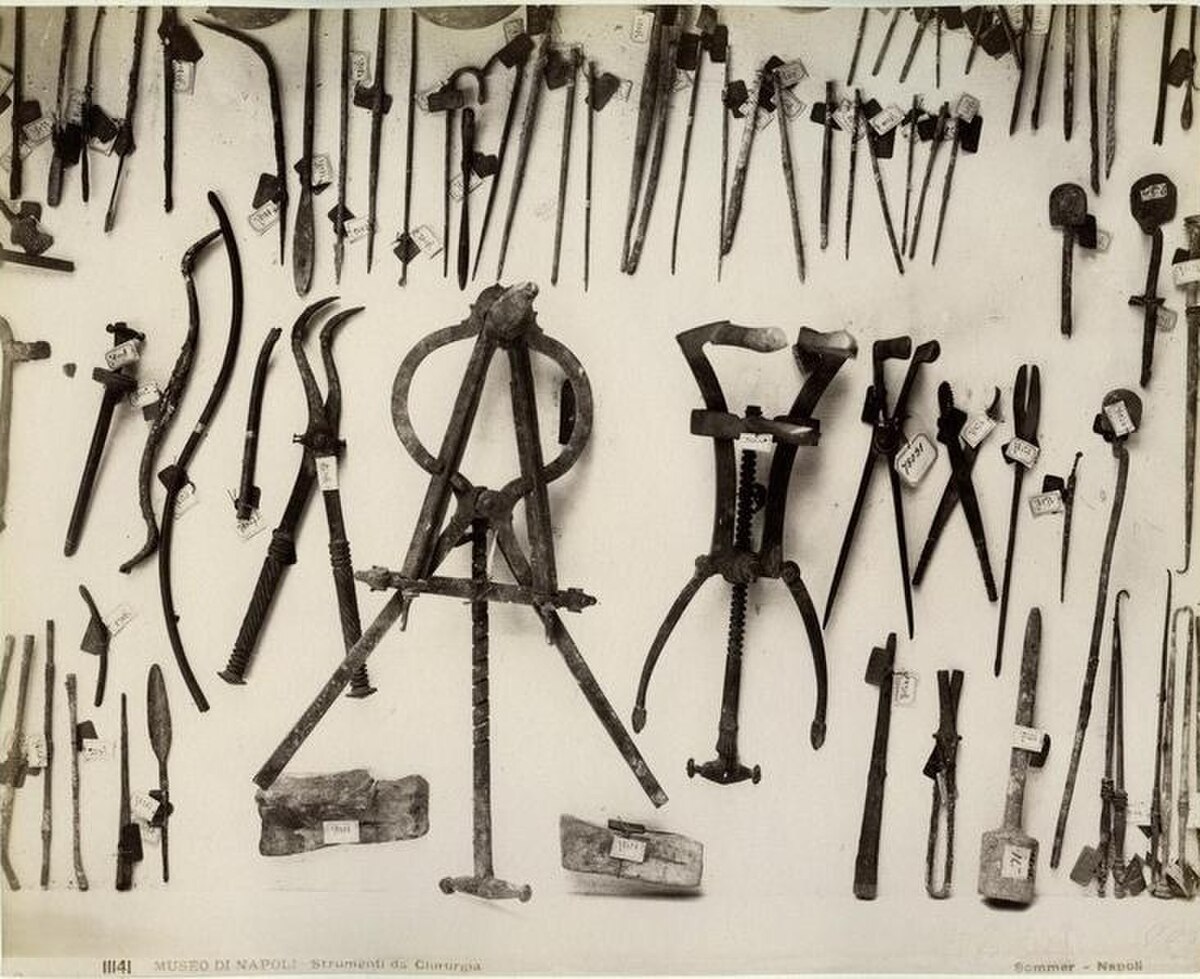
A collection of ancient Roman surgical instruments, including various forceps, hooks, scalpels, and a large tripod-like device, displayed against a dark background. Giorgio Sommer, Public domain, via Wikimedia Commons
By choosing a horrific death over submission, he became a more permanent obstacle to Caesar’s legacy than any army could have been.
The politics of ancient virtue
Cato crafted a public image centered on the ancestral customs of early Rome, known as the mos maiorum. He walked barefoot through the city, refused to travel on horseback, and wore a simple toga without an under-tunic. This archaic dress mirrored statues of Rome's ancient heroes rather than standard aristocratic fashions.
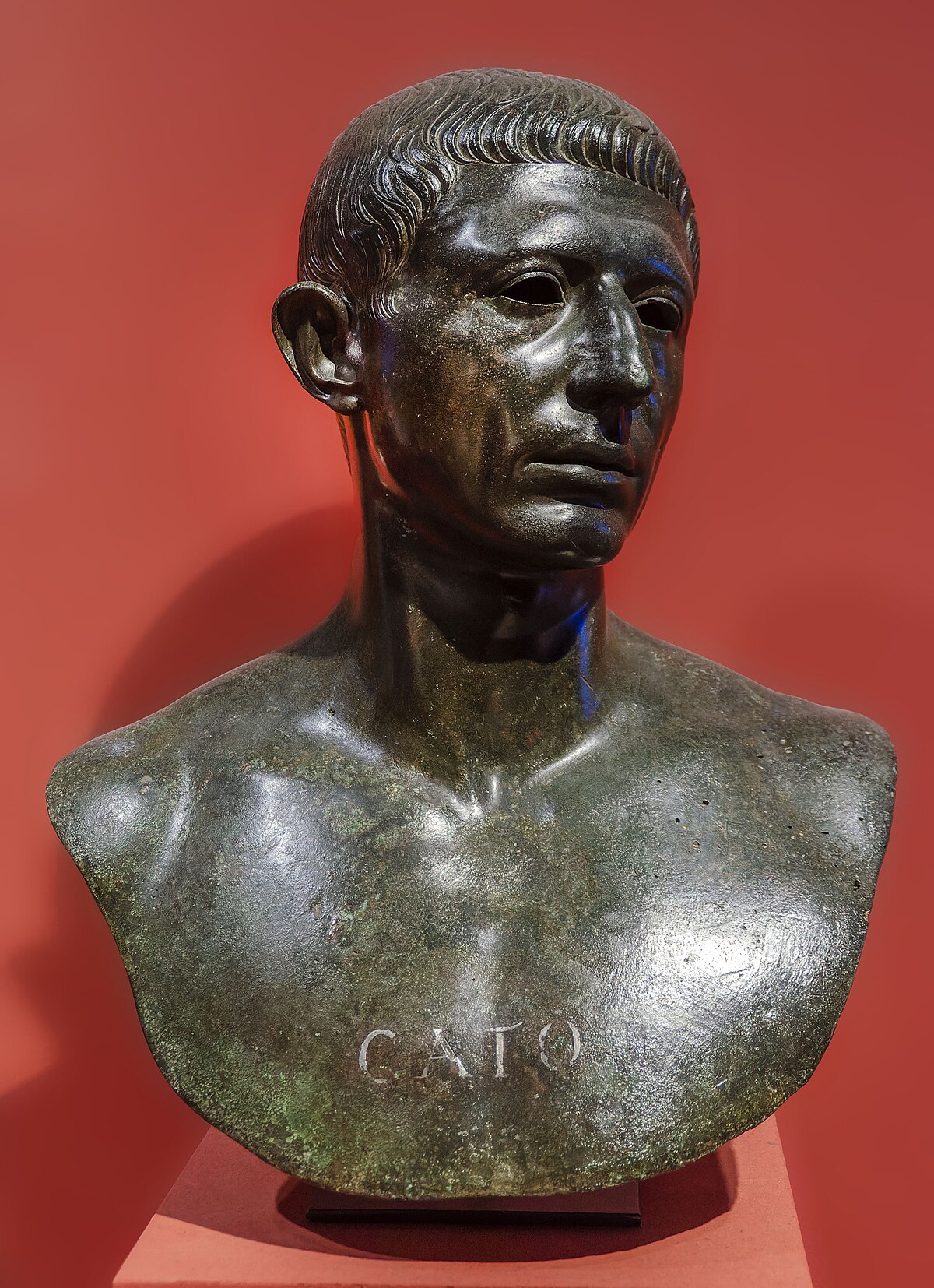
A bronze bust depicting the Roman senator Cato the Younger, who adopted an austere public image to champion traditional Roman virtues. Ángel M. Felicísimo from Mérida, España, CC BY 2.0, via Wikimedia Commons
This lifestyle leveraged the famous reputation of his great-grandfather, Cato the Elder. The deliberate display of strict traditionalism appealed directly to conservative voters and senators. It established Cato as an incorruptible figure in an era defined by political bribery and ambition.
How Cato fought the generals
In public office, Cato turned strict adherence to the law into a weapon against Rome's dominant warlords. During his quaestorship in 63 BC, he strictly reformed the treasury finances, and as a plebeian tribune in 62 BC, he passed laws requiring generals to surrender their armies before entering elections.
His refusal to compromise pushed rivals into desperate alliances, directly fueling the formation of the First Triumvirate between Caesar, Pompey, and Crassus. Later, Cato supported Pompey's sole consulship in 52 BC specifically to break Pompey away from Caesar. Cato pursued confrontation and brinkmanship against Caesar, which directly accelerated the outbreak of civil war in 49 BC.
Suicide as a political statement
Cato joined Pompey during the civil war to defend the Republic and attempted to minimize casualties among fellow citizens. After their cause collapsed in Africa at the Battle of Thapsus in 46 BC, Cato retreated to the city of Utica.
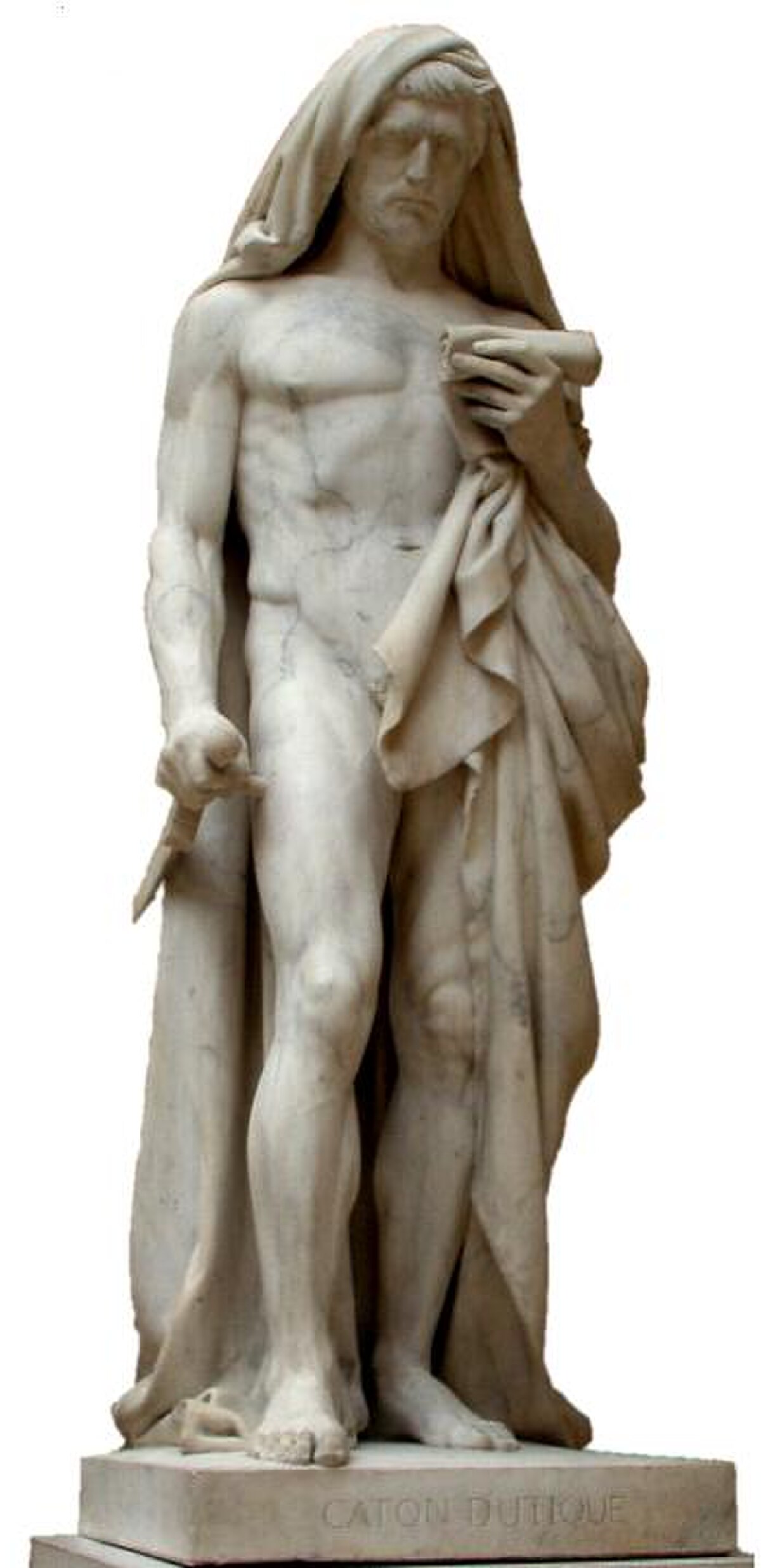
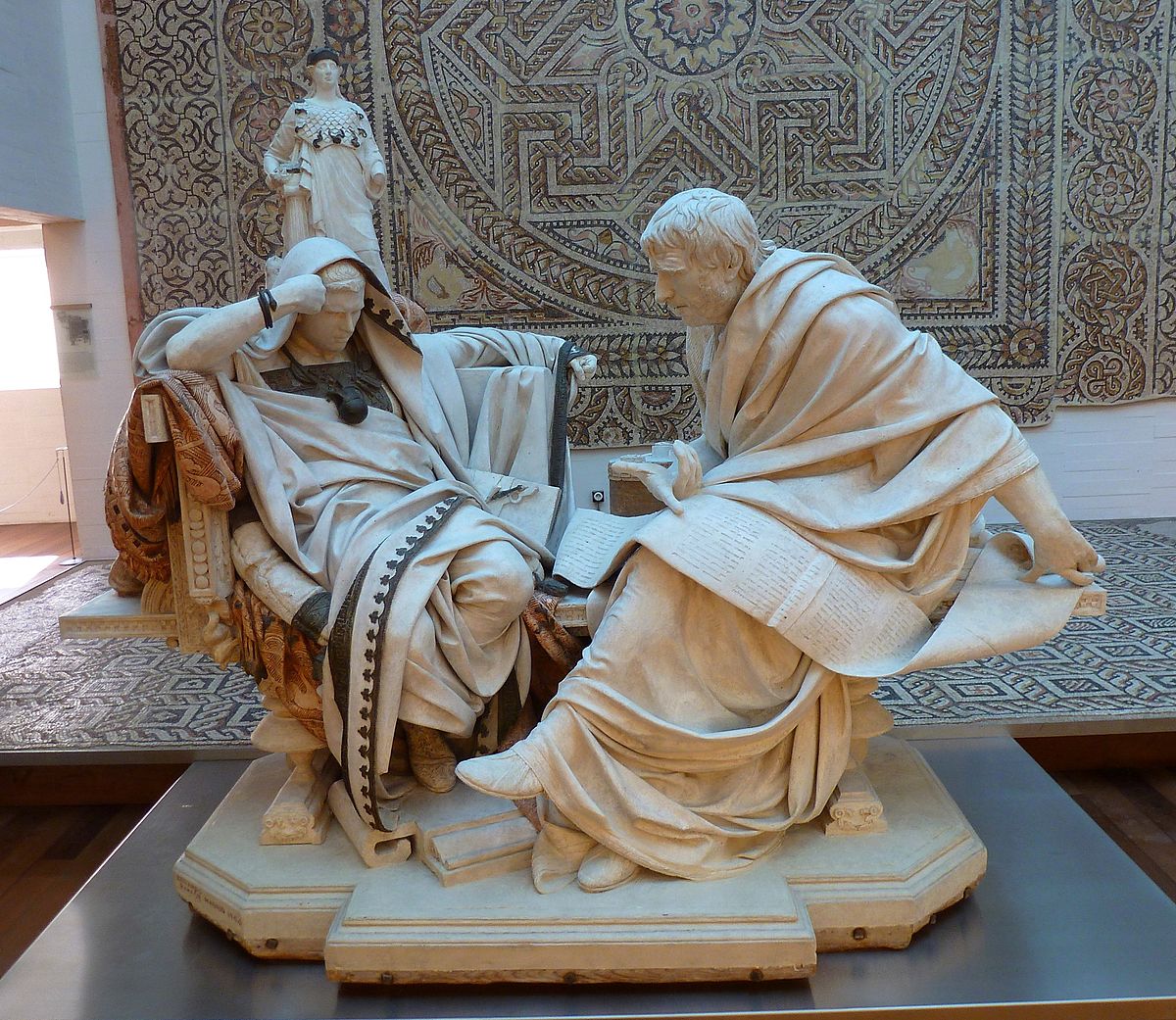
A statue showing Cato reading Plato's Phaedo just before ending his life to avoid submitting to Caesar. Jean-Baptiste Roman & François Rude, CC BY-SA 3.0, via Wikimedia Commons
Rather than grant Caesar the political victory of forgiving him with a pardon, Cato chose suicide. He spent his final evening reading Plato's dialogue on the immortality of the soul before stabbing himself. When a doctor attempted to sew up the wound, Cato tore it open to ensure his death, cementing his legacy as a martyr against tyranny.
Test yourself
Does Cato the Younger's political resistance rely on compromise or uncompromising rigidity?
Uncompromising rigidity. Cato treated political shifts as moral collapses, choosing absolute rigidity over any accommodation with tyranny.
Cato the Younger's suicide was primarily a political tactic to defeat Caesar.
False. Cato's suicide was a moral act of defiance to preserve his integrity, not a strategic military maneuver. He sought to deny Caesar the political power to pardon him, ensuring his personal freedom remained uncompromised by a tyrant's mercy.
Cato famously refused to take off his ___ even when mourning, as a sign of his grief for the Republic.
toga. His physical appearance often mirrored his internal state of mourning for the dying Roman institutions.
Play the lesson in edgi and the card is yours. It lands on your Map next to the ideas it connects to, and turns from matte to foil to gold as you learn more around it.
The title distinguishes him from his great-grandfather, Cato the Elder. Cato the Elder was a famous Roman censor and new man who was similarly renowned for austerity and traditional morality.
What philosophy did Cato follow?
He studied Stoicism under Antipater of Tyre during his youth. He also studied Epicureanism and Peripatetism, but Stoic principles shaped his rigid moral worldview.
What early offices did Cato hold in Rome?
Around age 16, he served on the priestly board of the quindecimviri sacris faciundis. Later, he served as urban quaestor in 63 BC, plebeian tribune in 62 BC, and praetor for 54 BC.