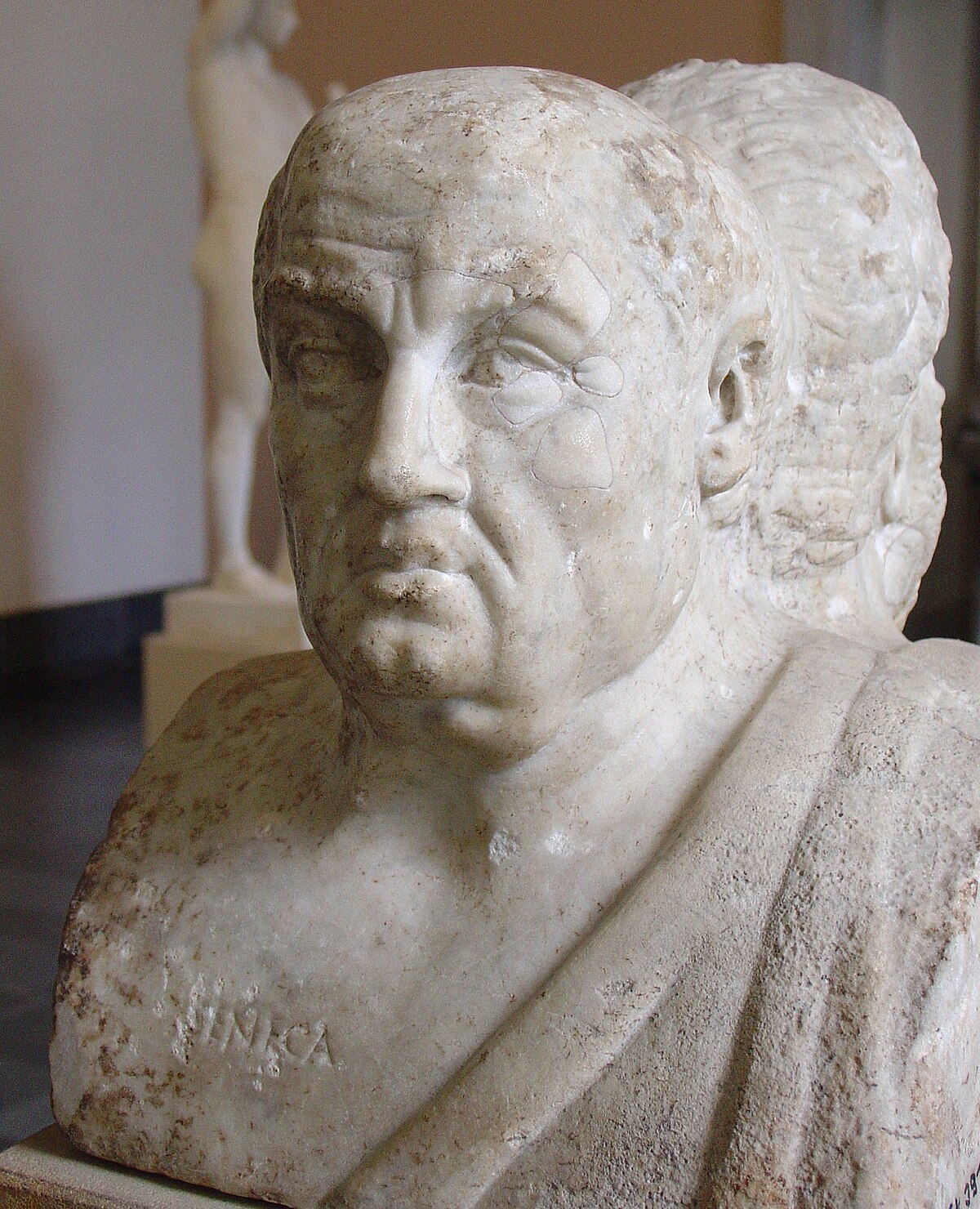
Seneca the Younger was an ancient Roman Stoic philosopher, statesman, and dramatist who served as the tutor and political advisor to Emperor Nero. He helped govern the Roman Empire while producing major essays and letters on ethics, virtue, and self-control. His life is famous for its contradiction: he preached detachment from worldly goods while becoming one of the wealthiest men in Rome.
By the edgi team We find the most surprising true thing about an idea and build a 60-second lesson around it.
Seneca the Younger was a leading Stoic, a philosophy that prizes self-control and indifference to material wealth. He was also one of the richest men in the Roman Empire, holding a fortune modern historians estimate at 300 million sesterces.
He spent his days writing letters on the nobility of poverty, and his nights managing the finances of a corrupt, violent state.
The tyrant's handler
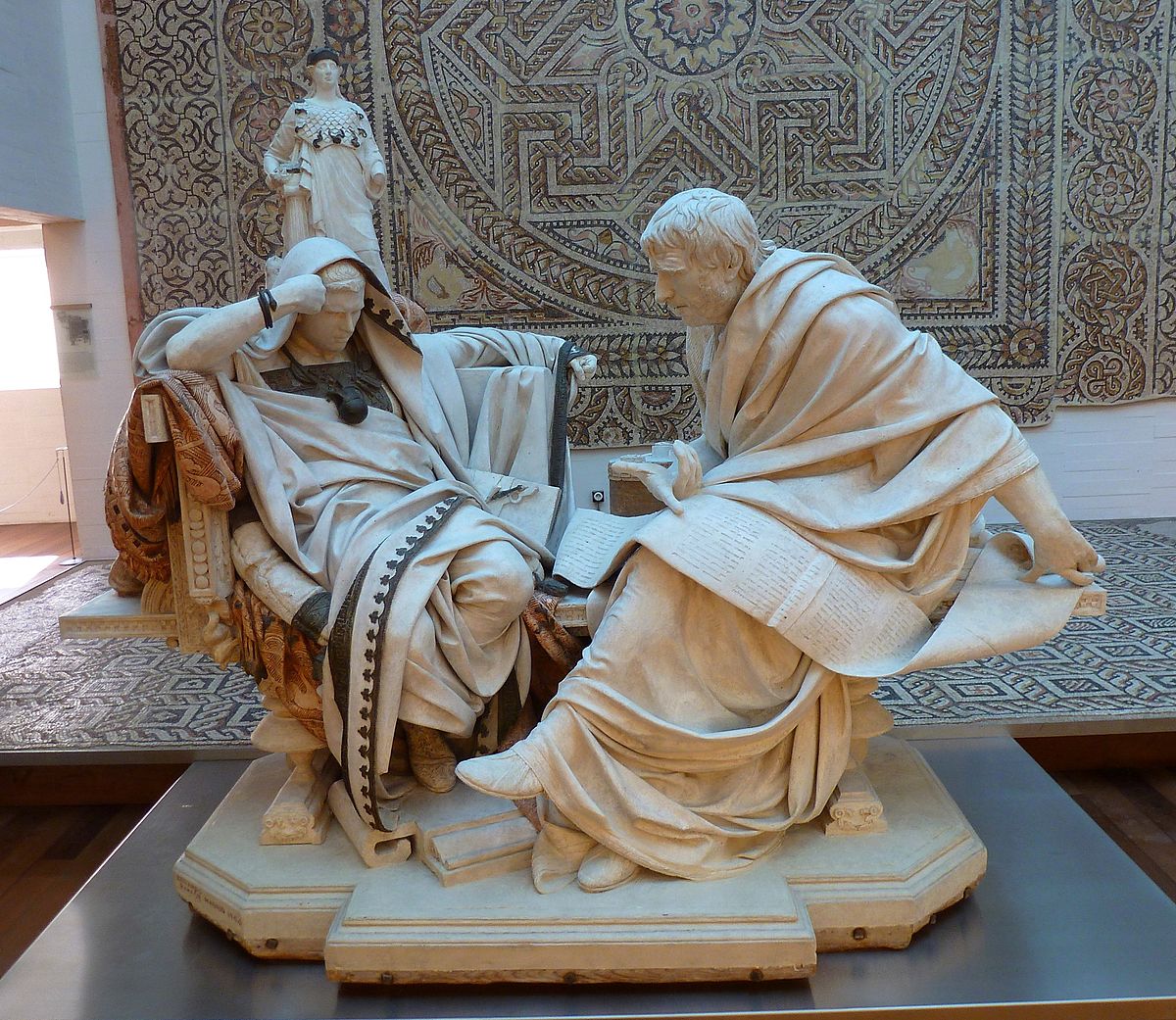
Seneca served as the tutor and political advisor to the infamous Emperor Nero. For years, he was the only person who could restrain the young emperor’s worst impulses.
Marble sculpture by Eduardo Barrón (1904) titled "Nero and Seneca" depicting Nero seated on a throne with his face covered, while Seneca sits opposite him, holding a scroll and gesturing. Eduardo Barrón, CC BY-SA 3.0, via Wikimedia Commons
But power is a dangerous game. In AD 65, Nero turned on his mentor, accusing him of conspiracy and ordering him to commit suicide.
The final performance
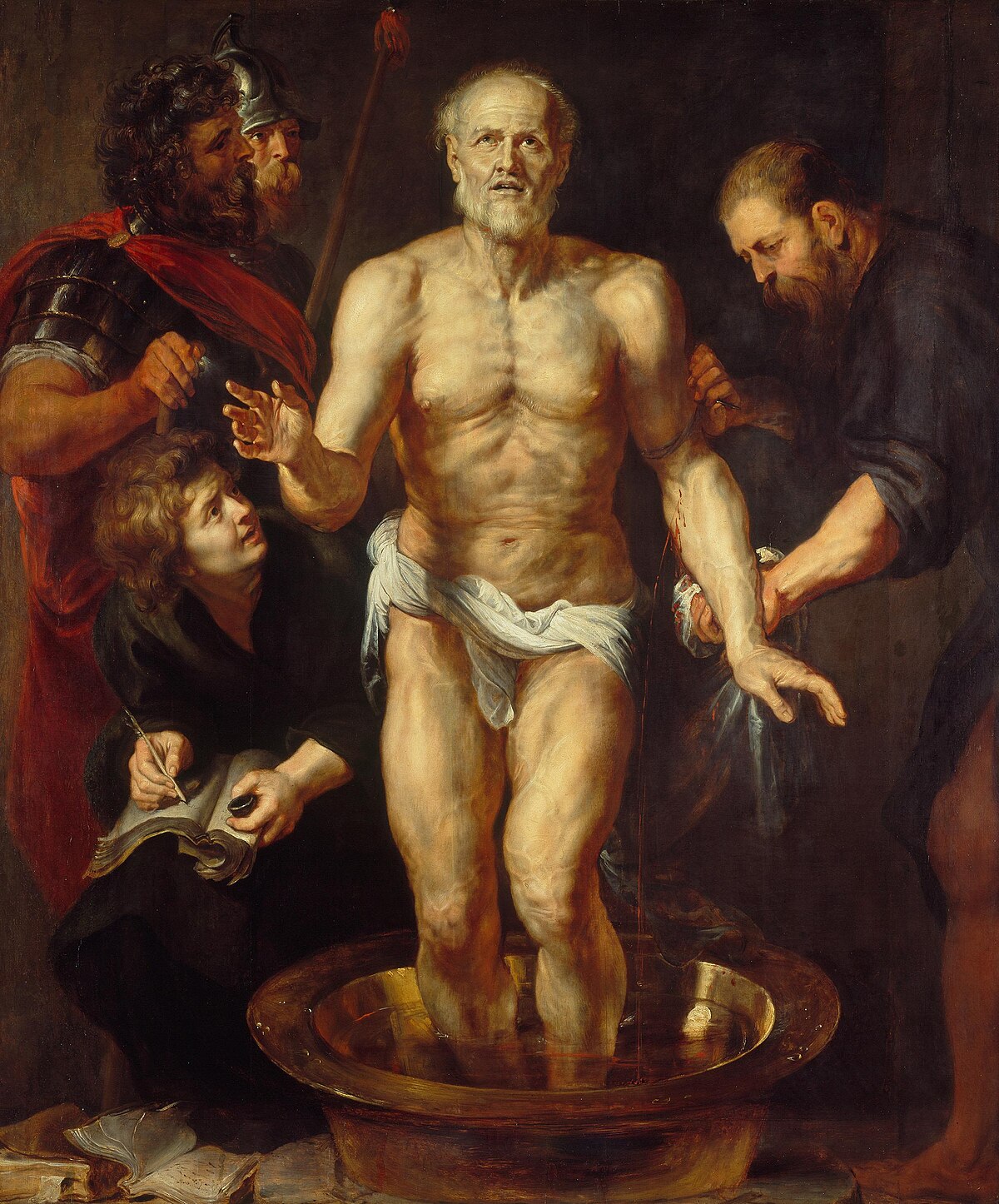
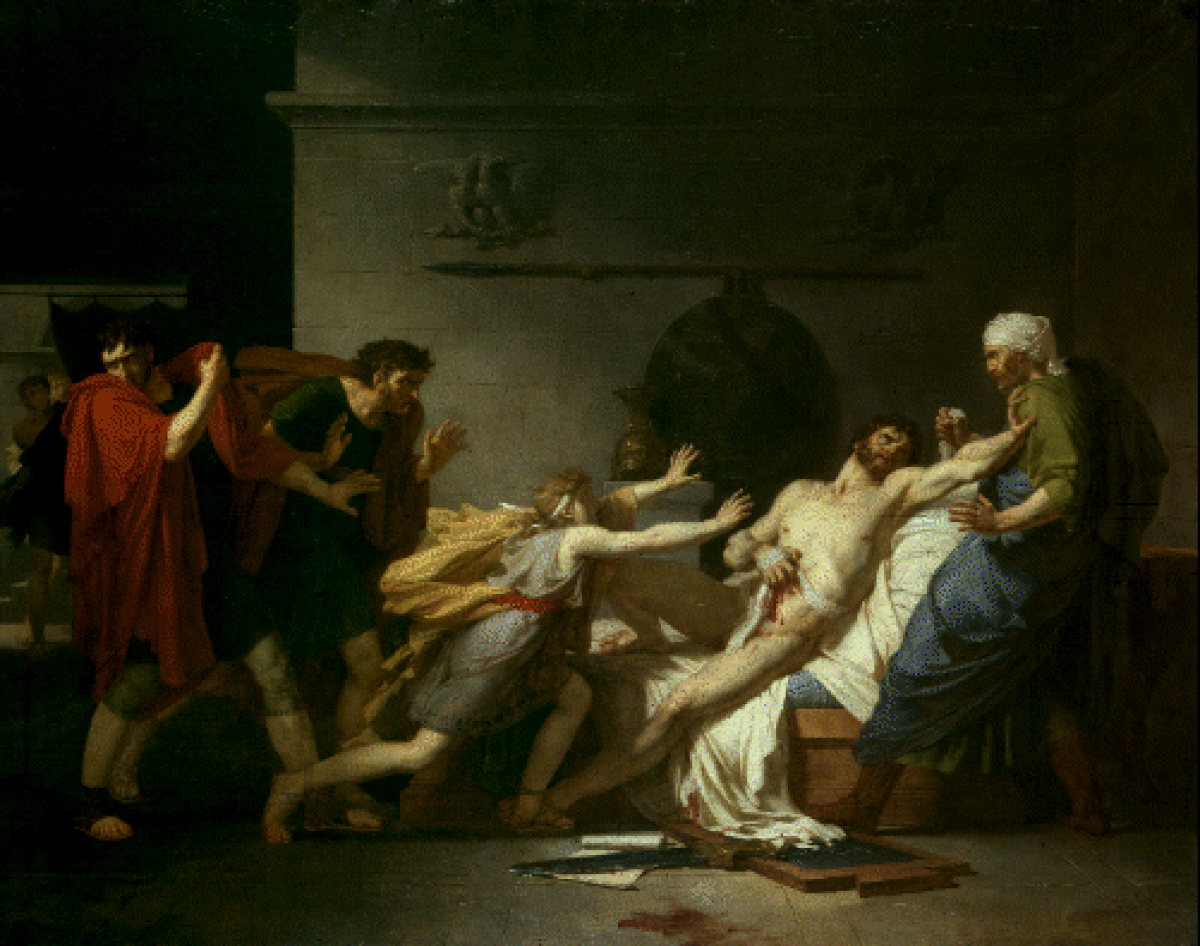
Seneca met his end with the theatrical calm he had taught for decades. He calmly severed his own veins and continued discussing philosophy with his friends as he slowly bled out.
Painting by Peter Paul Rubens titled "The Death of Seneca" depicting Seneca in a basin, surrounded by soldiers and attendants. Peter Paul Rubens, Public domain, via Wikimedia Commons
Even in his final moments, he was performing the very Stoic endurance he wrote about.
The legacy
He once wrote that there is no easy way from the earth to the stars. That line eventually evolved into the famous motto Per aspera ad astra, through hardships to the stars.
A black and white 360° panoramic photograph of the Milky Way arching across the night sky over a desert landscape in Death Valley. Dan Duriscoe, for the en:U.S. National Park Service., Public domain, via Wikimedia Commons
His life remains a high-stakes test of whether one can keep their integrity while running a superpower.
From exile to the Roman imperial court
Born in Córdoba, Hispania, Seneca was trained in Rome in rhetoric and philosophy by Stoic and Pythagorean teachers. In AD 41, the Empress Messalina accused him of adultery with Caligula's sister Julia Livilla. The Senate sentenced Seneca to death, but Emperor Claudius commuted the punishment to exile on the island of Corsica.
Seneca spent eight years in exile writing consolations before Claudius's new wife, Agrippina, secured his return in AD 49. Agrippina appointed Seneca to serve as the tutor for her young son Nero, setting the stage for Seneca's political rise.
When Nero became emperor in AD 54, Seneca and the Praetorian prefect Sextus Afranius Burrus guided the imperial administration. Together, they provided competent government for the first five years of Nero's rule before Seneca's influence over the emperor eroded.
What did Seneca write?
Seneca wrote 12 philosophical essays and 124 letters focused on moral issues, which together form one of the primary historical sources for ancient Stoic philosophy. During the Renaissance, scholars revered him as an authority on moral conduct and literary style.
Beyond moral philosophy, Seneca wrote a political satire titled Apocolocyntosis and worked extensively as a playwright. His surviving theatrical works are all tragedies, including Medea, Thyestes, and Phaedra, which became influential models for later dramatic literature.
Test yourself
Did Seneca live entirely free of wealth while preaching Stoicism?
No, he amassed a massive fortune. Seneca was one of the richest men in Rome, creating a profound contradiction between his Stoic writings on poverty and his actual luxury.
What does the life of Seneca the Younger reveal about intellectual ideals and reality?
High ideals often collide with reality. Seneca's life highlights the friction between teaching rigorous self-control and navigating the messy compromises of ruling an empire.
Did Seneca avoid politics entirely to protect his philosophical purity?
No, he advised Emperor Nero. Seneca actively engaged in the highest levels of Roman politics as Emperor Nero's tutor and advisor, directly managing state affairs.
Play the lesson in edgi and the card is yours. It lands on your Map next to the ideas it connects to, and turns from matte to foil to gold as you learn more around it.
His father was the writer and rhetoric teacher Seneca the Elder, and his mother was named Helvia. His elder brother was Lucius Junius Gallio Annaeanus, his younger brother was Annaeus Mela, and his nephew was the Roman poet Lucan.
Why did Seneca go to Egypt as a young man?
Seneca suffered from severe breathing difficulties and contracted tuberculosis in his mid twenties. He traveled to Egypt to live with his aunt, whose husband was the Prefect of Egypt, and she nursed him through ten years of illness.
Who was Seneca married to?
Later in his life, Seneca was married to a younger woman named Pompeia Paulina. He also had an infant son who died shortly before Seneca was exiled to Corsica in AD 41.