A compound eye is a visual organ made of thousands of tiny independent light-sensing units called ommatidia. Instead of focusing light through a single lens like human eyes do, it pieces together separate points of light into a wide mosaic view. This design trades fine image resolution for extreme reaction speed and a massive field of view.
By the edgi team We find the most surprising true thing about an idea and build a 60-second lesson around it.
Unlike a human eye with a single lens, a compound eye consists of thousands of independent units called ommatidia. Each ommatidium points in a slightly different direction, capturing just one tiny dot of light and color.
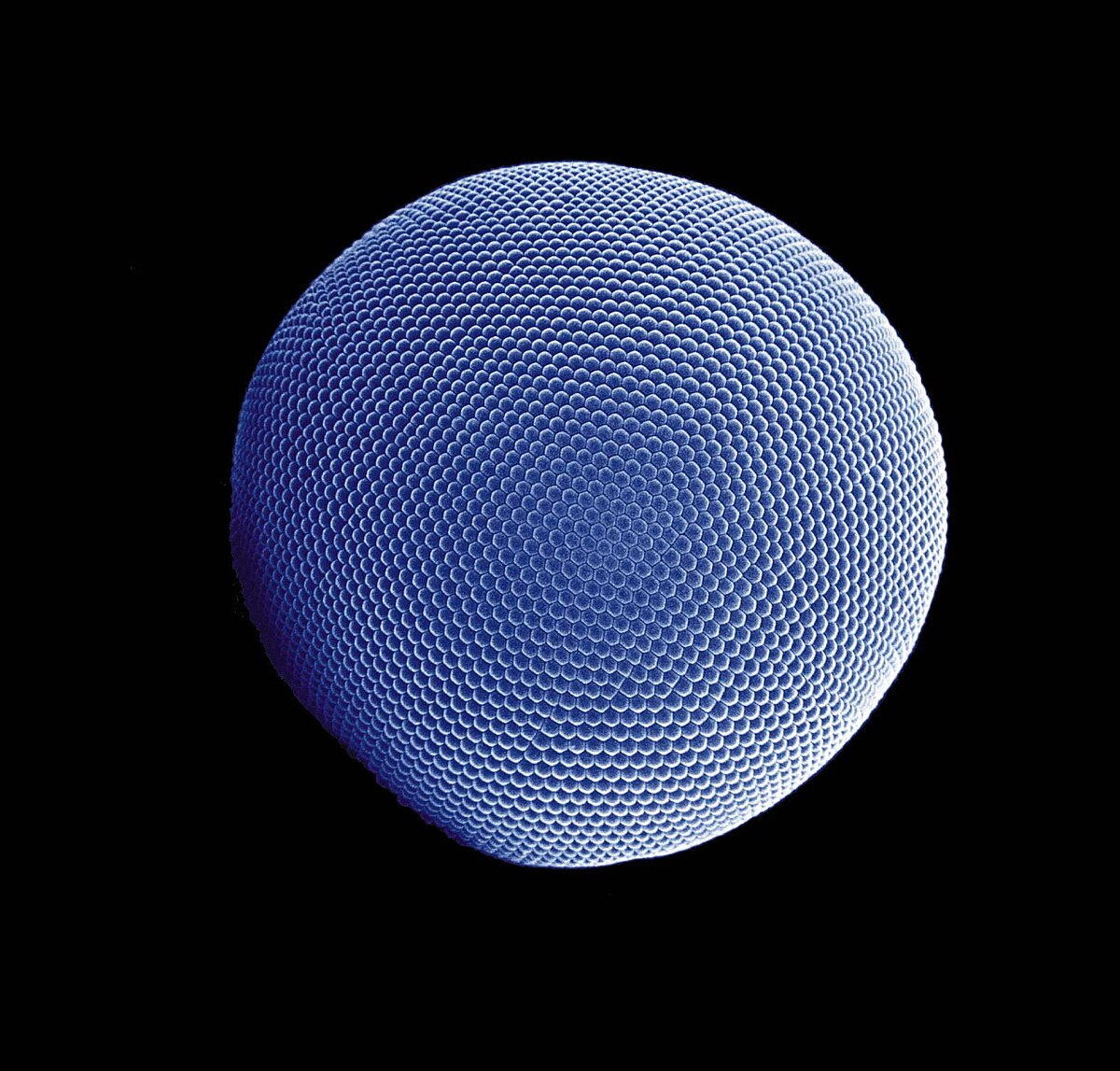
Electron microscope image of the spherical compound eye of an Antarctic krill, composed of numerous hexagonal ommatidia. Gerd Alberti and Uwe Kils, CC BY-SA 3.0, via Wikimedia Commons
The arthropod brain stitches these thousands of dots together to form a low-resolution mosaic image.
Built for speed
This setup trades sharp focus for incredible speed, letting insects detect motion faster than any video camera. To a housefly, a human hand moving to swat them appears to be moving in extreme slow motion.
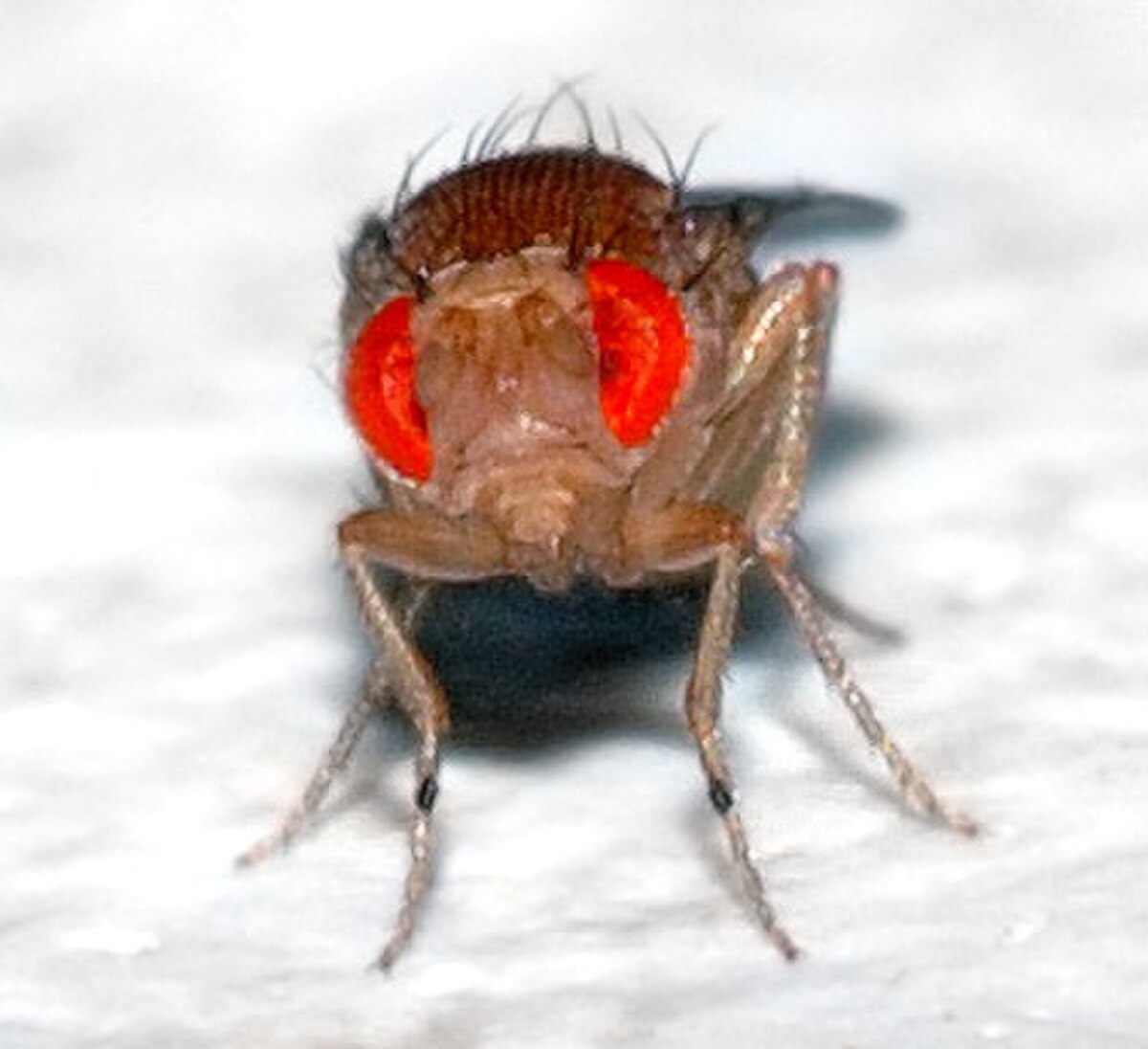
A frontal view of a Drosophila melanogaster fruit fly, highlighting its large red compound eyes and hairy head. André Karwath aka Aka, CC BY-SA 2.5, via Wikimedia Commons
Dragonflies use this hyper-fast visual hardware to intercept mid-air prey with a staggering 95 percent success rate.
The mosaic theory
In 1826, physiologist Johannes Müller first proposed the mosaic theory of vision after peering through honeybee eyes. He realized each tiny lens operated independently, proving nature could build vision without a single central focusing point.
While humans rely on a single sharp image, arthropods survive through raw optical hardware designed to spot danger instantly.
How compound eyes process light and motion
Light enters through the individual lenses of thousands of ommatidia rather than a single shared opening. Each ommatidium contains its own cornea, lens, and photoreceptor cells that detect brightness and color. As an object moves across the visual field, the light receptors behind each lens switch on and off in rapid sequence.
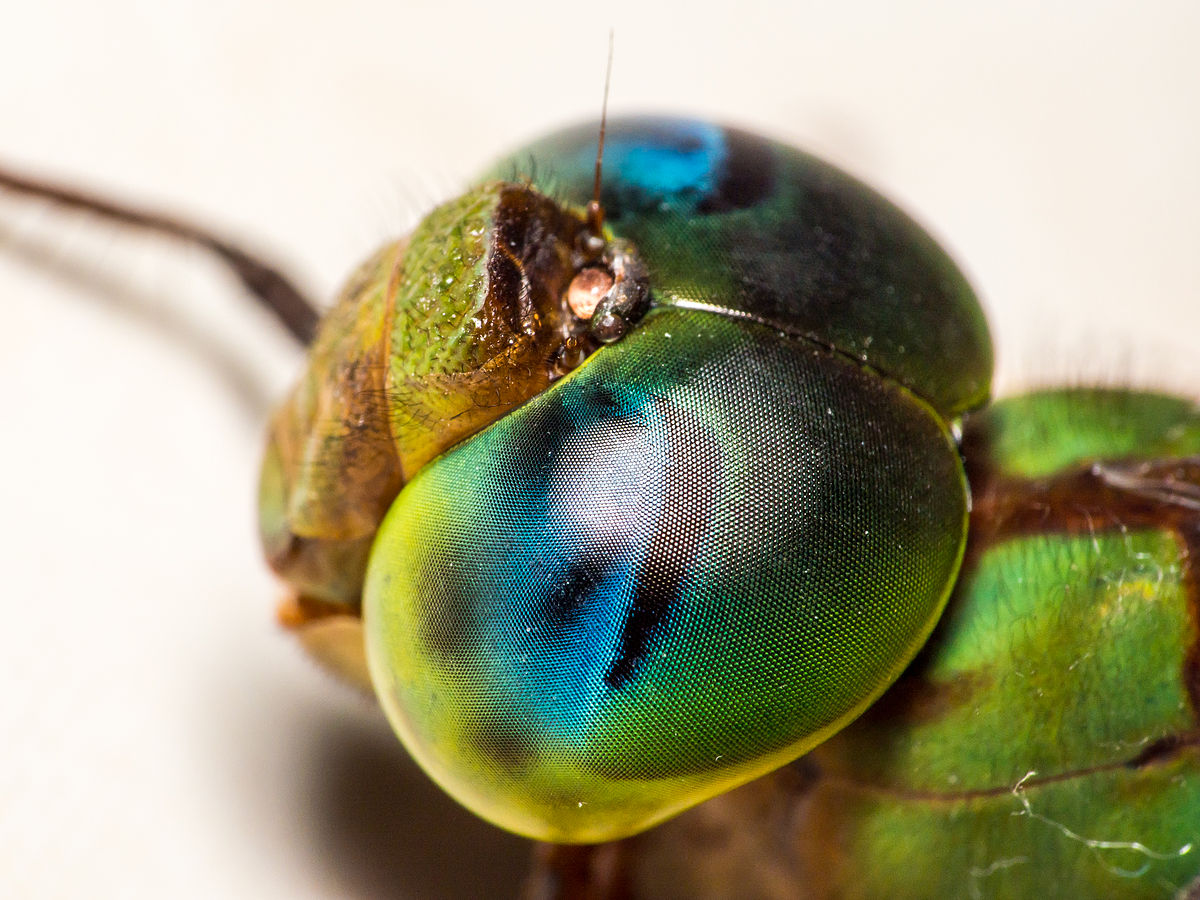
The thousands of distinct lens facets on a dragonfly compound eye capture light from different angles simultaneously. Macrogiants, CC BY-SA 4.0, via Wikimedia Commons
This on-off switching creates a flicker frequency that registers motion almost instantly. Honeybees react to movement in 0.01 seconds, compared to 0.05 seconds for humans. While compound eyes have poor image resolution compared to single-aperture eyes, they offer a wide viewing angle and can detect polarized light.
The main types of compound eyes
Biologists divide compound eyes into apposition eyes and superposition eyes. Apposition eyes form multiple inverted images. Light from one direction hits a light-receiving structure called a rhabdom, while dark side walls absorb stray light from other directions. The mantis shrimp possesses the most advanced version of this setup.
Superposition eyes form a single upright image and are common in nocturnal insects. They feature a gap between the lens and the rhabdom without side walls. Decapod crustaceans such as shrimp, prawns, crayfish, and lobsters possess reflecting superposition eyes, which replace lenses with tiny corner mirrors to steer light.
Specialized zones and structural variations
Fast fliers and active hunters modify the compound layout to gain sharper sight. Flies, honeybees, praying mantises, and dragonflies feature acute zones called fovea areas where the surface of the eye is flattened and the facets are larger. This flat profile allows more ommatidia to point at the exact same spot, creating a higher-resolution image in that target area.
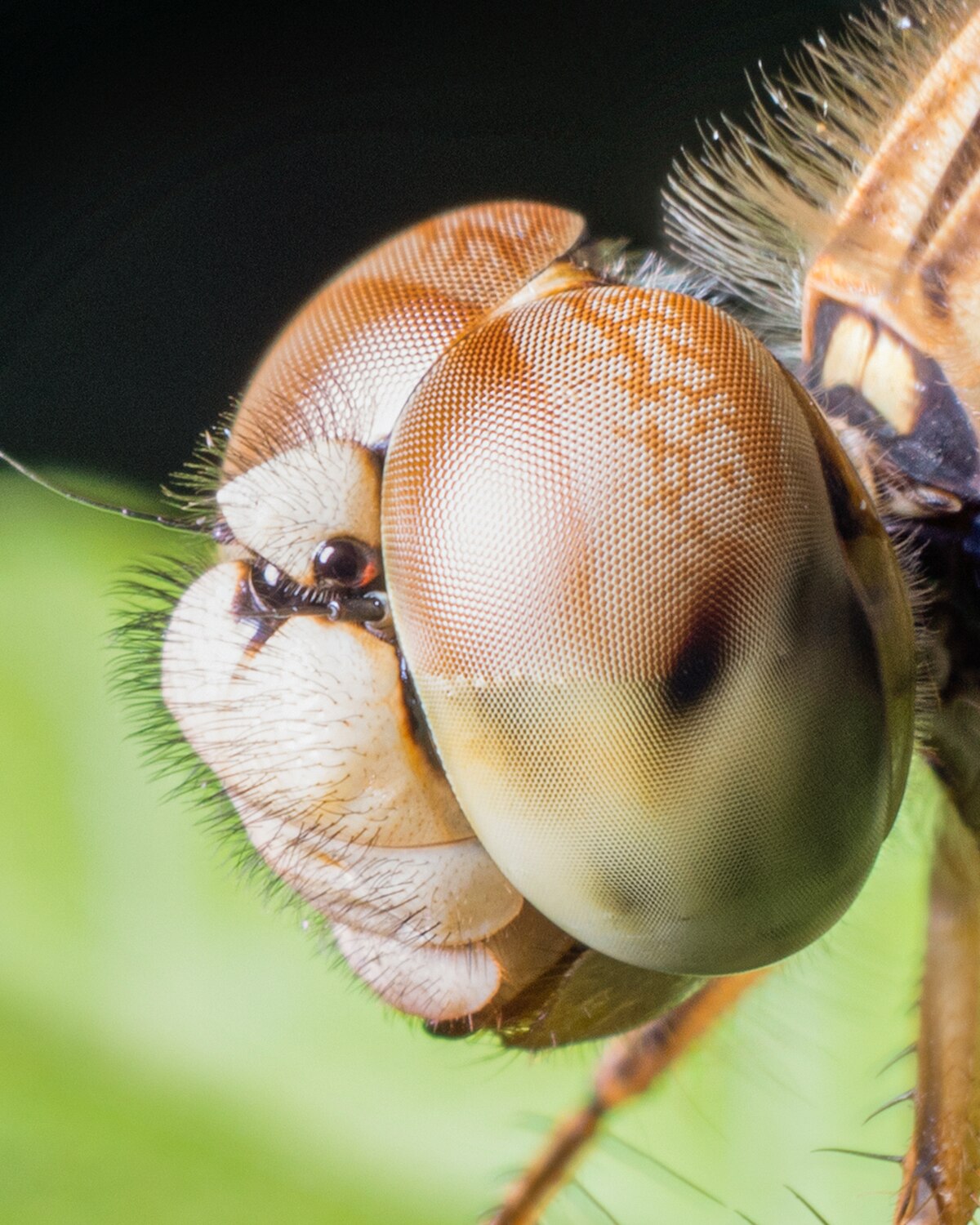
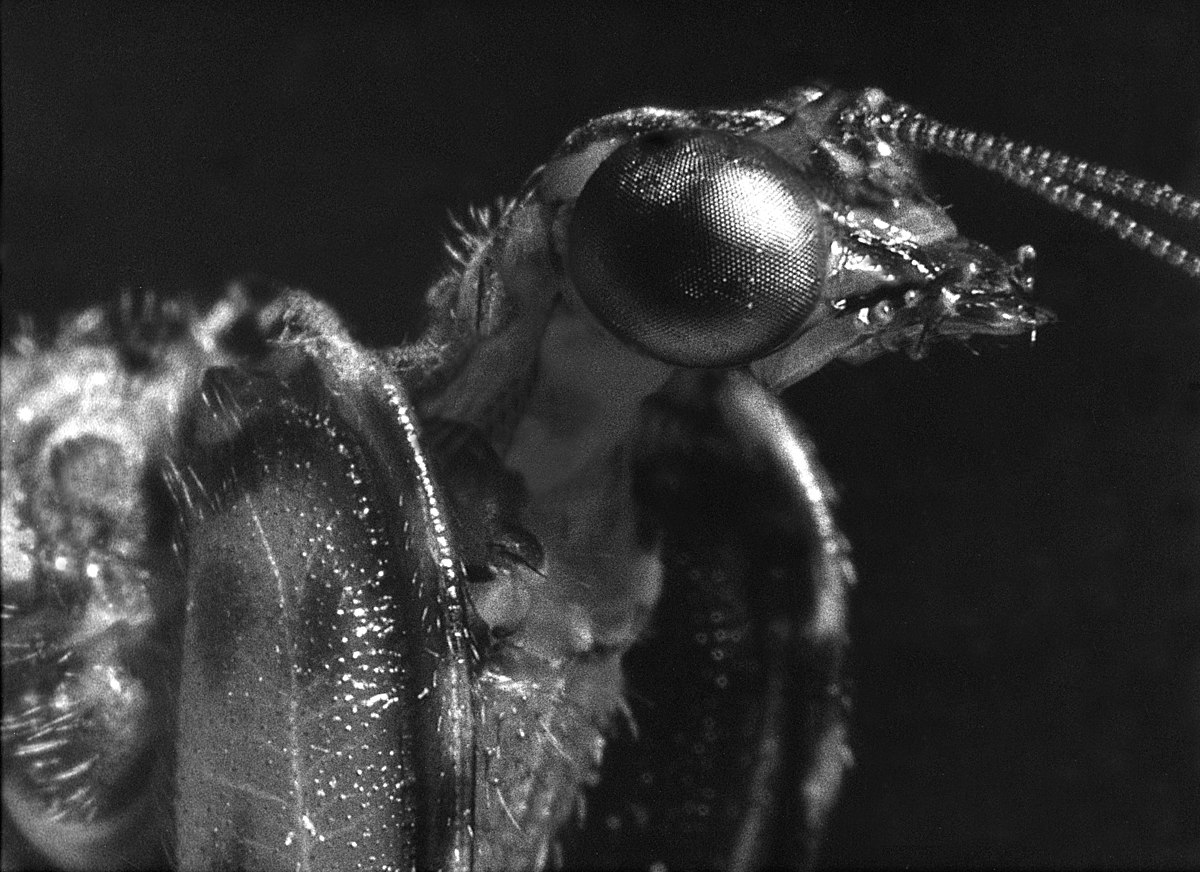
The large, bulging compound eye of a mantisfly provides the broad field of view needed to spot prey quickly. Ron Sterling, CC BY 4.0, via Wikimedia Commons
Physical variations in compound eyes can also drive asymmetric insect behavior. In Temnothorax albipennis ants, scouts have slightly different numbers of ommatidia in their left and right eyes. This physical difference correlates with a consistent population-level habit of turning left when exploring unfamiliar maze-like nest sites.
Test yourself
How does the structural design of a compound eye primarily benefit an insect like a dragonfly?
It trades sharp focus for extreme motion detection speed. The thousands of individual ommatidia are built for speed rather than focus, letting insects detect motion instantly and track fast-moving targets.
How does the structural design of a compound eye primarily benefit an insect like a dragonfly?
It trades sharp focus for extreme motion detection speed. The thousands of individual ommatidia are built for speed rather than focus, letting insects detect motion instantly and track fast-moving targets.
Does a compound eye form vision by projecting a single sharp image onto a retina?
No, it stitches thousands of dots. Unlike human eyes with a single lens, a compound eye uses thousands of independent ommatidia to stitch together a low-resolution mosaic image.
Play the lesson in edgi and the card is yours. It lands on your Map next to the ideas it connects to, and turns from matte to foil to gold as you learn more around it.
What is the difference between an apposition eye and a superposition eye?
An apposition eye isolates each ommatidium with dark walls, producing multiple inverted images. A superposition eye lacks these dark side walls and allows light from multiple lenses to combine across an internal gap, producing a single upright image that works well in low light.
Do all compound eyes rely on glass-like refractive lenses?
No. Long-bodied decapod crustaceans like lobsters, crayfish, shrimp, and prawns use reflecting superposition eyes. Instead of curved focusing lenses, their eyes rely on arrays of microscopic corner mirrors to channel light to the retina.
Can an animal have simple eyes and compound eyes in the same organ?
Yes. The mysid shrimp Dioptromysis paucispinosa has a refracting superposition eye that contains a single giant rear facet three times larger than the others, backed by an enlarged crystalline cone. This arrangement functions as a simple eye embedded directly within a compound eye.