Carcinization is an evolutionary process where crustaceans that are not true crabs independently evolve crab-like bodies. Biologist Lancelot Alexander Borradaile identified the pattern in 1916 after noticing how often nature arrives at the exact same physical build. It produces a wide, flattened shell and a tucked-in tail, turning long-bodied animals into compact, armored tanks.
By the edgi team We find the most surprising true thing about an idea and build a 60-second lesson around it.
In 1916, biologist Lancelot Borradaile noticed something strange: many crustaceans were evolving into crabs, even though they weren't related to them. He called this process carcinization. It is a form of convergent evolution where nature repeatedly hits the same anatomical target.
Why? Because a compact, flat body with a tucked-in tail is an efficient, defensive tank that is remarkably hard for predators to grab.
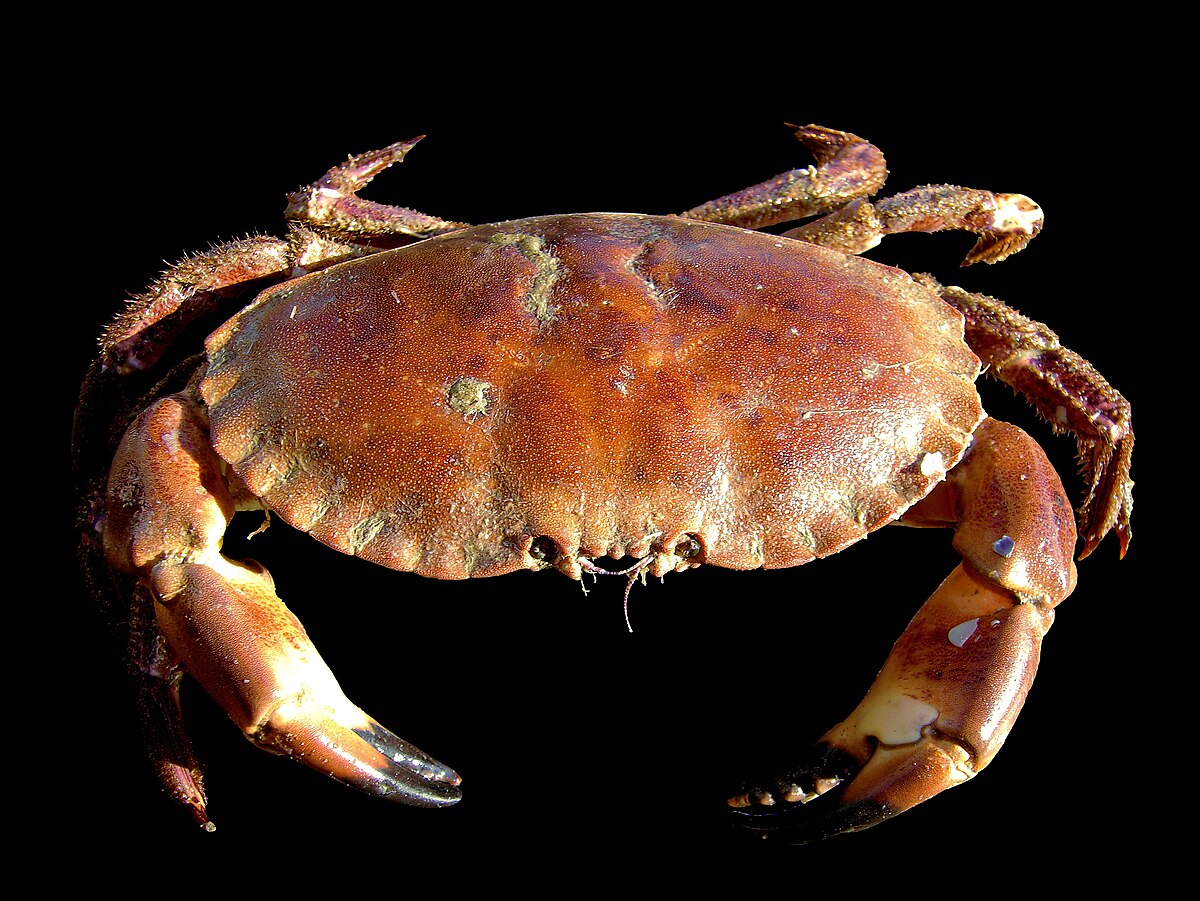
A brown crab, Cancer pagurus, also known as the edible crab, is shown against a black background, displaying its broad, oval carapace and robust claws. Hans Hillewaert, CC BY-SA 4.0, via Wikimedia Commons
The imposters
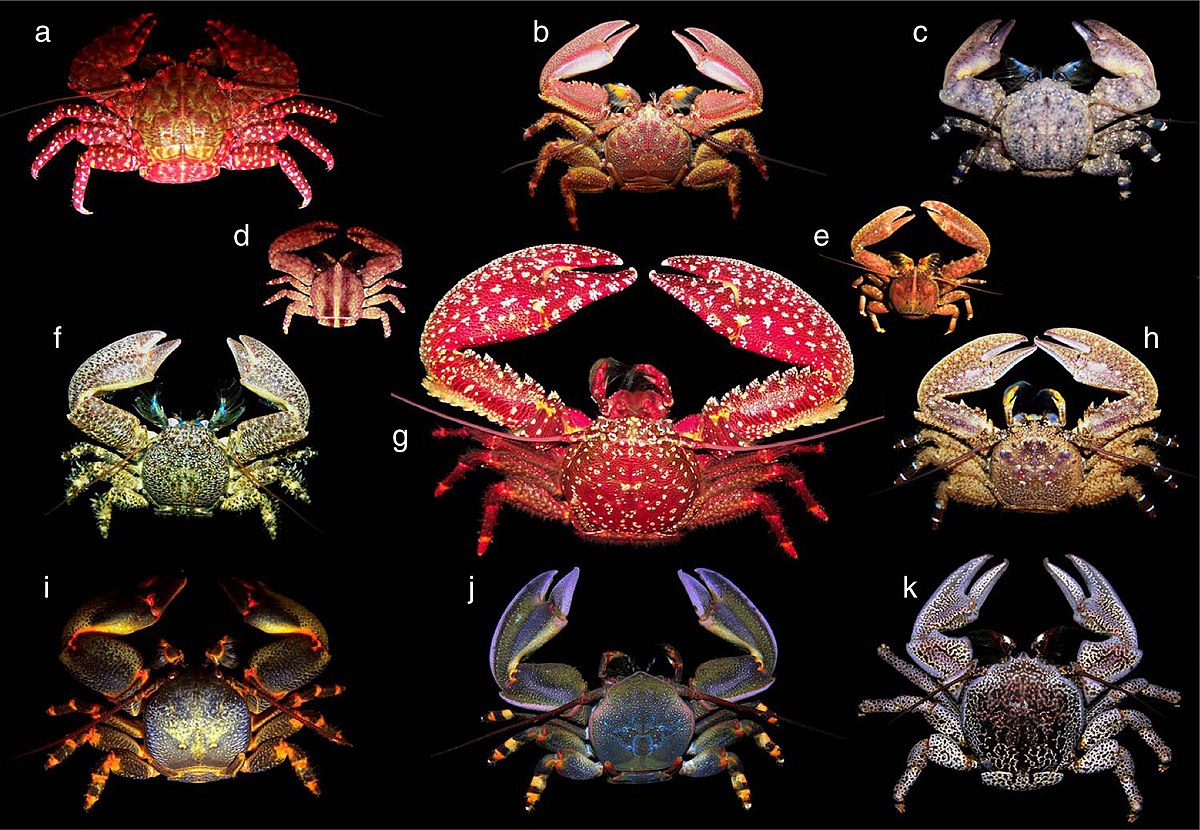
This isn't just one family tree. It is a recurring pattern across the infraorder Anomura. Take the hermit crab or the porcelain crab. They look like 'true' crabs, but they are genetically distinct.
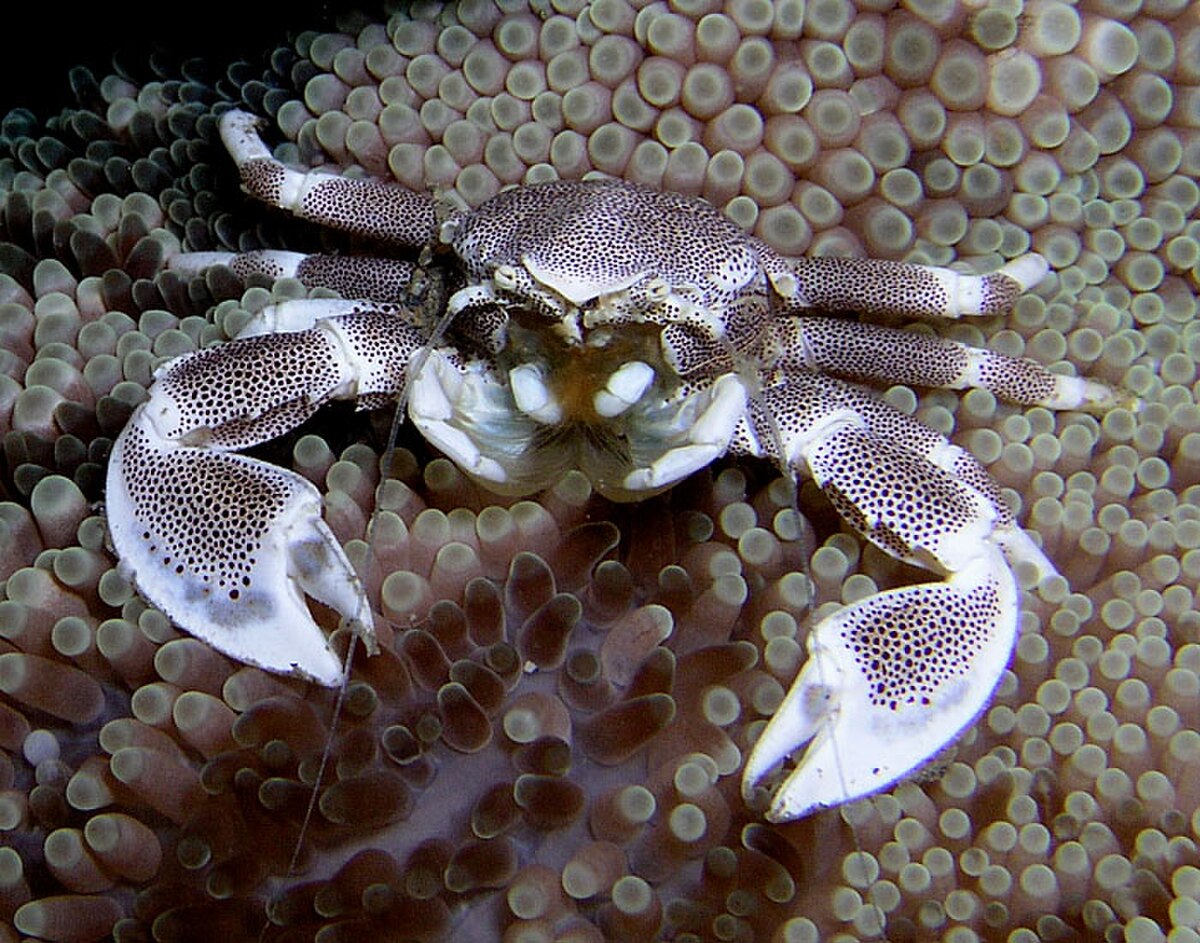
A Neopetrolisthes maculatus, or spotted porcelain crab, is camouflaged against the textured surface of a sea anemone. Nhobgood, CC BY-SA 3.0, via Wikimedia Commons
They abandoned their long, lobster-like bodies over millions of years to mimic the more successful crab design.
The coconut crab
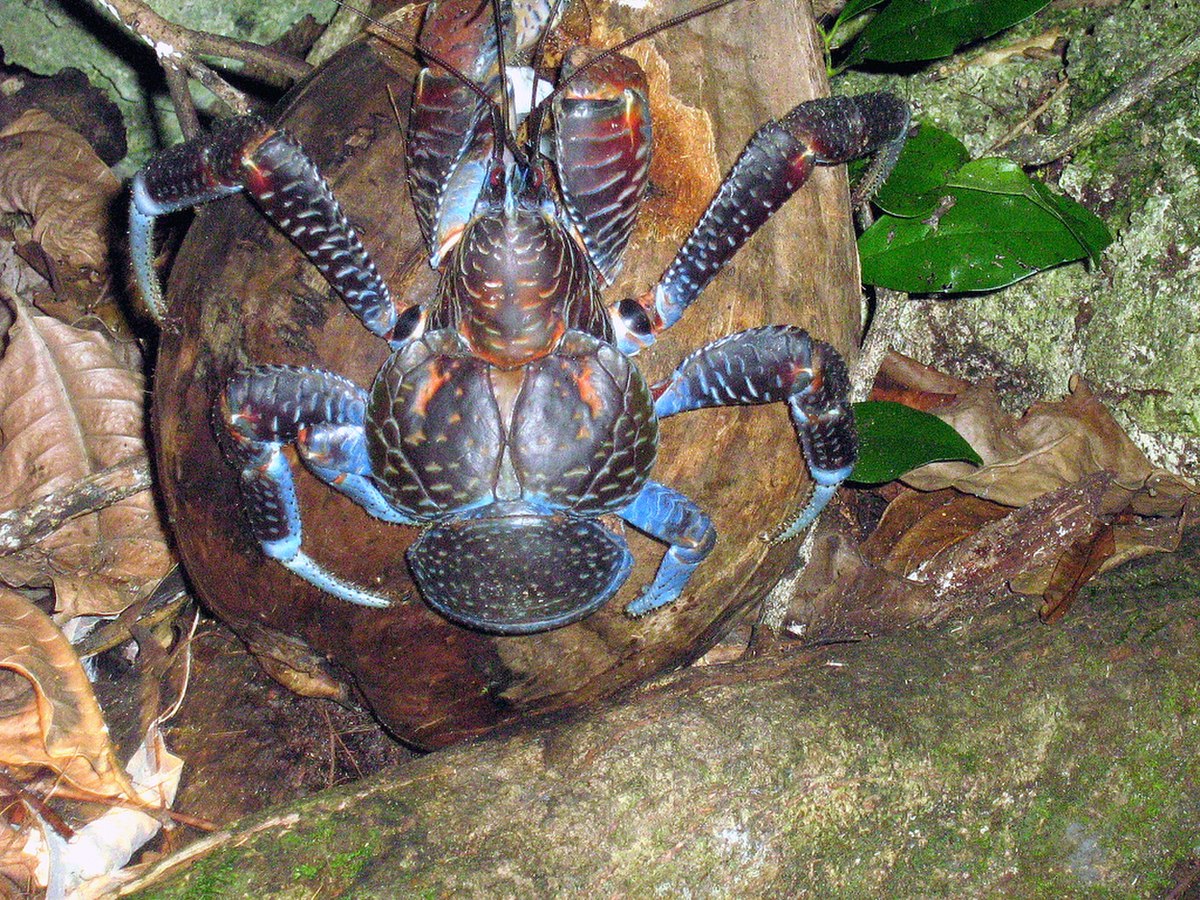
The most dramatic example is the coconut crab. It actually starts its life looking like a shrimp-like creature. As it matures, it undergoes a radical transformation, eventually becoming a massive, terrestrial tank that can crack open coconuts.
A large coconut crab (Birgus latro) with blue and reddish-brown coloration is seen on the forest floor among leaves and wood. fearlessRich, CC BY 2.0, via Wikimedia Commons
It proves that for a crustacean, the crab shape is often the ultimate evolutionary destination.
What makes a body crab-like
A carcinized crustacean undergoes three main physical shifts. Its main shell, the carapace, flattens and broadens sideways. The plates on its underside fuse into a wide, protective shield called a sternal plastron, and its tail, known as the pleon, flattens and folds tightly underneath the body. These modifications protect vital internal organs from predators on the ocean floor and lower the animal's center of gravity.
Long-tailed crustaceans rapidly flex their tails to propel backward, an escape reflex lost when a species carcinizes. Animation by Uwe Kils with modifications by Stigmatella aurantiaca, CC BY-SA 3.0, via Wikimedia Commons
This compressed frame changes how the animal moves and protects itself. Long-tailed crustaceans like lobsters rely on the caridoid escape reaction, which flexes their tail muscles to launch them backward through the water. Carcinized species lose the bulky muscles required for tail-flipping, trading rapid swimming for low-profile concealment among rocks and the ability to walk sideways across the ground.
Which animals have carcinized
Carcinization has occurred independently in at least five separate groups of decapod crustaceans, mostly within the infraorder Anomura. King crabs, for instance, evolved from hermit crab ancestors. Even though adult king crabs no longer carry shells, they still retain asymmetrical abdomens, a physical leftover from ancestors that twisted their bodies to fit inside spiral snail shells.
Porcelain crabs share the flattened, compact shape of true crabs despite being closer relatives of squat lobsters. J. Antonio Baeza, CC BY 4.0, via Wikimedia Commons
Other examples include porcelain crabs, which evolved from ancestors related to squat lobsters, and the hairy stone crab. The giant land-dwelling coconut crab also undergoes this shift as it grows. It starts life as an aquatic larva with a shrimp-like shape and matures into a heavy, terrestrial crustacean with a broad carapace and tucked tail, using its compact build to maneuver on land and wield powerful claws.
Test yourself
Which phenomenon best describes how entirely separate species independently evolve similar forms like carcinization?
Convergent evolution. Convergent evolution occurs when unrelated species independently evolve similar physical traits due to facing comparable environmental pressures.
What primary evolutionary advantage drives the repeated emergence of the crab body plan during carcinization?
Efficient defense and mobility. A compact, flat body with a tucked-in tail creates a sturdy tank that is difficult for predators to attack, making it a highly successful evolutionary destination.
Is carcinization limited to true crabs, or does it happen across other crustacean groups?
Happens across other crustacean groups. Carcinization is famously observed across the infraorder Anomura, where creatures like hermit crabs and porcelain crabs evolve crab-like bodies independently.
Play the lesson in edgi and the card is yours. It lands on your Map next to the ideas it connects to, and turns from matte to foil to gold as you learn more around it.
What is the difference between a true crab and a carcinized crustacean?
True crabs belong exclusively to the infraorder Brachyura, which first appeared in the Early Jurassic. Carcinized crustaceans belong to separate evolutionary groups, primarily the infraorder Anomura, and merely evolved the same outer body plan through convergent evolution.
What is hypercarcinisation?
Hypercarcinisation is an extreme form of carcinization observed in species such as the porcelain crab Allopetrolisthes spinifrons. In addition to a shortened, flattened body, this species mimics true crabs by displaying sexual dimorphism, where males have noticeably shorter tails than females.
Can animals evolve away from being crabs?
Yes. Evolutionary biologists recognize decarcinisation, the reverse process where a lineage loses its compact, crab-like morphology over time.