Insect flight is the mechanical and aerodynamic process by which insects use wings to travel through the air, making them the first animals to evolve flight. Instead of relying solely on direct muscle pulls, many insects flex their thoracic exoskeleton to snap their wings up and down. This unique design lets some species beat their wings hundreds of times per second, far faster than individual nerve signals can fire.
By the edgi team We find the most surprising true thing about an idea and build a 60-second lesson around it.
Unlike birds, which use muscles to pull wings directly, many insects power flight by deforming their own skeletal chests. Specialized muscles warp the thorax like a clicking tin can, snapping the wings up and down automatically.
This indirect flight mechanism allows them to beat their wings hundreds of times per second.
Giant prehistoric skies
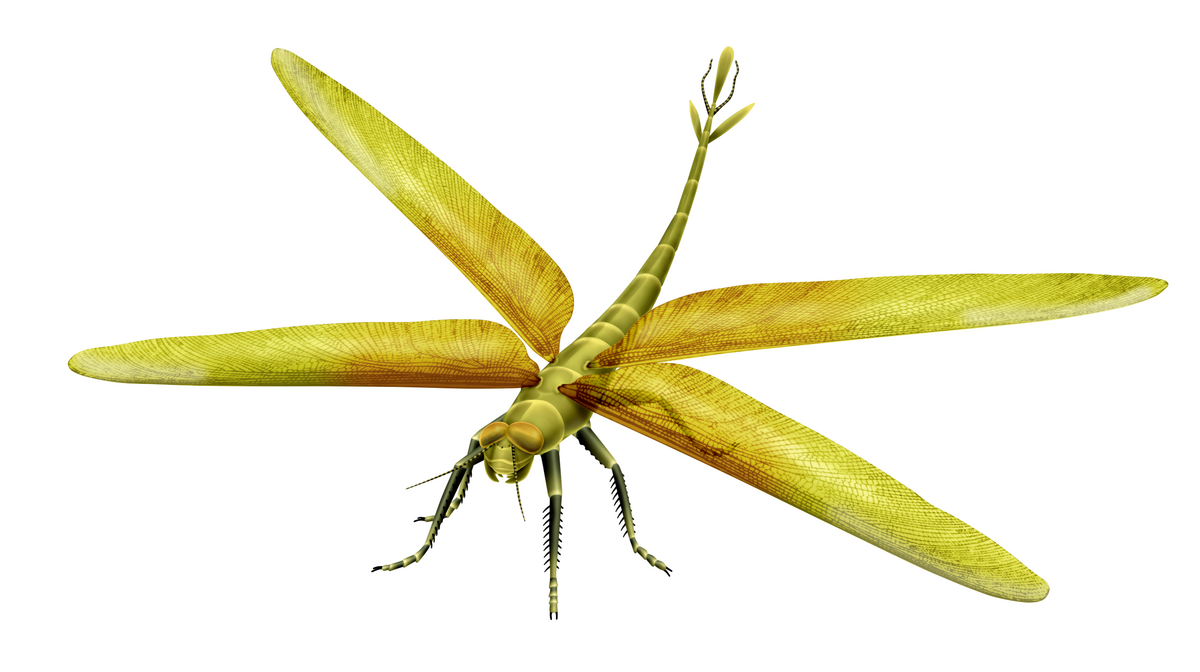
During the Carboniferous period, giant dragonflies like Meganeura patrolled the skies with a two-foot wingspan. They thrived because Earth's atmosphere was packed with up to 35 percent oxygen, making air much denser.
A life restoration of Meganeura monyi, a giant prehistoric insect resembling a dragonfly, is depicted against a white background. Qohelet12, CC BY-SA 4.0, via Wikimedia Commons
As oxygen levels dropped, giant insects shrank, leaving modern survivors to perfect high-speed aerial mechanics.
The ultimate spring
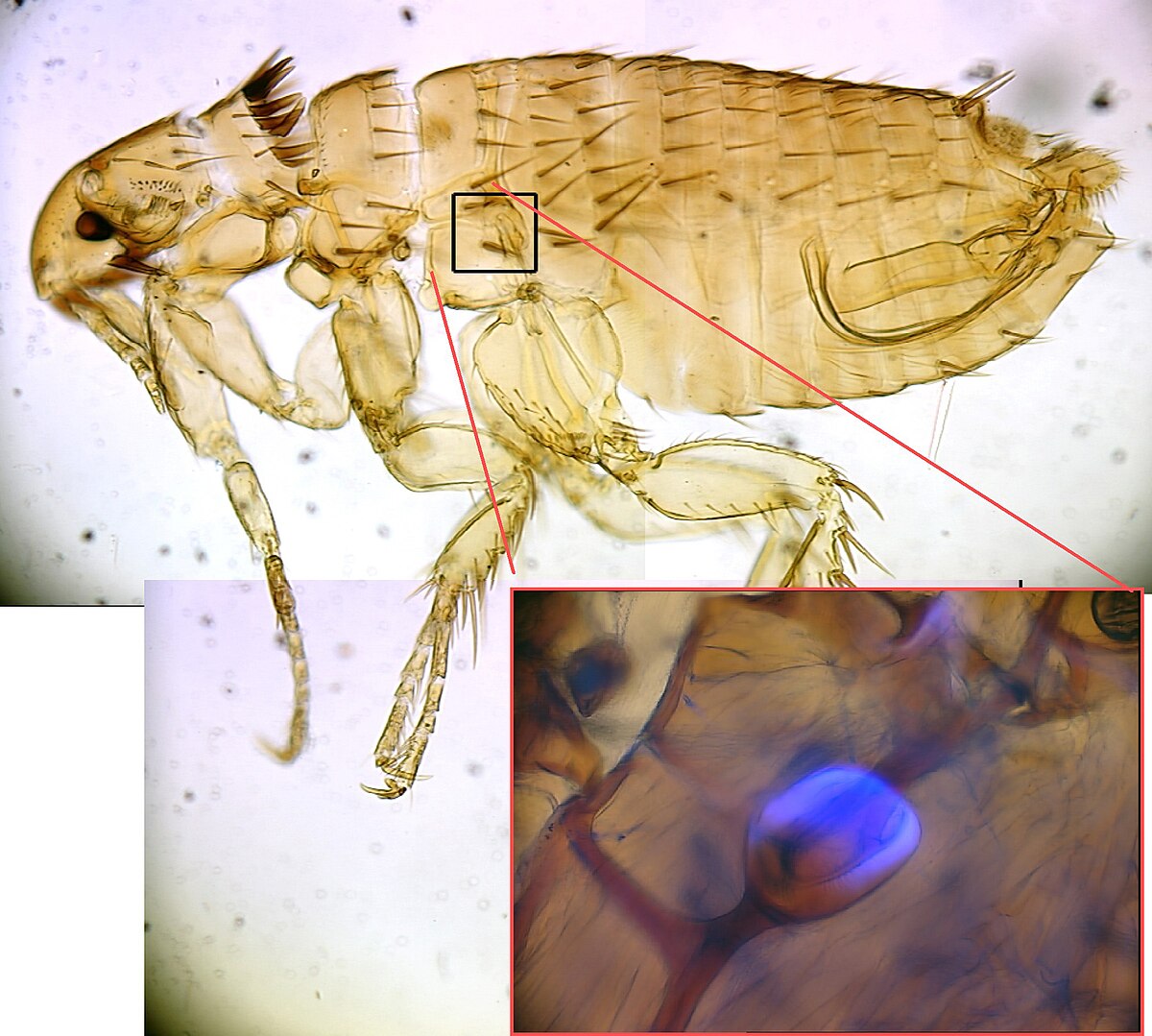
To stay airborne efficiently, insects rely on resilin, a rubber-like protein at the wing hinges. This biological spring stores energy during the upstroke and releases it on the downstroke.
A microscopic image of a flea, with an inset detail showing the resilin pad, a specialized elastic protein. division, CSIRO, CC BY 3.0, via Wikimedia Commons
It is one of the most efficient elastic materials on the planet, making tiny flyers masters of aerodynamics.
Direct vs indirect flight muscles
Insects fly using one of two distinct muscular architectures: direct or indirect flight. Dragonflies and damselflies, belonging to the order Odonata, use direct flight muscles. These muscles attach straight to the wing bases, operating like oars to pull the wings up and down independently with precise maneuverability.
Muscles connect directly to the wing bases in direct flight, tilting the wing over a pivot point like an oar. Bugboy52.40, CC BY-SA 3.0, via Wikimedia Commons
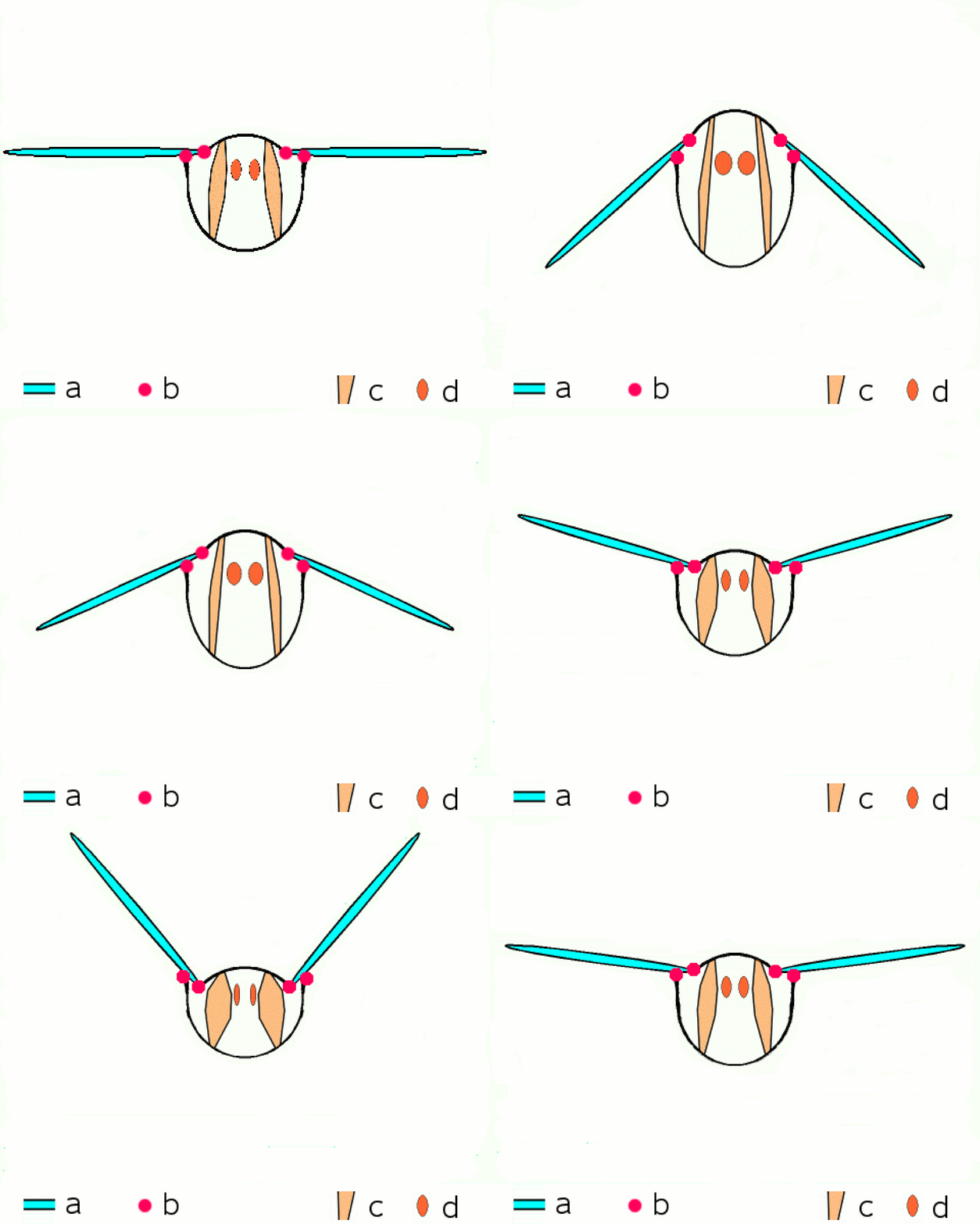
Almost all other winged insects rely on indirect flight muscles. These muscles do not connect to the wings at all. Longitudinal muscles compress the thorax from front to back to bow the dorsal surface upward and flip the wings down, while vertical muscles pull the roof downward to flip the wings back up. Because the wings are outward extensions of the exoskeleton, distorting the thorax forces the wings into motion.
Synchronous and asynchronous wingbeats
Insects that flap under 100 times per second use synchronous muscles, where a single nerve impulse triggers exactly one muscle contraction. This system powers flight in groups with lower wingbeat frequencies, but it hits a hard limit based on how fast nerves can fire.
Indirect flight moves the wings by contracting internal thoracic muscles that deform the body wall. Siga, CC BY-SA 3.0, via Wikimedia Commons
High-speed flyers like bumblebees, flies, and beetles evolved asynchronous flight muscles. In this system, muscle contraction is stimulated by a sudden release of tension rather than a fresh nerve impulse. This allows wingbeat frequencies to exceed 1,000 hertz, oscillating far faster than the central nervous system can send signals. Separate direct steering muscles attach to the wing hinges to handle fine control.
How insect wings generate lift
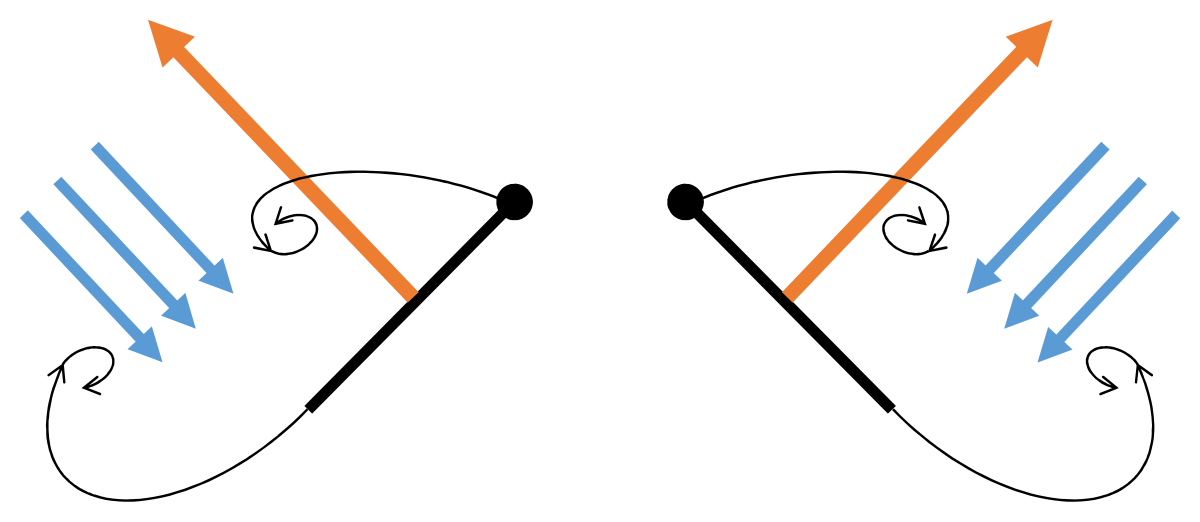
Standard steady-state aerodynamics cannot account for the lift insects produce; calculated lift under static assumptions falls short by a factor of three. Insects compensate by generating unsteady aerodynamic structures, most notably a spiralling leading-edge vortex during each stroke.
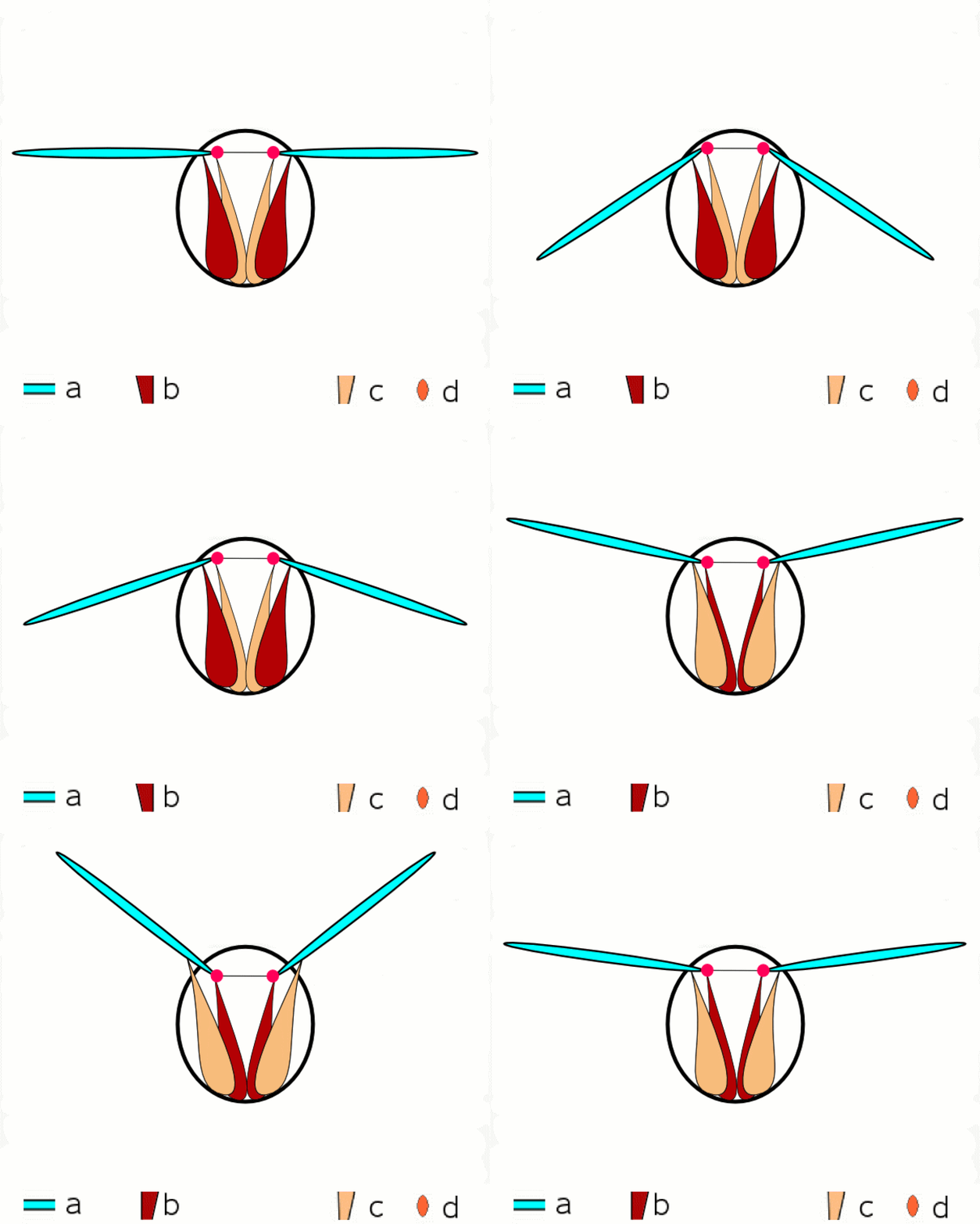
The clap and fling mechanism forces wings together to create high-lift vortices before the downstroke begins. Original: Chiswick Chap Automated conversion to SVG: CheChe, CC BY-SA 4.0, via Wikimedia Commons
Each flapping cycle consists of two half-strokes: a downward-forward plunge followed by wing rotation, and an upward-backward stroke. Some tiny insects also use the Weis-Fogh clap and fling mechanism, clapping their wings together at the top of the stroke to generate extreme lift forces despite increased wear on the wing structures.
Test yourself
How does resilin assist insect flight at the wing hinges?
It stores and releases elastic energy. Resilin acts as a rubber-like biological spring, capturing energy on the upstroke and snapping it back on the downstroke.
Does insect flight rely on direct muscle attachment or indirect thorax deformation?
Indirect thorax deformation. Many insects warp their skeletal chests rather than pulling wings directly, letting them beat hundreds of times per second.
How do insects achieve high-speed wing beats in indirect flight?
Warping the thorax like a click tin can. Indirect flight uses elastic deformation of the skeleton, bypassing the speed limit of individual nerve impulses.
Play the lesson in edgi and the card is yours. It lands on your Map next to the ideas it connects to, and turns from matte to foil to gold as you learn more around it.
Basal insects like silverfish never evolved wings at all. Other insects, such as fleas and worker ants, descend from winged ancestors but lost their wings secondarily through evolution.
Why were prehistoric flying insects so much larger?
During the Carboniferous period, giant insects like the dragonfly Meganeura grew wingspans up to two feet. They thrived because Earth's atmosphere contained up to 35 percent oxygen, creating denser air that supported larger bodies before levels dropped.
What is resilin and what does it do during flight?
Resilin is a highly elastic, rubber-like protein found at insect wing hinges. It acts as an efficient biological spring that stores kinetic energy on the upstroke and releases it into the downstroke.