Jet propulsion is the movement of an object in one direction produced by shooting out a fast stream of fluid in the opposite direction. This mechanism relies on Newton's third law of motion, where the backward force of the ejected mass creates an equal forward push. It provides the only method for vehicles to generate thrust and maneuver through the vacuum of space.
By the edgi team We find the most surprising true thing about an idea and build a 60-second lesson around it.
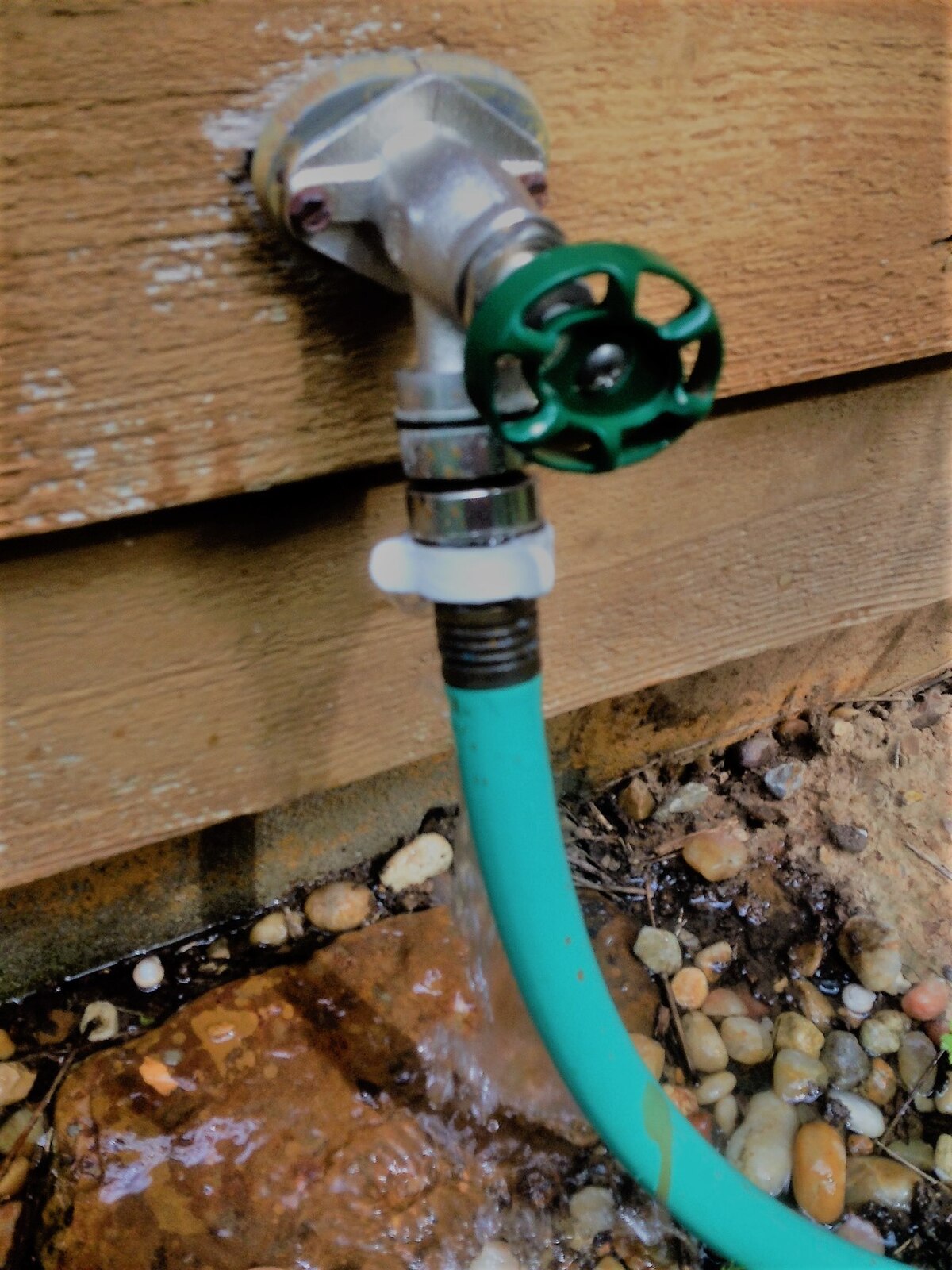
Jet propulsion works because of the physical recoil created when you throw mass in one direction to move in the other. It is the exact same principle that makes a garden hose snake backward when the water is turned on full blast.
A leaking garden hose bib is shown attached to a wooden wall, with water visibly dripping from the connection to a turquoise garden hose. DziegielewskiBA, CC BY-SA 4.0, via Wikimedia Commons
By accelerating a fluid through a nozzle, an engine generates the massive thrust required to overcome gravity and air resistance.
The first turbojet
In 1937, a young RAF officer named Frank Whittle bench-tested the first successful turbojet engine. His design didn't just throw fuel out the back; it used a turbine to compress air and explode it into a continuous stream.
The test was so violent the engine ran out of control, causing ground crew to flee while Whittle stayed to shut it down.
Vacuum travel
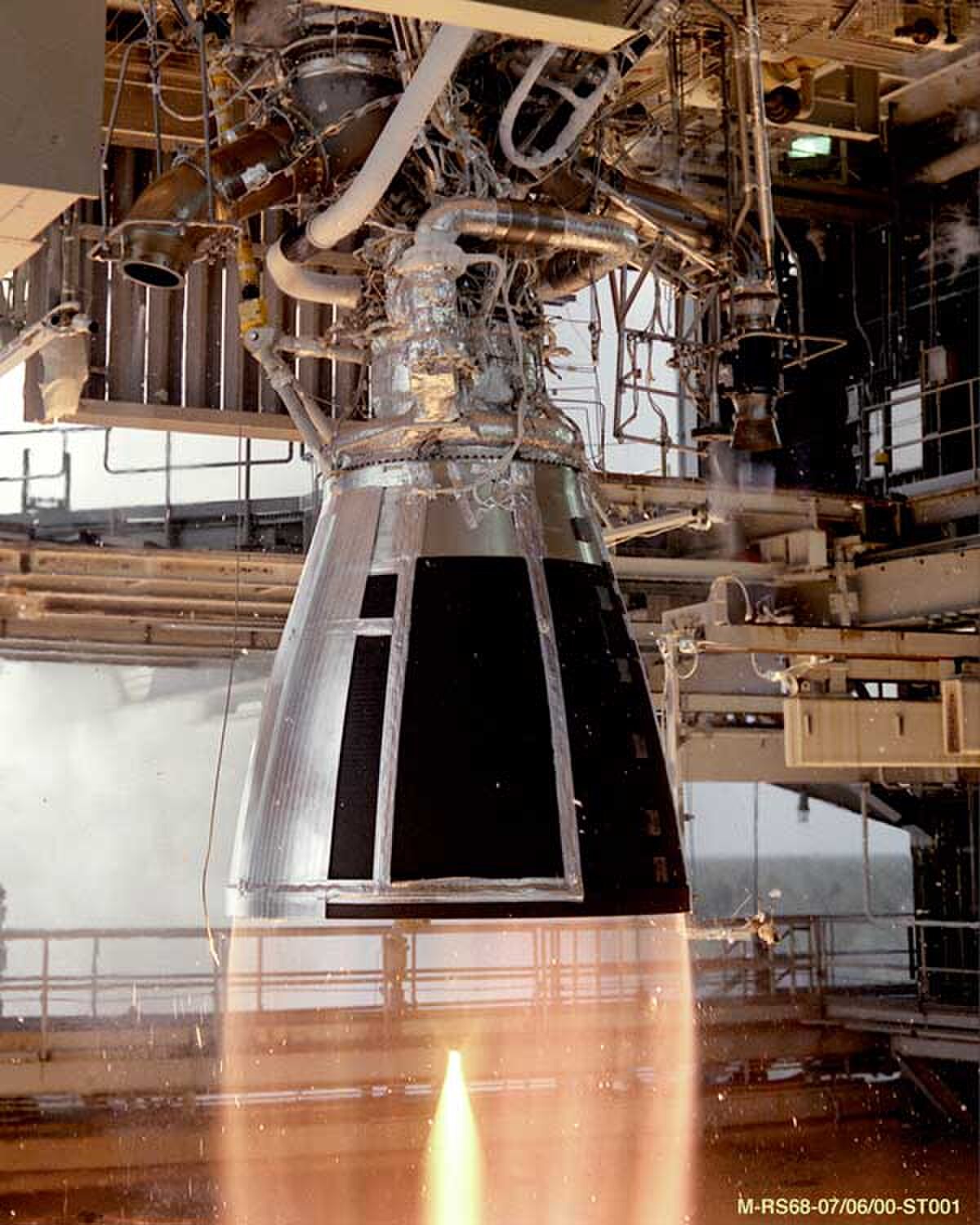
This mechanism is the only way to travel through the emptiness of space. A rocket engine must carry its own oxygen to burn fuel where there is no atmosphere to suck in.
It is a pure application of Newton's Laws of Motion, proving that for every action, there is a literal, powerful reaction.
How engines generate thrust
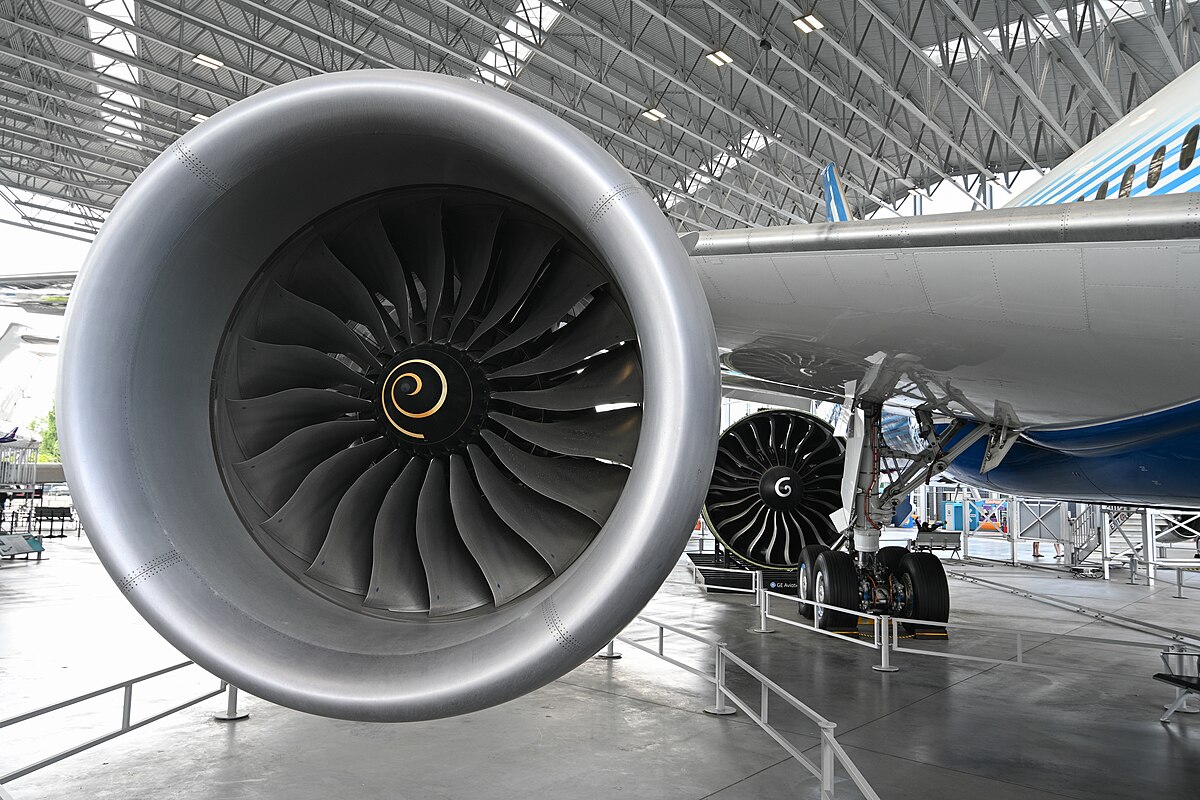
Jet propulsion operates through reaction engines that accelerate a fluid reaction mass out of a nozzle. The thrust produced equals the propellant flow rate multiplied by the effective exhaust velocity. Because aircraft jet engines pull in ambient air to burn with fuel rather than carrying their own oxidizer, they achieve a much higher specific impulse, or fuel efficiency per unit of propellant, than rockets.
A Boeing 787 turbofan engine, which compresses ambient air to burn fuel and exhaust a high-speed jet. Jorge Láscar, CC BY 2.0, via Wikimedia Commons
Gas turbine engines such as turbojets and turbofans rely on compressors to raise air pressure before combustion. In contrast, ramjets omit mechanical compressors and turbines entirely, relying instead on the high speed of the aircraft to ram air into the engine.
Marine and biological propulsion
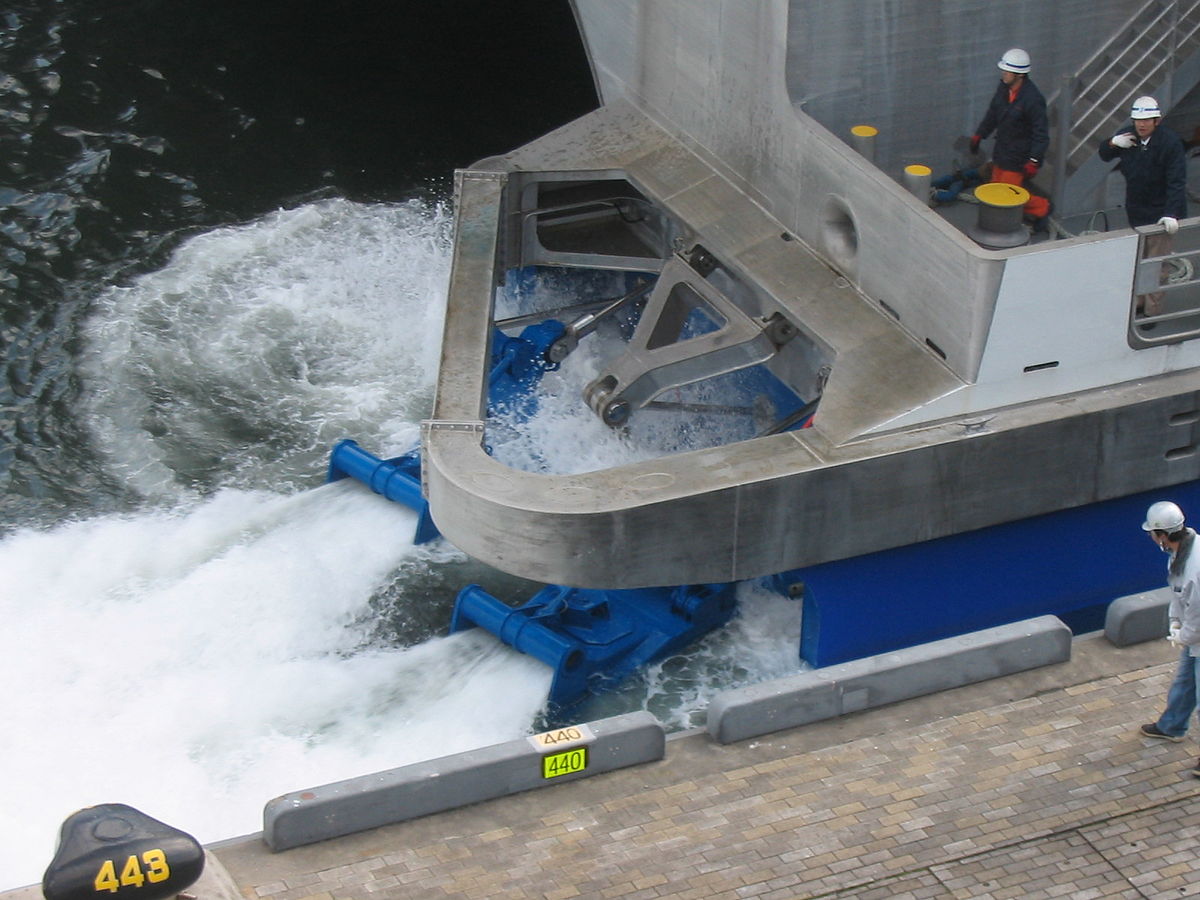
Jet propulsion is not limited to the sky or outer space. Marine vessels use pump-jets, which draw in water and pressurize it using a ducted propeller or centrifugal pump before expelling it out the back.
A marine pump-jet installation, showing the intake and nozzle system used to propel watercraft. Mytrajectory22, CC0, via Wikimedia Commons
In nature, several marine animals rely on pulsed jets of water. Squid draw water across their gills for breathing and blast it out through a narrow siphon to escape predators rapidly. Flying squid even use this underwater thrust mechanism to launch themselves into aerial flight.
Test yourself
What fundamental physical reaction drives jet propulsion in a vacuum?
The recoil of expelling mass backward. Jet propulsion relies entirely on action and reaction, pushing mass out the back rather than pushing against outside air.
In jet propulsion, moving forward requires pushing mass in the opposite direction.
True. Jet propulsion relies on the reaction force produced when mass is expelled rearward, demonstrating Newton's third law.
Play the lesson in edgi and the card is yours. It lands on your Map next to the ideas it connects to, and turns from matte to foil to gold as you learn more around it.
Why can rockets work in a vacuum while aircraft jet engines cannot?
Aircraft jet engines are gas turbines that need outside atmospheric air to burn fuel. Rocket engines carry their own oxidizer onboard, allowing them to burn propellant and eject exhaust gases without any surrounding atmosphere.
What is a plasma thruster?
A plasma thruster is a spacecraft reaction engine. Instead of burning chemical propellants, it uses electromagnetic forces to accelerate an ionized gas (plasma) out of the engine.
How do sea hares use jet propulsion?
Sea hares use a two-phase swimming cycle. They eject a jet of water during a propulsive phase to push themselves forward, followed by a rolling phase where they somersault to reset their body position.