Aroma of wine is the collection of airborne scent molecules detected by your nose and the olfactory receptors in the back of your throat. While your tongue perceives only five basic tastes, almost all the complex flavors you notice in a glass are actually smelled. Many of these scents start out locked away as odorless sugars in the grape and only vaporize after fermentation and aging.
By the edgi team We find the most surprising true thing about an idea and build a 60-second lesson around it.
Your tongue reports five things: sweet, sour, salty, bitter and savory. Blackcurrant, smoke, wet stone, and lychee are mostly smell. Smell reaches you from inside as well as outside. Chewing and swallowing push vapor up the back of your throat to the same sensors that smell a flower.
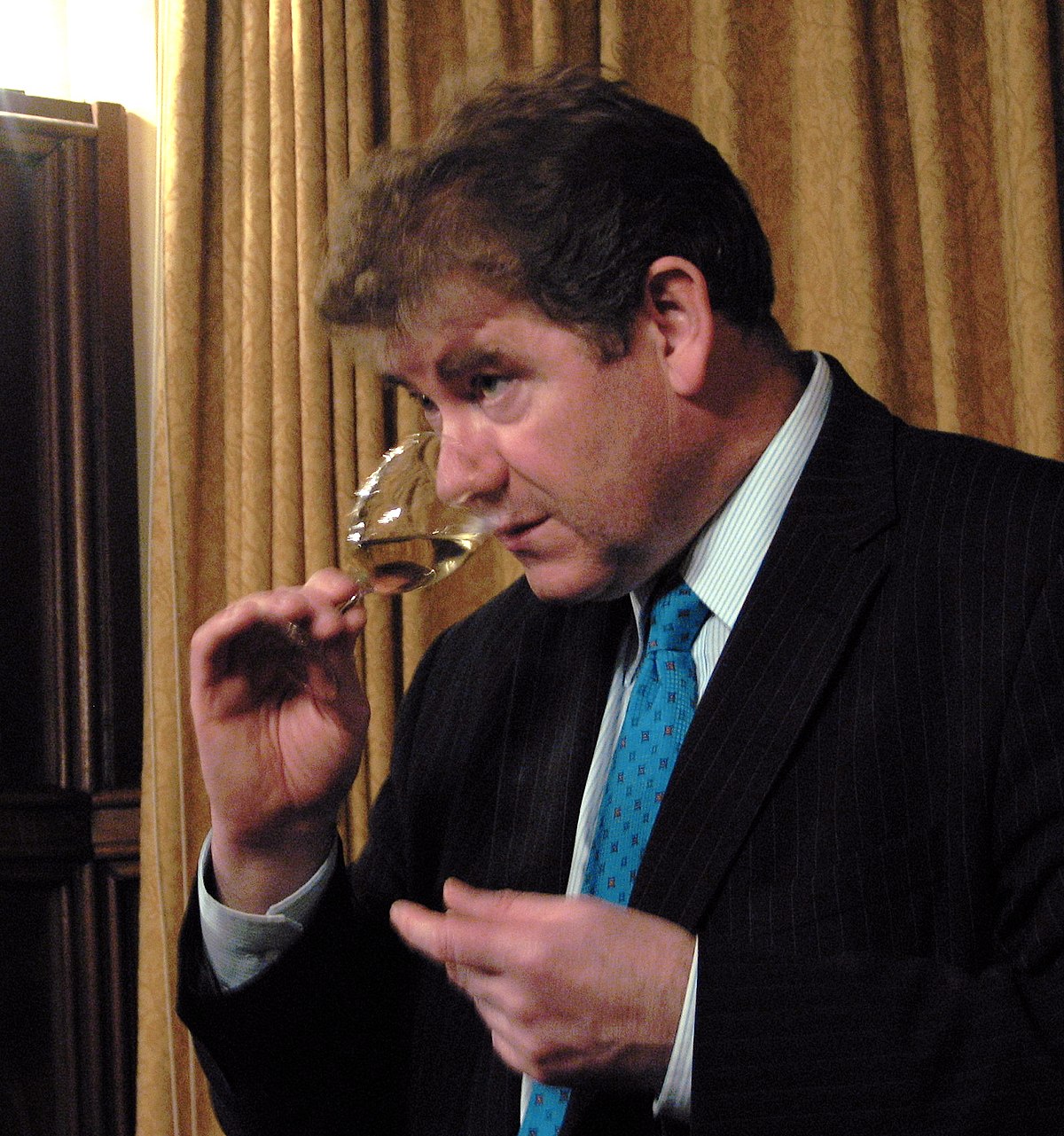
A man in a dark pinstripe suit and blue patterned tie holding a wine glass close to his nose to smell the wine. J. Nathan Matias, CC BY-SA 2.0, via Wikimedia Commons
The inside route is called retronasal olfaction, and it runs on everything you eat. Coffee, strawberry and cinnamon are nearly all smell arriving the back way. Test it tonight. Pinch your nose, sip, hold it, then let go and breathe out. The sweetness and the sourness were there the whole time. The fruit is what appears.
Where the smell comes from
Many wine aromas start locked in odorless forms inside the grape. Crush one and you get sugar, acid, and water. Fermentation cuts some of those forms open, and the cellar and the years add more aroma compounds.
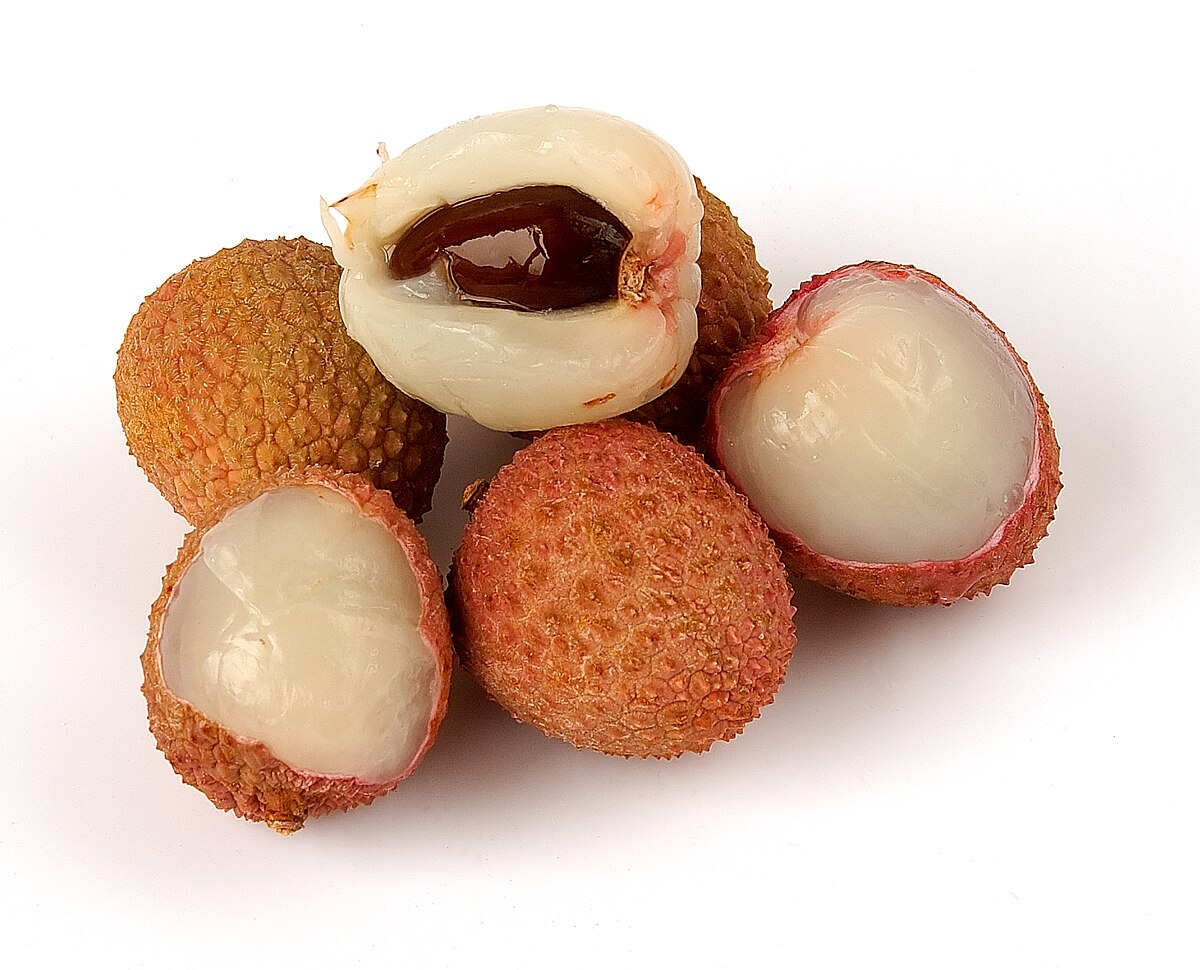
Tasters use three words for where aromas come from. Primary comes from the grape, secondary from the cellar, and tertiary from time in the bottle. One molecule can carry a whole impression. Rose oxide in Gewürztraminer helps make it smell lychee-like.
Close-up photograph of whole and peeled Litchi chinensis (lychee) fruits featuring rough reddish-brown rinds, translucent white flesh, and a dark brown seed. Luc Viatour, CC BY-SA 3.0, via Wikimedia Commons
The three-second habit
Start by swirling. It smears a film of wine up the glass wall, and the alcohol carries the aroma off that film into the air above it. A tasting glass narrows at the top for the same reason. The rim funnels the aroma into a small space, which is where your nose is about to go.
Diagram of an INAO official wine tasting glass with precise dimensions. Olivier Lemoine (https://Photo-Terroir.fr), CC BY-SA 4.0, via Wikimedia Commons
Then name one thing. Out loud or in your head. Cherry. Toast. Wet leaves. Anything at all. Naming a smell helps you recognize it next time. A sommelier has more labels and more practice noticing what the same nose can detect.
How odorless grapes turn into complex scents
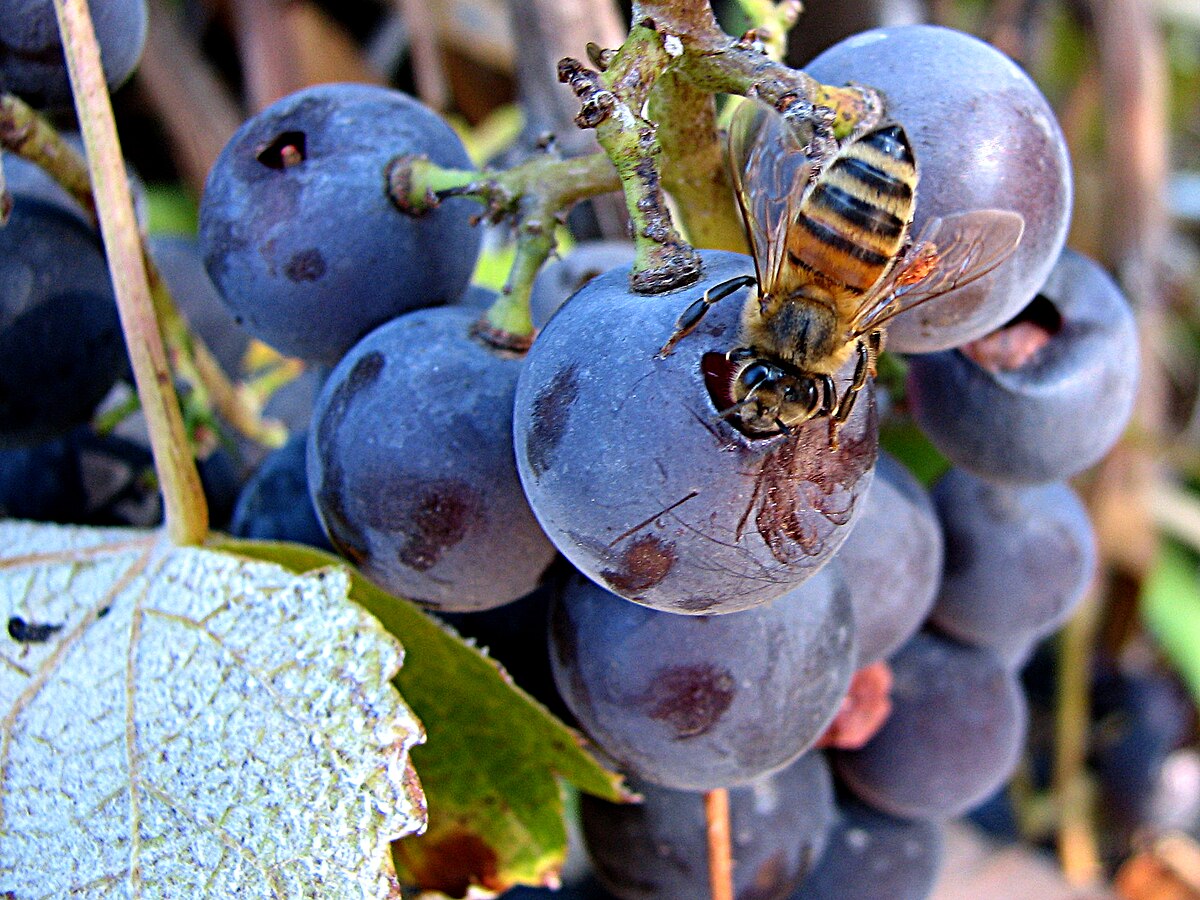
Most volatile aroma compounds in fresh grapes are bound to sugars, forming odorless molecules called glycosides. Grapes naturally developed these compounds to attract insects for pollination and animals for seed dispersal. When yeast ferments the juice, acids and enzymes break these bonds through hydrolysis, freeing the aroma compounds into volatile forms that can evaporate into the air.
Grapevines produce volatile aroma compounds in the skin and juice to attract pollinators and animals that disperse seeds. marya, CC BY 2.0, via Wikimedia Commons
Specific chemical families give wines their characteristic varietal scents. Methoxypyrazines create grassy and herbal notes in Sauvignon blanc and Cabernet Sauvignon. Monoterpenes provide floral qualities in Riesling and Muscat. Norisoprenoids generate spice notes in Chardonnay and Syrah, as well as raspberry aromas in red wines.
The difference between aroma and bouquet
In wine tasting, smells are divided into primary, secondary, and tertiary categories. Primary aromas come directly from the grape variety, such as black currant in Cabernet Sauvignon or lychee in Gewürztraminer. These dominate young bottles.
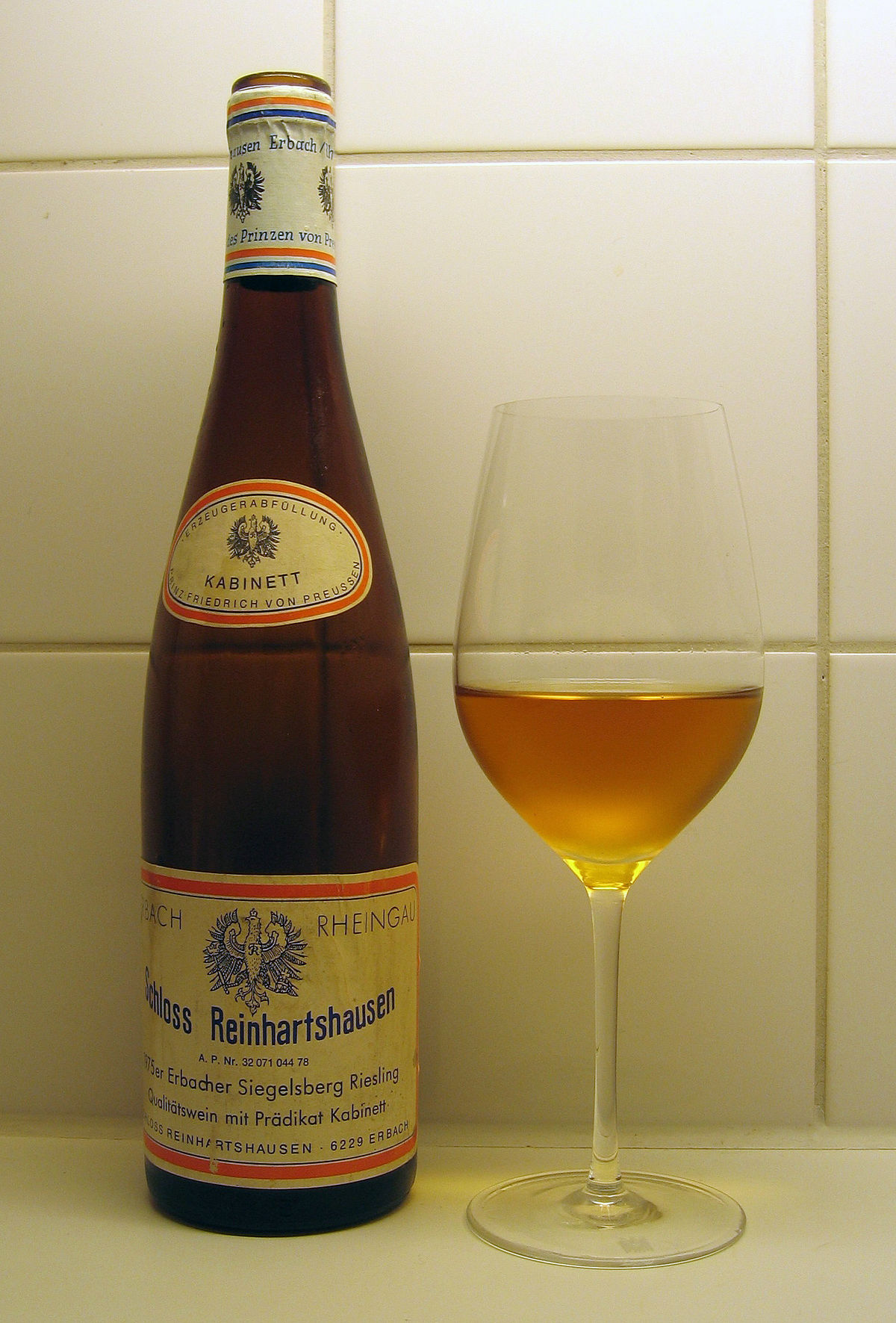
Bouquet refers to the secondary and tertiary smells created later by fermentation, oak exposure, and aging. Yeast strain and temperature shape fermentation esters, which can make identical grapes taste different under different winemakers. Over years in the bottle, slow reactions between acids, sugars, and alcohols yield mature tertiary bouquets like honey in Sauternes or truffles in Pinot noir.
Test yourself
You have a bad cold. Why may wine taste dull?
Smell carries much of the flavor. A cold can make wine seem dull because much of its fruit character reaches you through smell. Your tongue still detects basic tastes.
Why can wine smell different after you swirl it?
Swirling sends more aroma into the air. Swirling smears wine up the glass wall. Alcohol carries aroma from that film into the air above it.
Play the lesson in edgi and the card is yours. It lands on your Map next to the ideas it connects to, and turns from matte to foil to gold as you learn more around it.
What is the difference between an aroma and an odour in wine?
Aroma refers to a pleasant smell characteristic of the grape or the aging process. Odour describes an unpleasant smell that usually signals a wine fault, such as excess sulfur compounds that smell like garlic or onion.
Why does swirling a wine glass change how it smells?
Swirling coats the inner wall of the glass in a thin film of liquid. This increases evaporation, allowing alcohol to carry volatile aroma compounds directly toward the narrowed rim of the glass where the nose can detect them.