Sweetness of wineWhy sugar numbers deceive your tongue
Sweetness of wine is the level of unfermented sugar, known as residual sugar, left in the liquid after yeast finishes converting grape juice into alcohol. It is measured in grams per liter and ranges from nearly zero in dry table wines to hundreds of grams in dense dessert styles. Perceived sweetness does not depend on sugar alone, because high acidity and bitter tannins mask sweetness, while elevated alcohol enhances it.
By the edgi team We find the most surprising true thing about an idea and build a 60-second lesson around it.
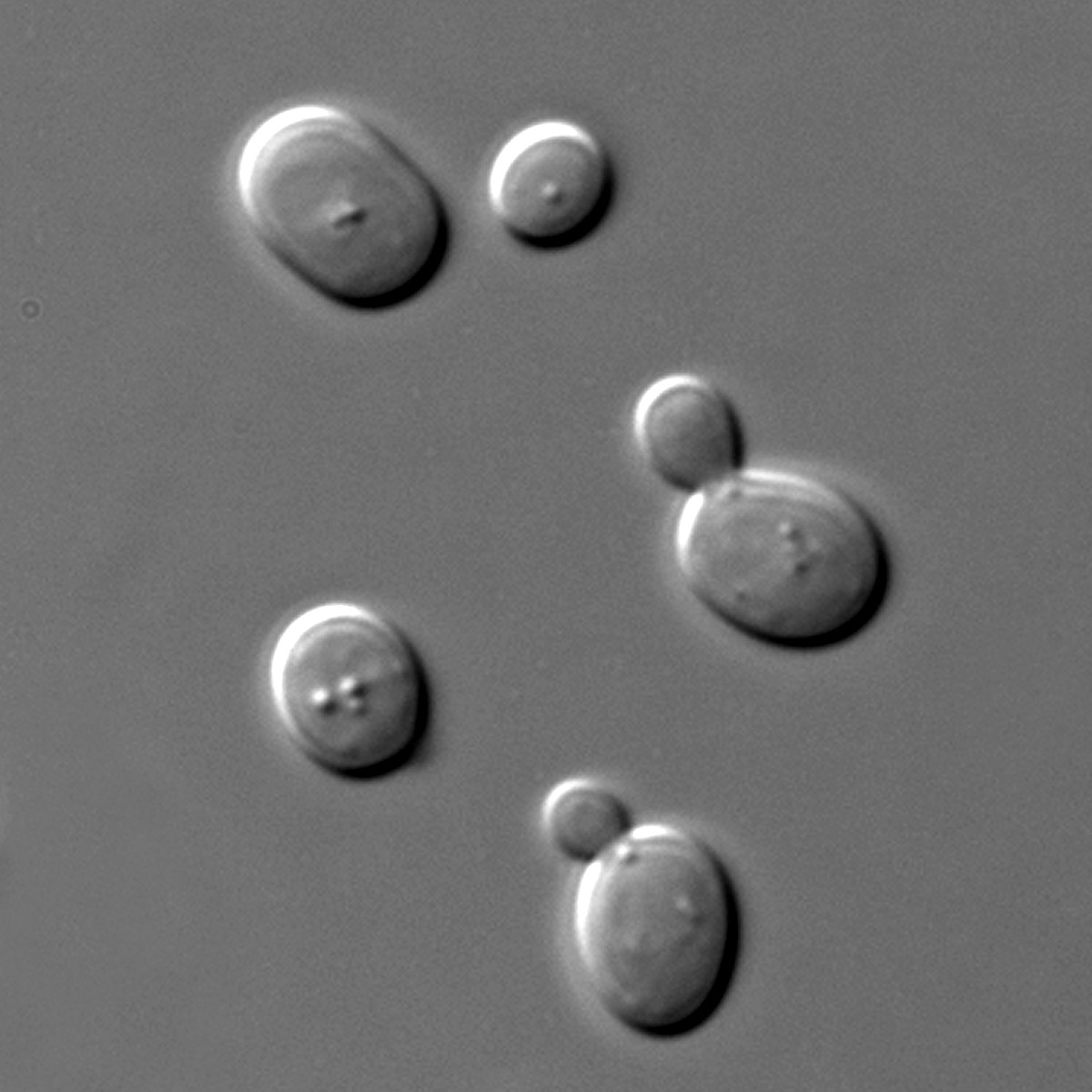
Yeast eats the sugar in grape juice and gives back alcohol and carbon dioxide. That is the whole trick of wine, and everything else is detail on top of it. Let the yeast finish and no sugar is left. Chill the tank or filter the yeast out early and whatever it had not reached yet stays in the bottle.
Microscopic image of Saccharomyces cerevisiae yeast cells under DIC microscopy, showing oval-shaped cells with some exhibiting budding, indicating reproduction. Masur, Public domain, via Wikimedia Commons
So sweetness is a stopping point, and the sugar left behind has a name: residual sugar, counted in grams per liter. Dry means that number is near zero. Which makes it one of the few wine words with a legal line under it. In the European Union a wine can be labeled dry at four grams per liter or less.
From nothing to syrup
Four grams a liter is meaningless without something to set it against. Coca-Cola runs about 106 grams a liter. A dry red is under four. Off-dry sits roughly ten to forty: much of the Prosecco on a supermarket shelf, plenty of cheap rosé, a lot of German Riesling.
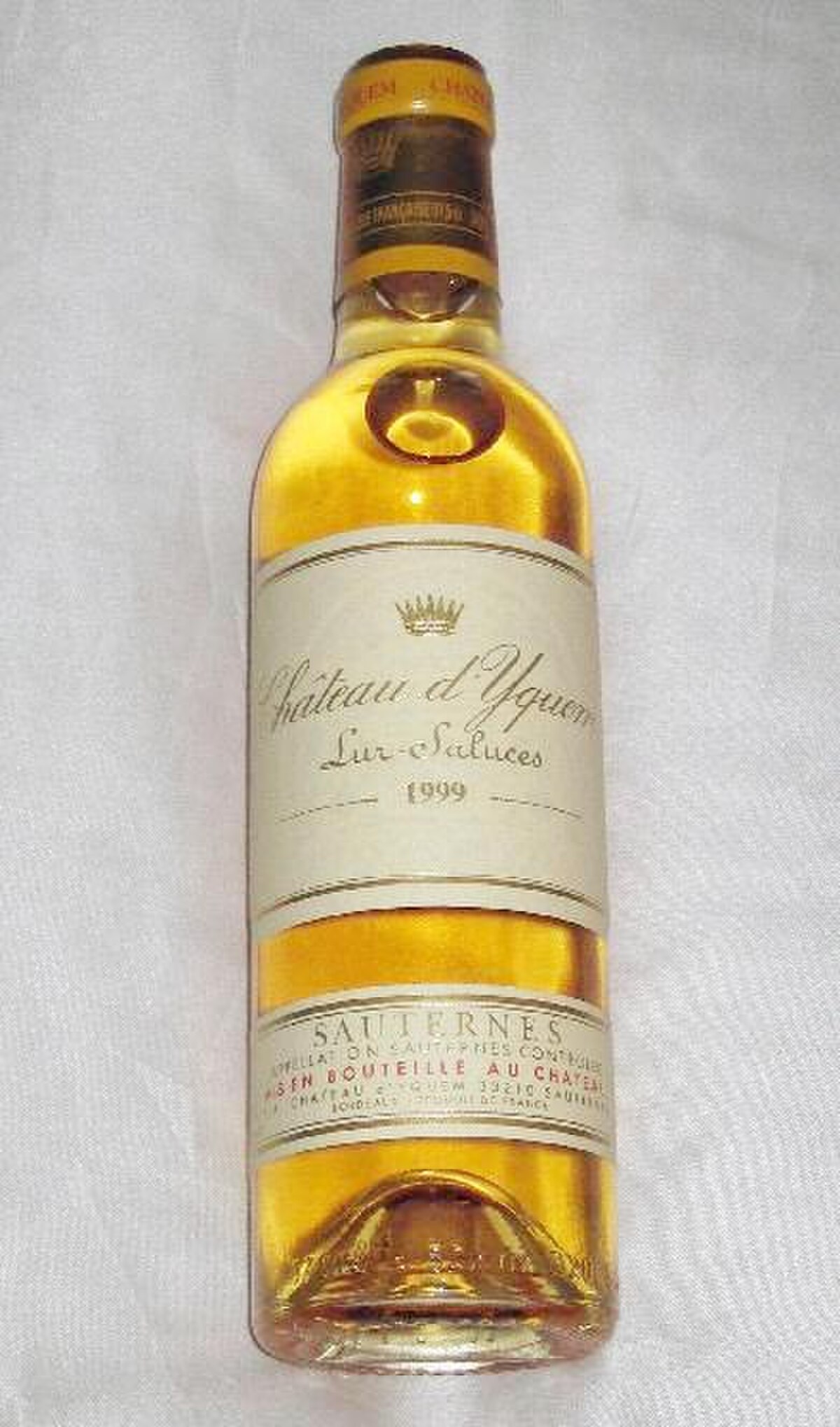
Sauternes, the gold dessert wine from Bordeaux, starts around 120 grams and climbs from there. It carries more sugar than the Coke does.
The number is fixed and your reading of it is not, because sourness and sweetness suppress each other on the way to your brain. A Riesling at thirty grams of sugar with hard acid behind it can taste crisp. The same thirty grams in a soft, low-acid wine tastes like syrup.
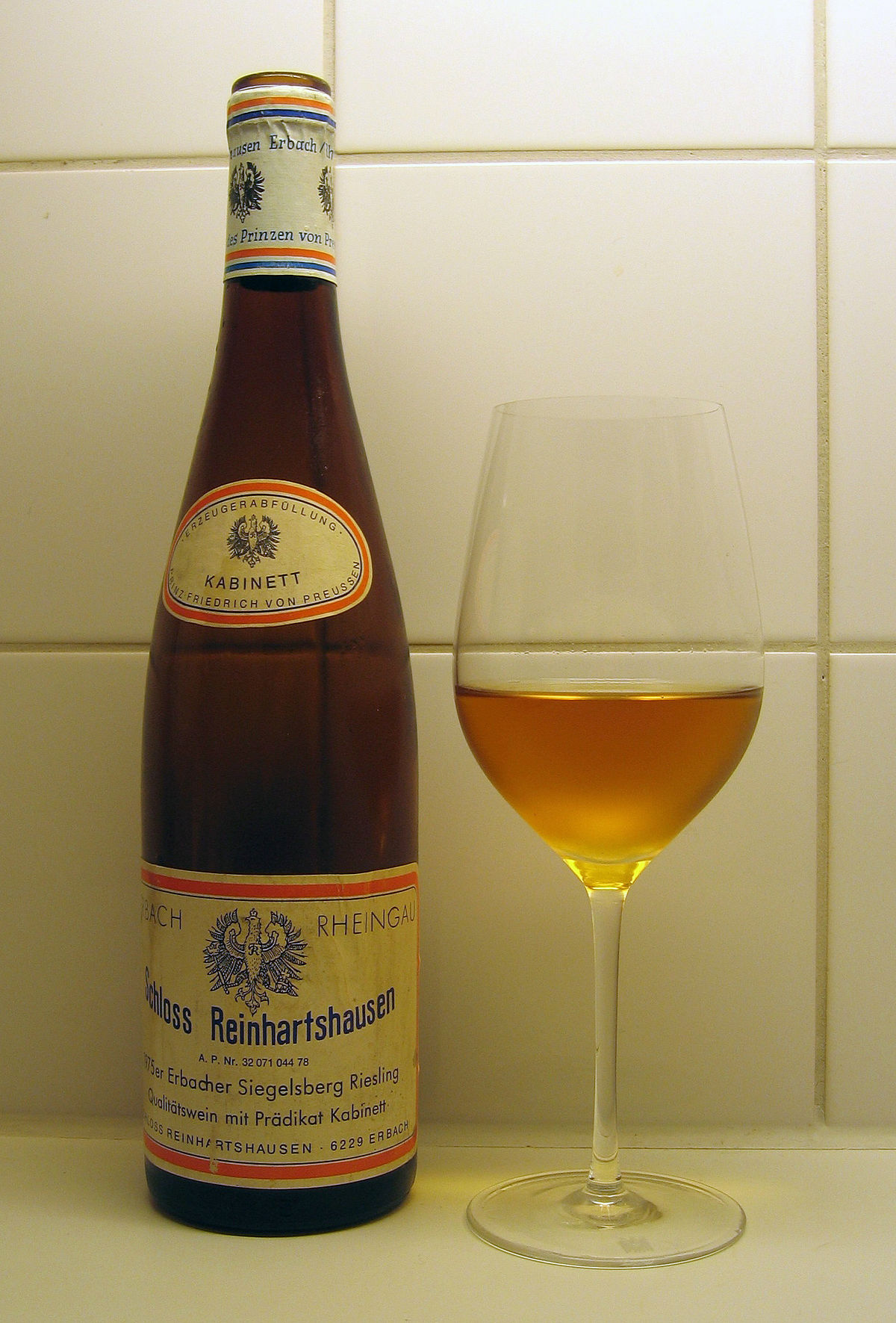
A bottle of 1975 Riesling Kabinett from Schloss Reinhartshausen in Rheingau, Germany, stands next to a glass of the same golden-hued wine. Tomas Eriksson, CC BY-SA 3.0, via Wikimedia Commons
The law concedes the point. Europe will let a wine up to nine grams be called dry, as long as its acidity is within two grams of the sugar. So the label and your tongue can disagree honestly. A wine that tastes sweeter than its number says is usually a wine short on acid.
Dry and drying
There is a second thing people mean by the word. Most of the people who order a dry red are asking for the rough grip a red leaves on the sides of the tongue. That grip is tannin, which comes out of the grape skins and is a separate variable. A wine can carry almost no sugar and almost no grip at once, and that is most of what a light red is.
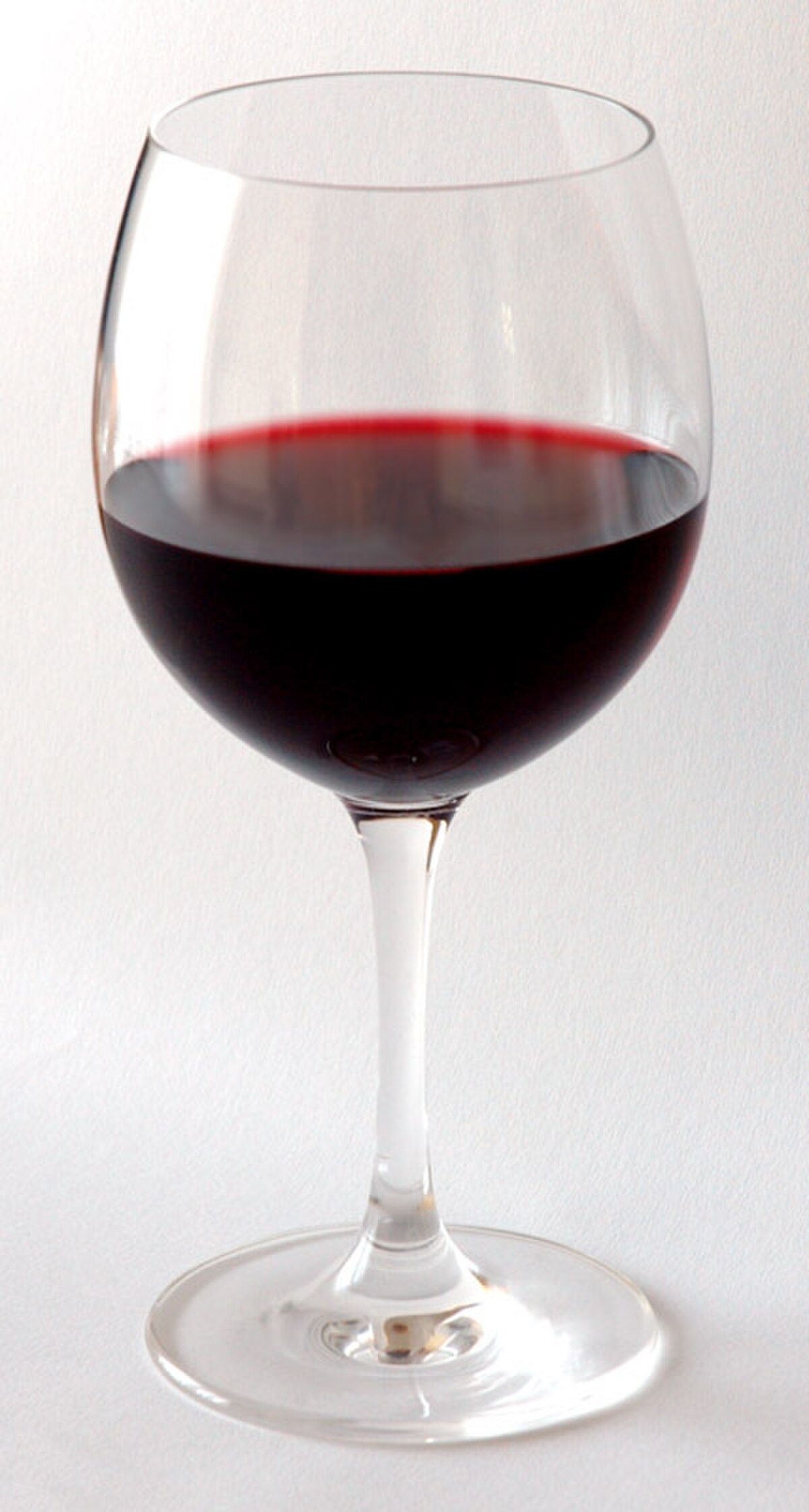
A clear wine glass is filled with red wine, showcasing the liquid's deep color and the glass's elegant stem and bowl. André Karwath aka Aka, CC BY-SA 3.0, via Wikimedia Commons
So take the two apart tonight. Sip and judge only the first second, at the tip of the tongue: sweet, or not sweet. Everything after that belongs to another variable.
What is residual sugar?
Even the driest wines rarely drop below one gram of sugar per liter because certain sugars, like pentose, cannot be fermented by yeast. When fermentation stops naturally or is halted intentionally by chilling or filtering, the remaining glucose and fructose constitute the wine's residual sugar.
According to the International Organization of Vine and Wine, wines with four grams per liter or less are classified as dry. Semi-sweet wines range up to 45 grams per liter, while anything above 45 grams is considered sweet. Extreme dessert wines reach far higher concentrations: Château d'Yquem contains between 100 and 150 grams per liter, while Tokaji Eszencia contains over 450 grams per liter, with exceptional vintages reaching 900 grams.
How acids and alcohol alter taste
As French oenologist Émile Peynaud detailed in The Taste of Wine, the perceived sweetness of a bottle is an interaction between sugar, alcohol, acids, and tannins. Sugars and alcohol enhance sweetness, whereas acids cause sourness and tannins contribute bitterness.
High acidity suppresses the taste of sugar so effectively that a sweet wine like Vouvray can taste dry. Conversely, a wine with low acidity or elevated alcohol can taste sweet even when its residual sugar is low. Grape varieties that preserve their natural acidity at high ripeness levels, such as Riesling and Chenin blanc, allow winemakers to produce sweet wines that do not taste cloying.
Historical and modern sweetening techniques
Winemakers have adjusted sweetness for millennia. Ancient Romans harvested grapes late, while ancient Greeks picked grapes early to preserve acidity and dried them in the sun to concentrate sugars. In Crete, winemakers twisted grape stalks on the vine to cut off sap flow, creating passum.
Fermentation was historically stopped by submerging amphorae in cold water until winter. In Germany, winemakers developed the Süssreserve method, blending unfermented, sterile grape must back into fermented wine. This adds a balanced mix of glucose and fructose while lowering the final alcohol level, unlike halting fermentation early, which leaves mostly fructose behind.
Test yourself
Homemade lemonade needs far more sugar than you would guess. Why?
The acid cancels a lot of the sweetness. Sourness and sweetness suppress each other. An amount of sugar that would be sickly on its own comes out balanced once there is enough acid competing with it.
Wine A holds 15 g of sugar with soft acid; Wine B holds 20 g of sugar with sharp acid. Which tastes sweeter?
15 g of sugar, soft acid. Sourness competes with sweetness directly. More sugar behind hard acid can read as drier than less sugar with nothing to cut it, which is how high-acid Rieslings fool people.
Play the lesson in edgi and the card is yours. It lands on your Map next to the ideas it connects to, and turns from matte to foil to gold as you learn more around it.
Süssreserve is unfermented grape juice held back and added to fermented wine to raise sweetness and reduce alcohol. Under German law, it can make up no more than fifteen percent of the total volume of the finished wine.
Why was sugar of lead used in wine?
Sugar of lead is a toxic compound that historical producers added to artificially enhance perceived sweetness. The practice began in Roman times and persisted into the nineteenth century, primarily in cheap wines.
What were mulsum and conditum?
Mulsum was a Roman apéritif made by mixing freshly fermented wine with honey and spices. Conditum used similar sweetening ingredients but was aged and stored before drinking.