Oak in wine: how wood adds vanilla and softens tannin
Oak is a type of wood used during winemaking to alter the color, texture, tannin profile, and flavor of wine. Beyond adding chemical flavor compounds like vanillin, oak barrels allow tiny amounts of oxygen to seep inside, which softens harsh astringency. Barrels also allow liquid to slowly evaporate, concentrating the wine flavors over time.
By the edgi team We find the most surprising true thing about an idea and build a 60-second lesson around it.
For most of ancient history wine traveled in clay. Amphorae, tall ceramic jars, were the standard shipping container all around the Mediterranean. Clay is heavy, it shatters, and a full jar takes two people to move. The Gauls were using wooden barrels instead, and Rome took the idea and spread it across Europe.
A barrel is lighter, it survives being dropped, and one person can tip it on its edge and roll it. Wood won on logistics. Nobody chose it for taste. But the wine then sat inside that wood for months at a time, and it did not come out the way it went in.
What the wood gives up
Oak is porous, and full of compounds that dissolve in alcohol. The wine is slowly extracting the barrel the entire time it sits there. The clearest one is vanillin, the same molecule that makes a vanilla pod taste of vanilla. It dissolves straight out of the wood into the wine.
Oak carries another compound that smells of coconut, and American oak has far more of it than French oak. So a coconut note usually means American barrels. Toast, caramel and smoke arrive a different way. Oak planks are straight, so they get bent over a fire to curve them into a barrel, and that fire caramelizes the sugars in the wood. Those burnt sugars are the toast and the smoke.
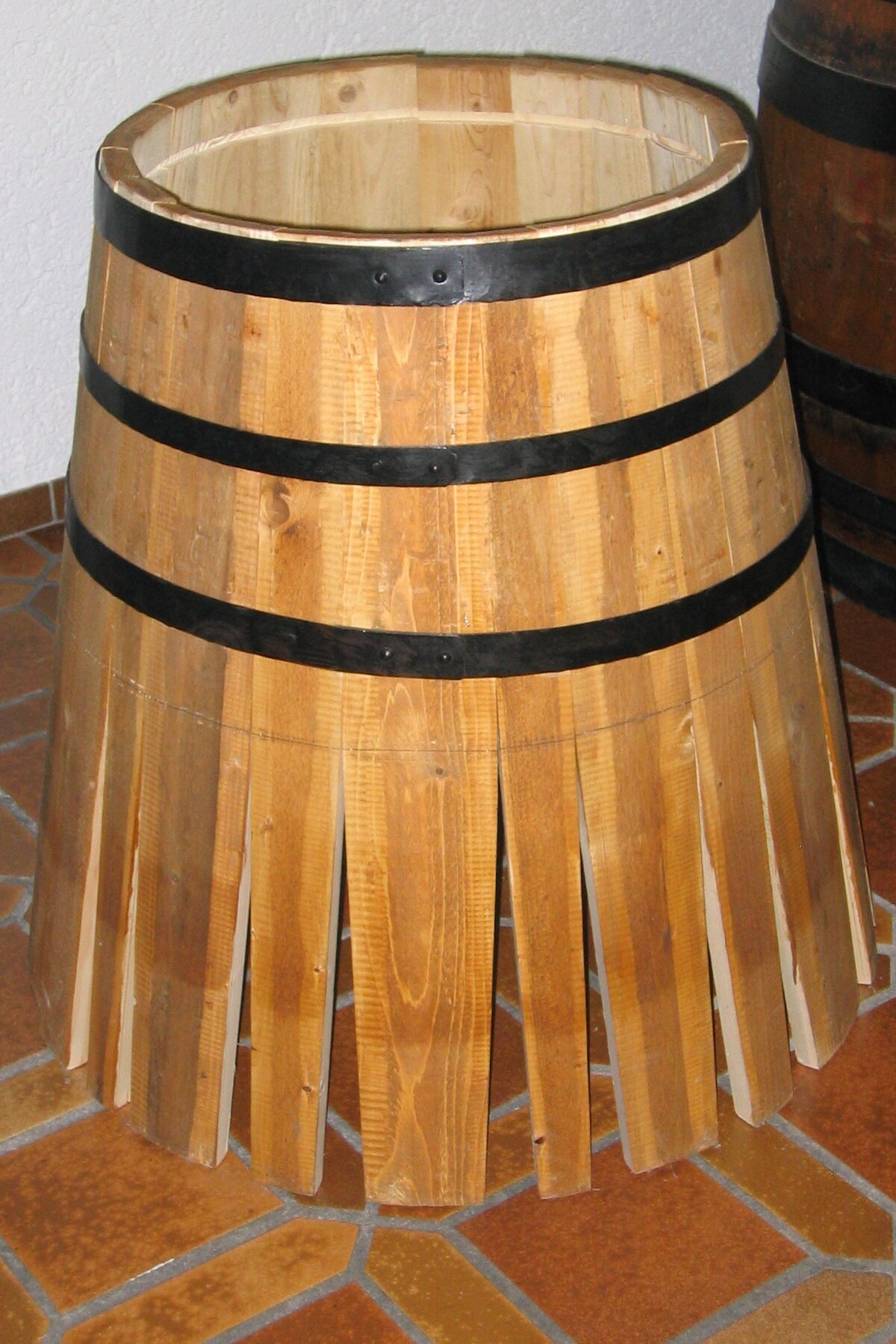
A wooden barrel midway through construction, with its staves held together by black metal hoops, but the bottom and top are not yet fully assembled. Flominator (talk), CC BY-SA 3.0, via Wikimedia Commons
What the wood lets in
Air seeps through the wood too, a small amount the whole time the wine is inside. That oxygen links tannin molecules, the ones that make a red feel dry and grippy, into bigger ones. Bigger tannins are too clumsy to grab the proteins in your saliva, so the grip fades.
That is what people mean when they say age softens a wine, and the longer it sits in wood the further it goes: more flavor out of the barrel, more air in, less grip.
The cheap version
Doing it properly is expensive. A new French oak barrel is about a thousand dollars and holds 300 bottles, and after three or four fills it has given up most of its flavor. So a ten dollar wine that tastes strongly of vanilla has almost certainly never been in a barrel. The cheap route is oak chips steeped in a steel tank like a teabag, which gives the flavor but not the air, so the tannin never softens.
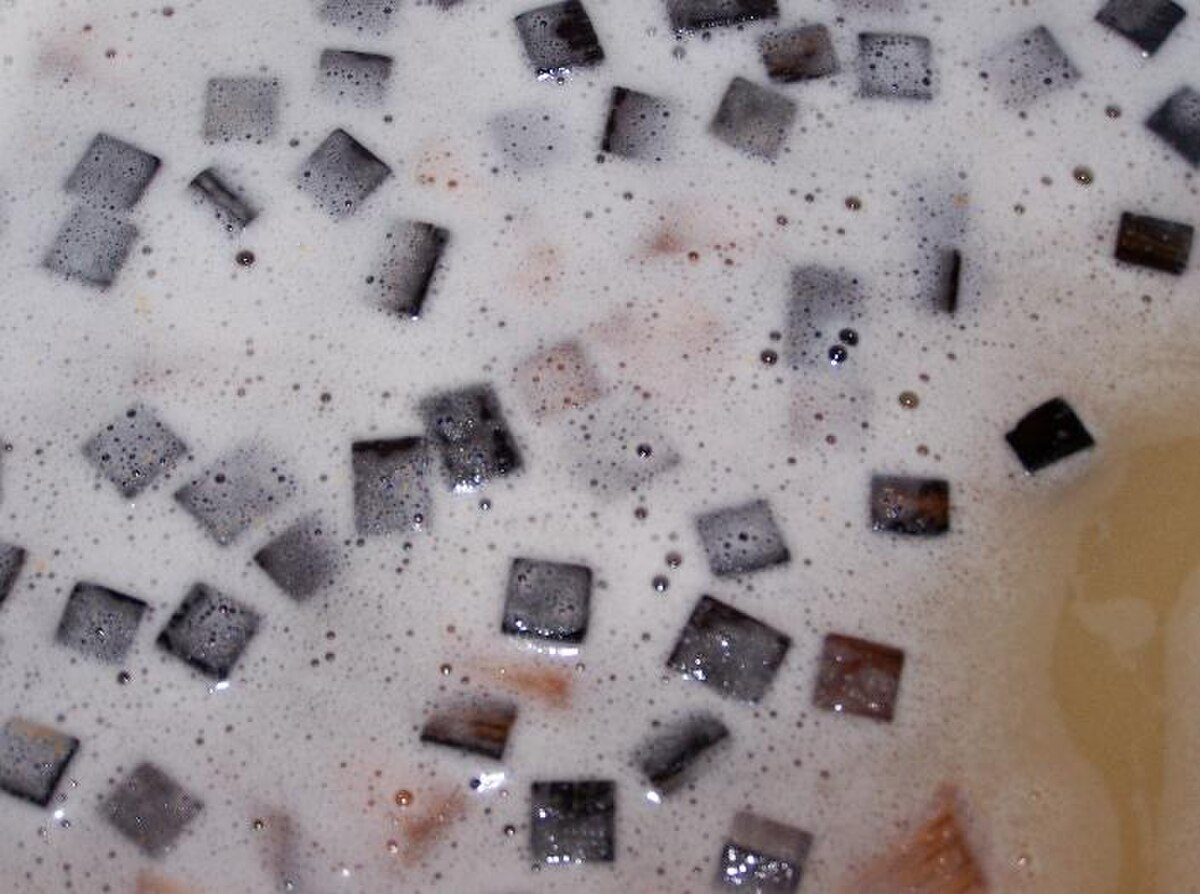
Close-up of oak chips floating in a foamy liquid, likely Chardonnay undergoing malolactic fermentation. Agne27, CC BY-SA 3.0, via Wikimedia Commons
The next time a wine tastes of vanilla, coconut or smoke, you know where that came from: the wood, and somebody chose to put it there.
How oak changes wine chemistry
A typical 59-gallon oak barrel loses between 5.5 and 6.5 gallons of mostly alcohol and water to evaporation each year. This slow loss concentrates the aroma and flavor compounds left behind in the liquid. At the same time, the porous wood allows a small amount of oxygen to filter into the barrel without spoiling the wine. This oxygen binds smaller, harsh tannin molecules together into larger ones, which reduces their drying grip in your mouth.
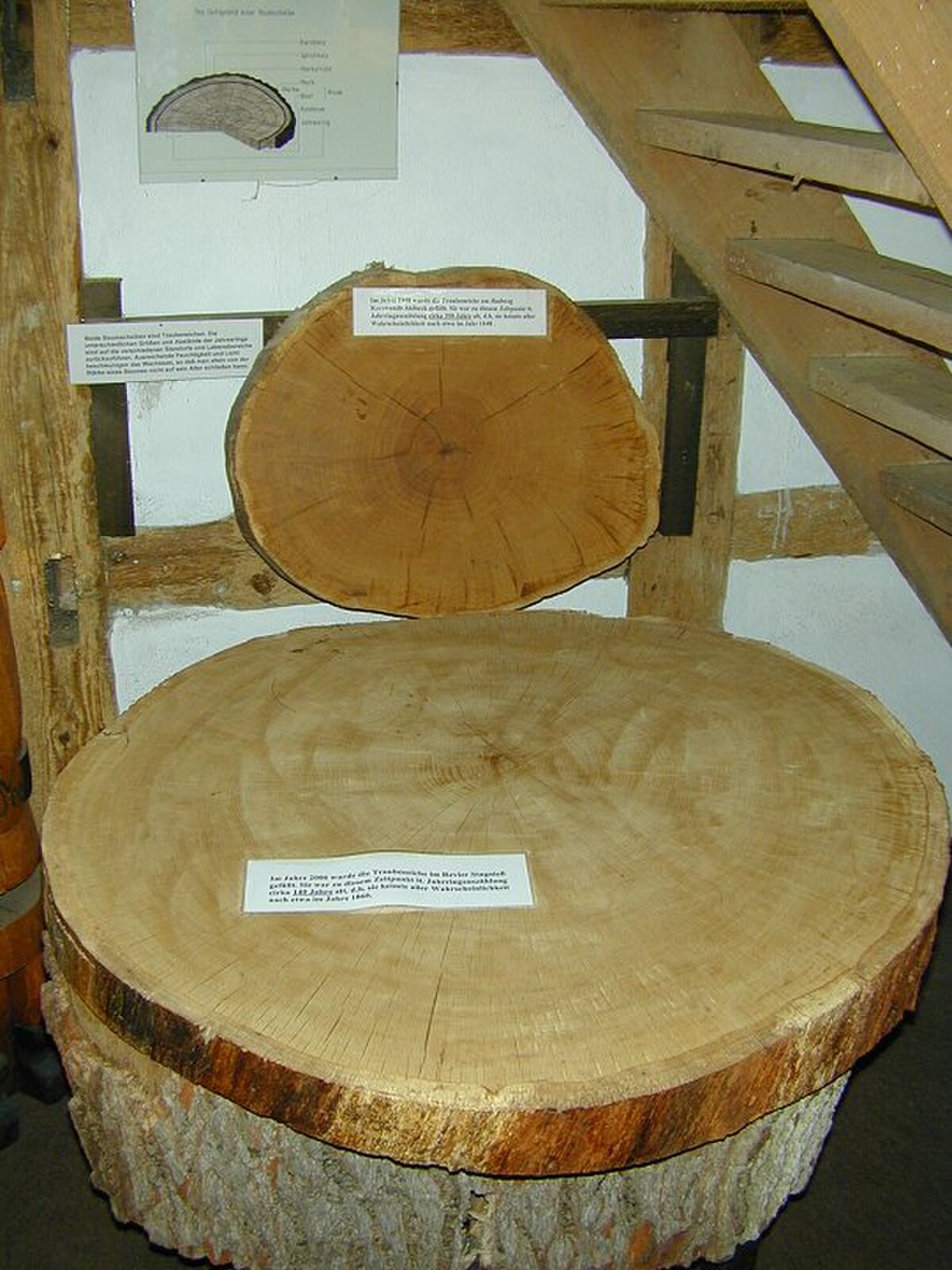
The tight growth rings of French oak wood dictate how slowly aromatics and oxygen seep into the aging liquid. User:Gerhard Elsner, CC BY-SA 3.0, via Wikimedia Commons
The wood itself dissolves chemical compounds directly into the wine. Ellagitannins derived from the wood lignin structure help guard the liquid against oxidation. Phenols in the oak contribute tea-like notes, sweetness, and flavors like vanilla, spice, and coconut. The fire used to bend the wooden staves during barrel making toasts the wood, which can later impart notes of smoke, caramel, mocha, and toffee.
Fermenting versus aging in barrels
Wine aged in oak after fermentation takes on far more wood character than wine fermented inside an oak barrel. During fermentation, active yeast cells bind to oak compounds; when those dead yeast cells are later filtered out as sediment, they carry those absorbed wood compounds away with them.
A comparison of two Cabernet Sauvignon wines showing how prolonged oak aging alters the color from dark purple to lighter, mature hues. Mick Stephenson mixpix, CC BY-SA 3.0, via Wikimedia Commons
Timing varies by grape varietal and style. A New World Pinot Noir may spend less than a single year in wood, whereas a dense Cabernet Sauvignon might spend two years, and tannic Nebbiolo can take four or more years. Most oak flavors transfer into the wine during the first few months of contact, while the remaining time serves primarily to aerate the wine and soften its tannins.
French oak compared to American and Hungarian oak
American white oak (Quercus alba) grows relatively fast with wider wood grain and lower wood tannins. It releases intense aromatics, including high levels of coconut flavor. French sessile oak (Quercus petraea) features a tighter grain that releases compounds like vanillin, methyl-octalactone, and volatile aldehydes more gradually.
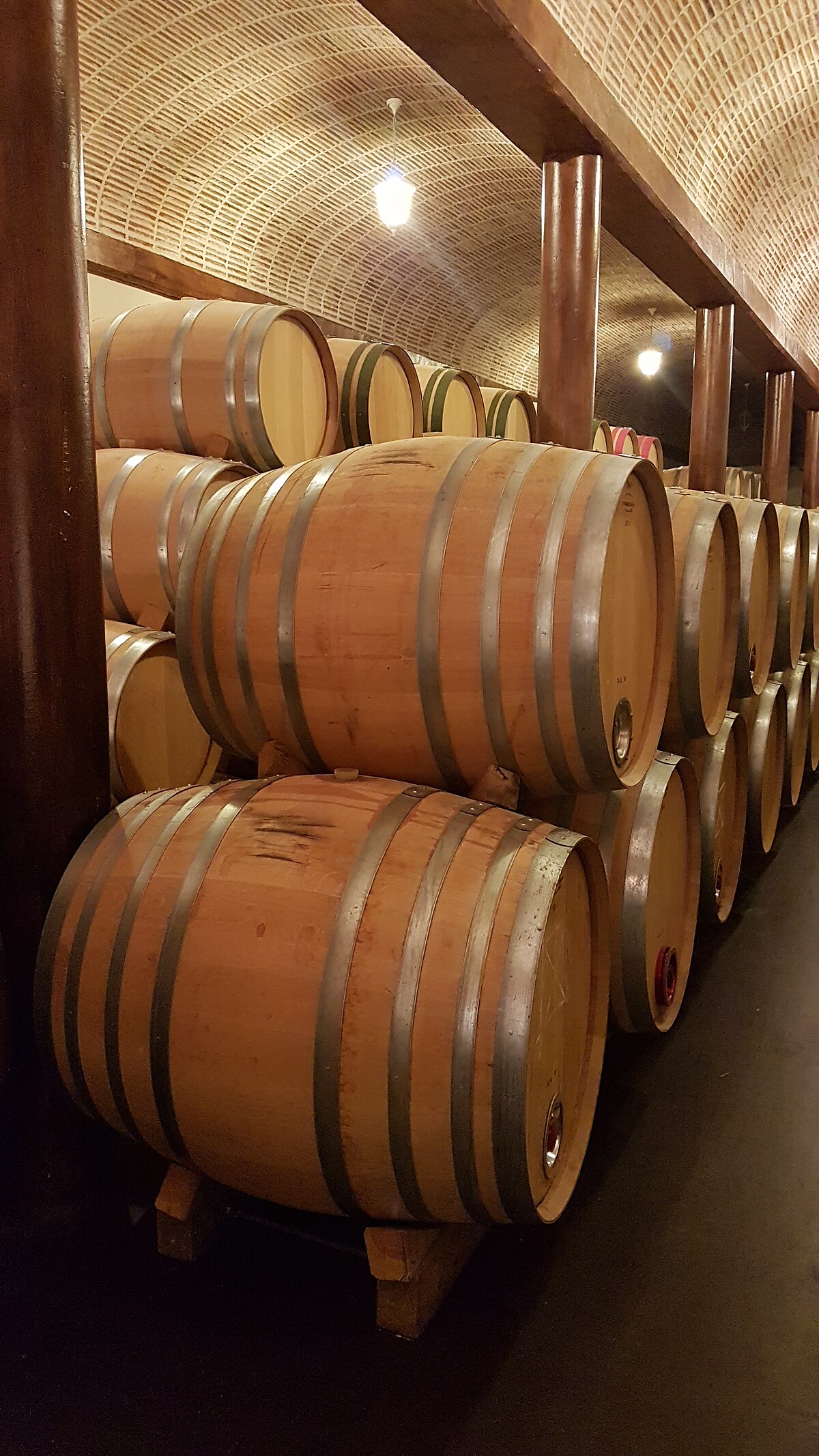
Large French oak barrels aging wine in a cellar to steadily extract subtle wood compounds. AntoineOne, CC BY-SA 4.0, via Wikimedia Commons
Hungarian oak, also from Quercus petraea, grows slowly in volcanic soil and has easily broken-down hemicellulose. It lends subtle caramel, toasted, and vanilla notes with a smoother texture at lower intensity than French or American oak. French winemakers actually preferred Hungarian barrels until supply cutoffs during the World Wars forced them to rely on domestic forests.
Test yourself
A cheap whiskey and a rare one both taste of vanilla. Why?
Both sat in charred oak. Vanillin comes out of the wood, not out of time. Any spirit that spends a while in a toasted or charred oak barrel picks it up, whatever it costs.
A winemaker wants oak flavor but wants to keep the tannin firm and grippy. Barrel or chips?
Chips in a steel tank. Chips hand over flavor and nothing else. A barrel also lets air in, and that oxygen links tannins into bigger molecules that grip less. Keeping the grip means taking the flavor without the air.
Play the lesson in edgi and the card is yours. It lands on your Map next to the ideas it connects to, and turns from matte to foil to gold as you learn more around it.
No, oak does not create buttery flavors. That buttery note comes from diacetyl, a compound created when naturally occurring lactic acid is converted during malolactic fermentation. Winemakers preserve diacetyl by adding sulfur dioxide to prevent the reaction from reversing.
How does using oak chips compare to using wooden barrels?
Oak chips or staves suspended in steel tanks impart flavors like vanilla and spice quickly and cheaply. However, steel tanks prevent the slow oxygen exposure that occurs through porous barrel staves, meaning the wine tannins do not soften the same way.
Why do some winemakers use Slavonian oak?
Slavonian oak from Quercus robur offers tight wood grain, medium tannins, and low aromatics. Italian winemakers traditionally use it in large barrels that can be reused for many years without overpowering the wine with heavy oak flavor.