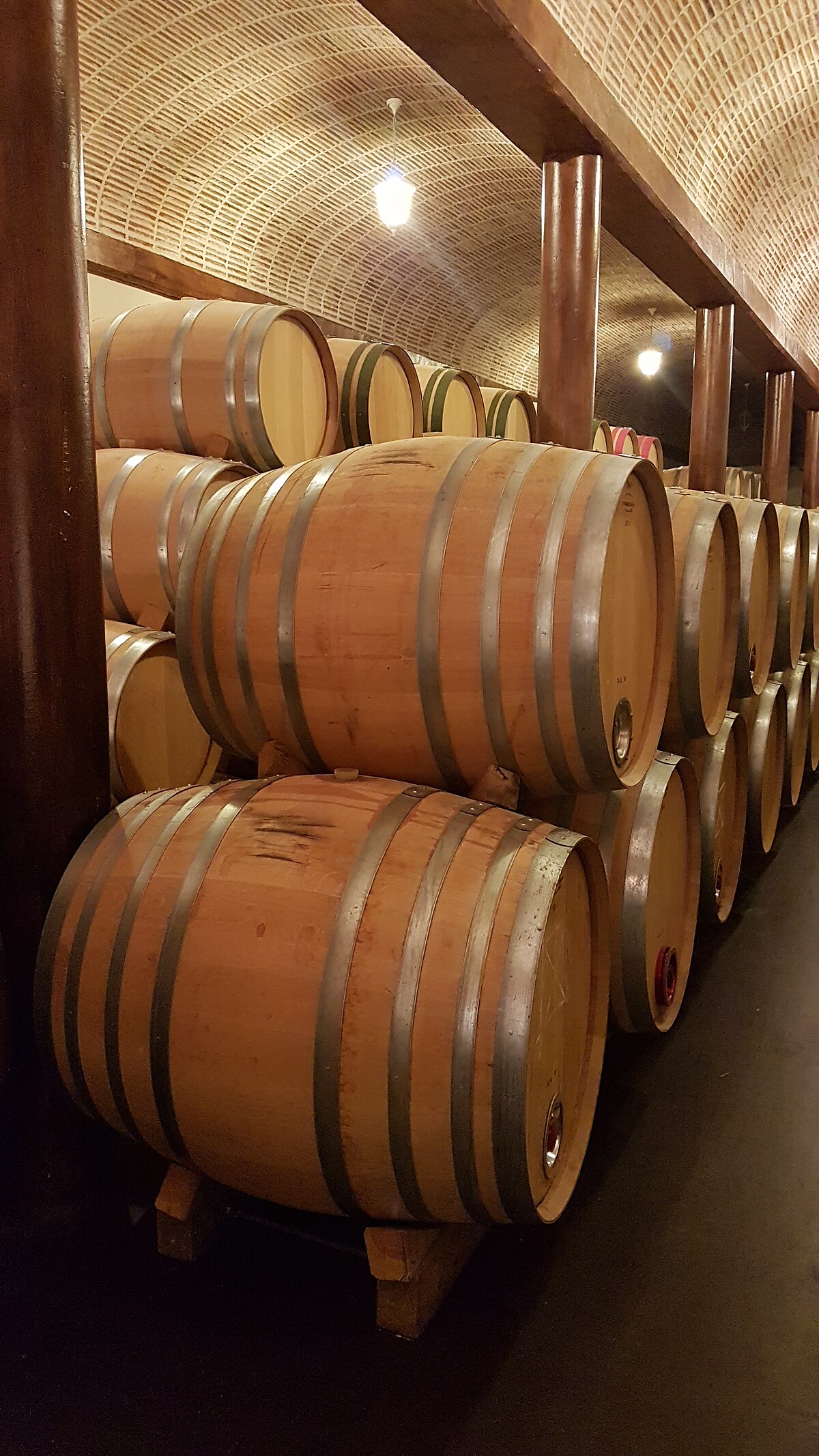
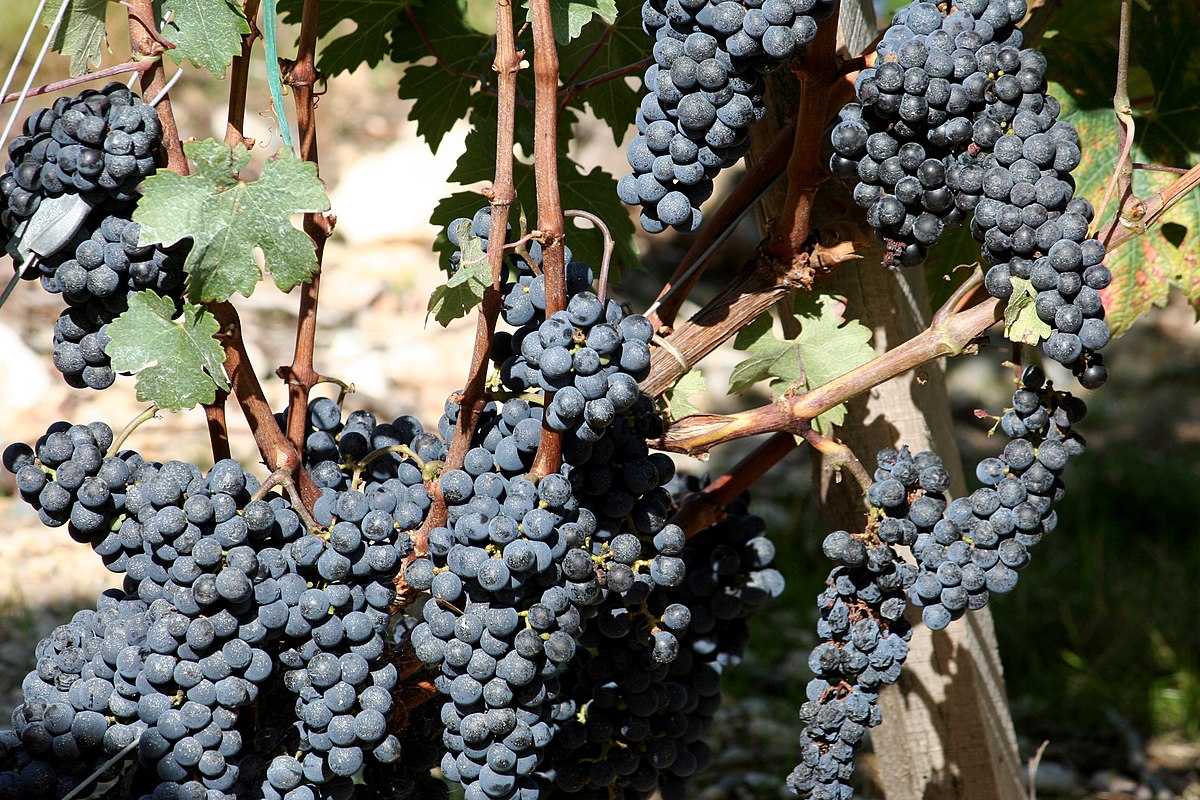
A wine fault is an unpleasant smell, taste, or appearance in a wine caused by chemical reactions or microbial spoilage. Many fault-causing compounds exist naturally in grapes or fermentation, but they become problems when they cross a sensory threshold and cover up desirable aromas. Major faults ultimately make a bottle unappealing or completely undrinkable.
By the edgi team We find the most surprising true thing about an idea and build a 60-second lesson around it.
Cork producers used to bleach corks with chlorine. Mold living in the bark reacted with it and made a compound called TCA, which leaks into the wine. That is what corked means. Your nose finds TCA at around two nanograms per liter. That is a teaspoon dissolved across a thousand Olympic swimming pools.
Chemical structure of 2,4,6-trichloroanisole, a chlorinated aromatic compound with a methoxy group (OCH3) and three chlorine atoms (Cl) attached to a benzene ring. Quasar, Public domain, via Wikimedia Commons
At full strength it smells like a damp cellar, a wet dog, or the cardboard box in the garage that got rained on. In the mid 1990s, estimates ran as high as three to five bottles in every hundred. The chlorine bleaching stopped, and the rate has come down a long way since.
It subtracts
A mildly corked wine often smells like nothing much at all, which is why bad bottles get drunk instead of sent back. In 2013 a team at Osaka University found why. TCA adds no odor of its own. It suppresses the signaling machinery inside your olfactory cells.
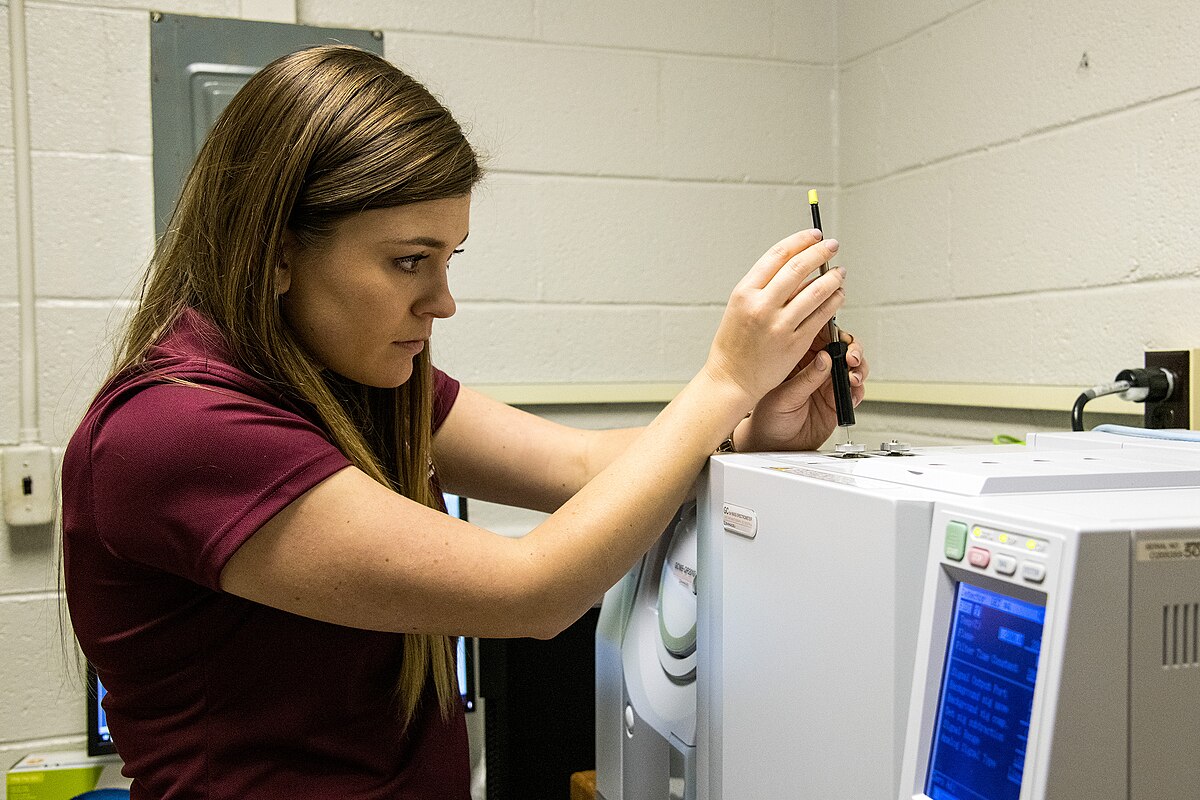
A scientist is operating a gas chromatography–mass spectrometry (GC-MS) instrument to analyze the chemical volatile aroma profile of wine. Ark. Agricultural Experiment Station, CC BY-SA 2.0, via Wikimedia Commons
So the fruit smells fainter than it should, and a wine that seems oddly dull for no reason is one of the commonest ways cork taint actually turns up. Which flips the test you should be running. You are not sniffing for a bad smell. You are asking whether this wine smells like less than it should.
The other three
Brettanomyces is a wild yeast that colonizes barrels and smells of barnyard, bandage or horse. A trace reads as character. A lot reads as a farm. Oxidation is air getting in. A white goes deep gold and tastes of bruised apple and nuts. Invited, it is the whole point of sherry, and tasters call it a tertiary aroma, the kind time makes.
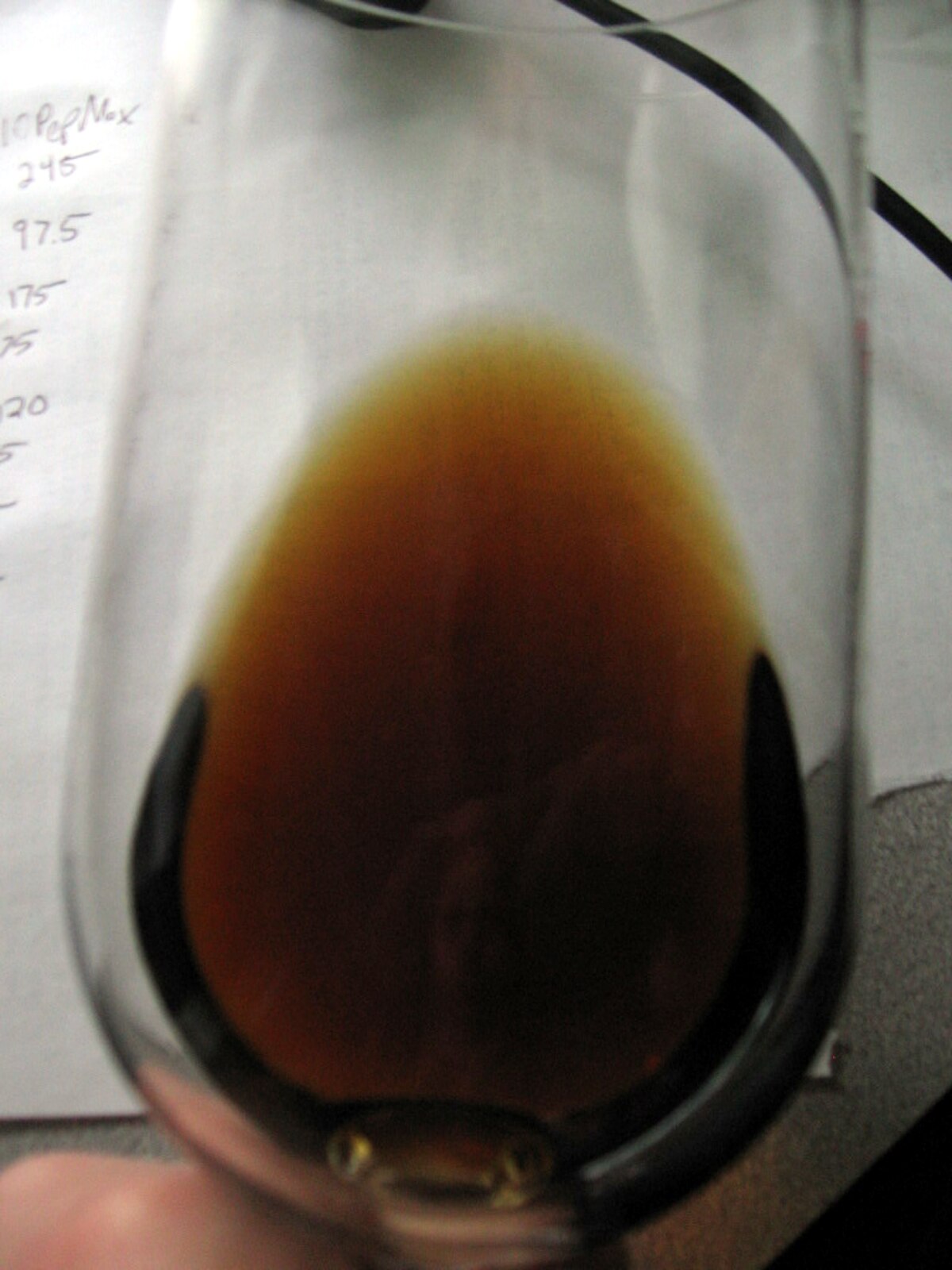
A glass containing aged Malmsey Madeira wine, exhibiting a deep brown color. inspector_81, CC BY-SA 2.0, via Wikimedia Commons
Volatile acidity is the vinegar one. Bacteria turn alcohol into acetic acid, with a nail polish note underneath. In balsamic that is the product. In a red it is a fault.
The restaurant test
So when a waiter pours an inch and waits, they are asking one question. Is this bottle sound? Smell it, then leave it ten minutes and smell it again. A wine that is only slow to open will show more with air. A corked bottle only gets worse.
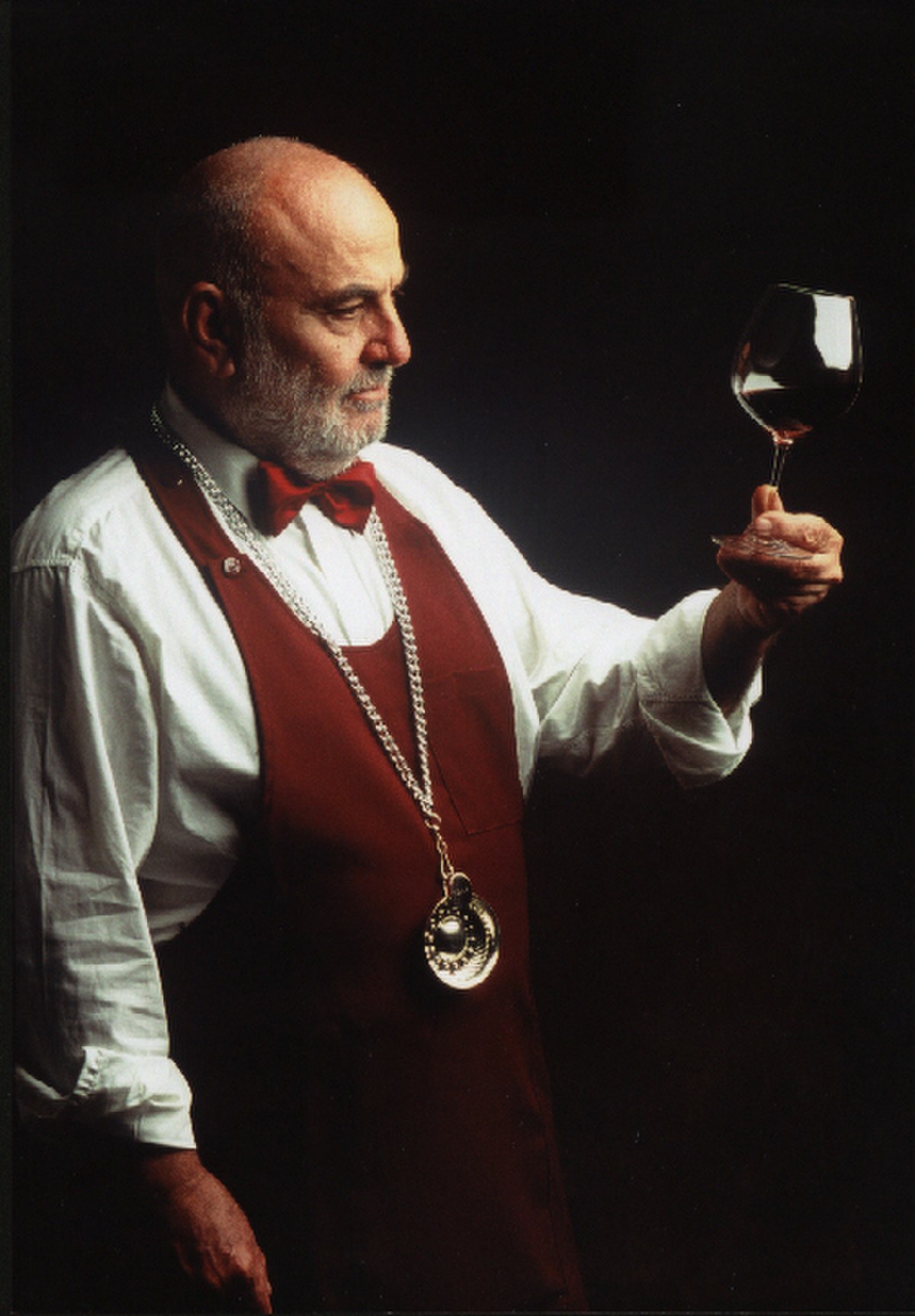
An Italian sommelier from F.I.S.A.R. OneArmedMan, Public domain, via Wikimedia Commons
And say it plainly: "I think this might be corked, would you try it?" Every sommelier alive has poured a bad bottle and would rather hear it from you.
Wine flaws versus wine faults
The difference between a flaw and a fault comes down to concentration. Minor attributes that depart from normal wine characteristics, such as small amounts of volatile acidity, buttery diacetyl, or barnyard notes from Brettanomyces yeast, are considered flaws. At low levels, these can add character, and many drinkers still enjoy the bottle. The renowned 1947 Cheval Blanc is widely recognized to contain high levels of volatile acidity.
A flaw becomes a fault when the compound overwhelms the other components in the glass, rendering the wine undrinkable. Major faults include ethyl acetate, cork taint, and severe acetaldehyde buildup. At these concentrations, off-aromas completely obscure the fruit and structure the winemaker intended to show.
The chemistry of oxidation
Oxidation is the most common wine fault because it requires only oxygen and a catalyst to start. When air enters a bottle, compounds like anthocyanins, catechins, and other phenols oxidize rapidly. This leads to a loss of color and aroma, a process known as flattening. To prevent this, winemakers add sulfur dioxide or erythorbic acid to bind with oxidation products and protect the liquid.
Oxidation converts ethanol into acetaldehyde, introducing bruised apple and metallic off-aromas when exposed to air. Richtom80 at English Wikipedia, CC BY-SA 3.0, via Wikimedia Commons
Ethanol can also oxidize directly into acetaldehyde, catalyzed by the enzyme ethanol dehydrogenase or driven by surface-film yeasts and acetic acid bacteria. Acetaldehyde carries a sensory threshold of 100 to 125 milligrams per liter. Beyond that limit, it produces sour, metallic, and bruised green-apple notes. While intentional in Sherry and French Vin jaune, it spoils standard table wines.
Detecting faults in the glass
The human nose catches the majority of wine faults, but sight and taste provide direct evidence as well. Premature oxidation turns white wines dark yellow or brown. Unintended carbonation or tiny bubbles in a still wine indicate that trapped yeasts or bacteria started a second fermentation inside the sealed bottle.
Taste and mouthfeel reveal severe chemical shifts. High levels of acetic acid from spoilage bacteria create a sharp, burning vinegar sensation with a sensory threshold starting around 700 milligrams per liter. Acetic acid also reacts with ethanol to produce ethyl acetate, giving off a distinct solvent smell like nail polish remover.
Test yourself
Why did screw caps take over in Australia and New Zealand?
A mold compound was ruining corks. It was a quality decision, not a cost one. Losing a few bottles in every hundred to cork taint was unacceptable to producers whose reputation traveled in the bottle.
A wine smells of almost nothing and tastes flat. Corked, or just cheap?
Could easily be corked. Mild cork taint mostly subtracts. It suppresses your sense of smell rather than adding a strong one, so a bottle that seems dull for no reason is a prime suspect.
A wine suffering from cork taint typically smells fresh and fruity.
False. Wines affected by cork taint smell overwhelmingly like damp cardboard or moldy basement due to the chemical compound TCA.
Play the lesson in edgi and the card is yours. It lands on your Map next to the ideas it connects to, and turns from matte to foil to gold as you learn more around it.
Faults stem from poor winery hygiene, dirty oak barrels, poor-quality corks, and incorrect exposure to oxygen or sulfur. Mistakes during filtering, stabilization, and extended grape maceration also spoil the liquid.
Can poor storage after purchase cause a wine fault?
Yes. Storing bottles in places with excessive heat or wide temperature fluctuations damages the wine. Even drinking from dirty glassware can introduce unwanted residues and off-odors to an otherwise sound bottle.
What visual signs indicate a faulty wine?
Unusual browning reveals oxidation, while gas bubbles in a non-sparkling wine indicate accidental refermentation in the bottle. Color breaks can also point to excessive levels of copper, iron, or unremoved proteins.