Cabernet SauvignonThe accidental cross of red and white
Cabernet Sauvignon is a red wine grape variety known for making full-bodied wines with high tannins, which are natural plant compounds that create a dry, gripping sensation in the mouth. It is the most widely planted wine grape in the world, covering roughly 340,000 hectares across major wine-producing regions. Surprisingly, this famous red grape is the natural offspring of a red grape, Cabernet franc, and a white grape, Sauvignon blanc.
By the edgi team We find the most surprising true thing about an idea and build a 60-second lesson around it.
Cabernet Sauvignon covers around 340,000 hectares of the planet, more than any other wine grape. Bordeaux, Napa, Chile, Coonawarra, and now China. And it is recognizable in all of them. Blackcurrant, a green herbal edge underneath, and a firm drying grip holding the whole thing up.
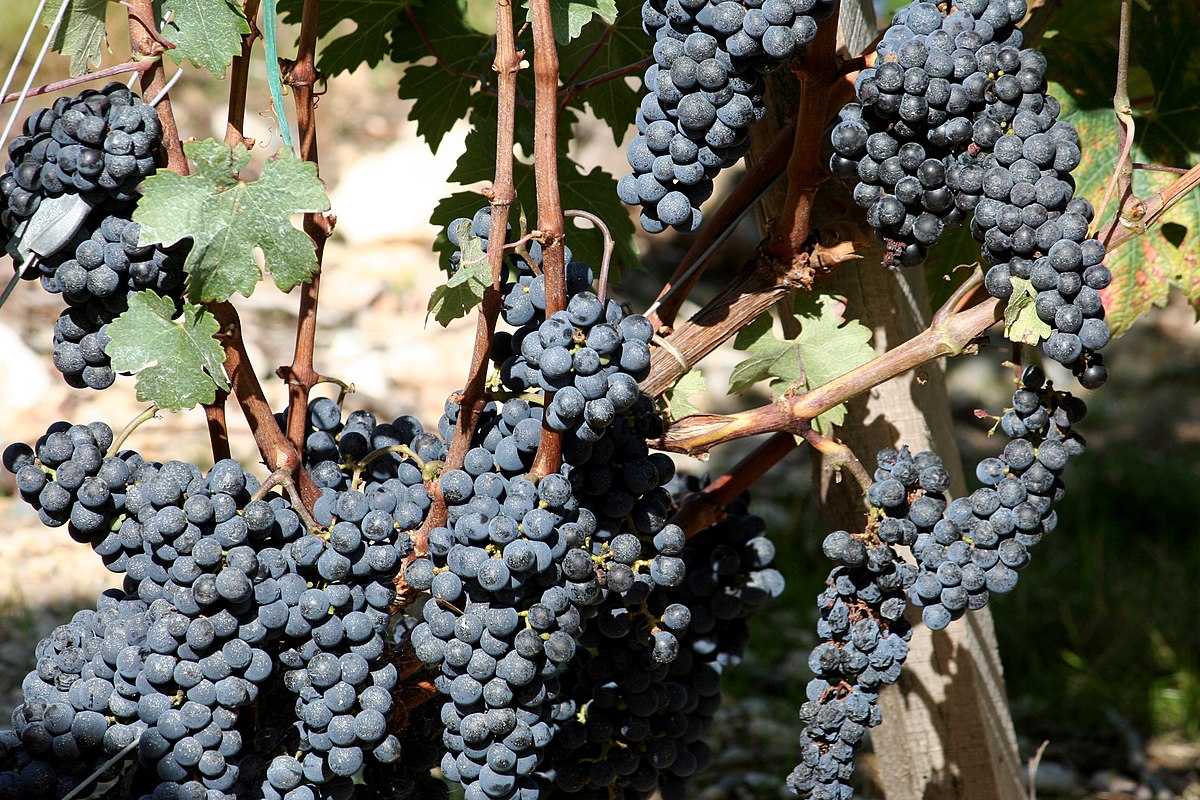
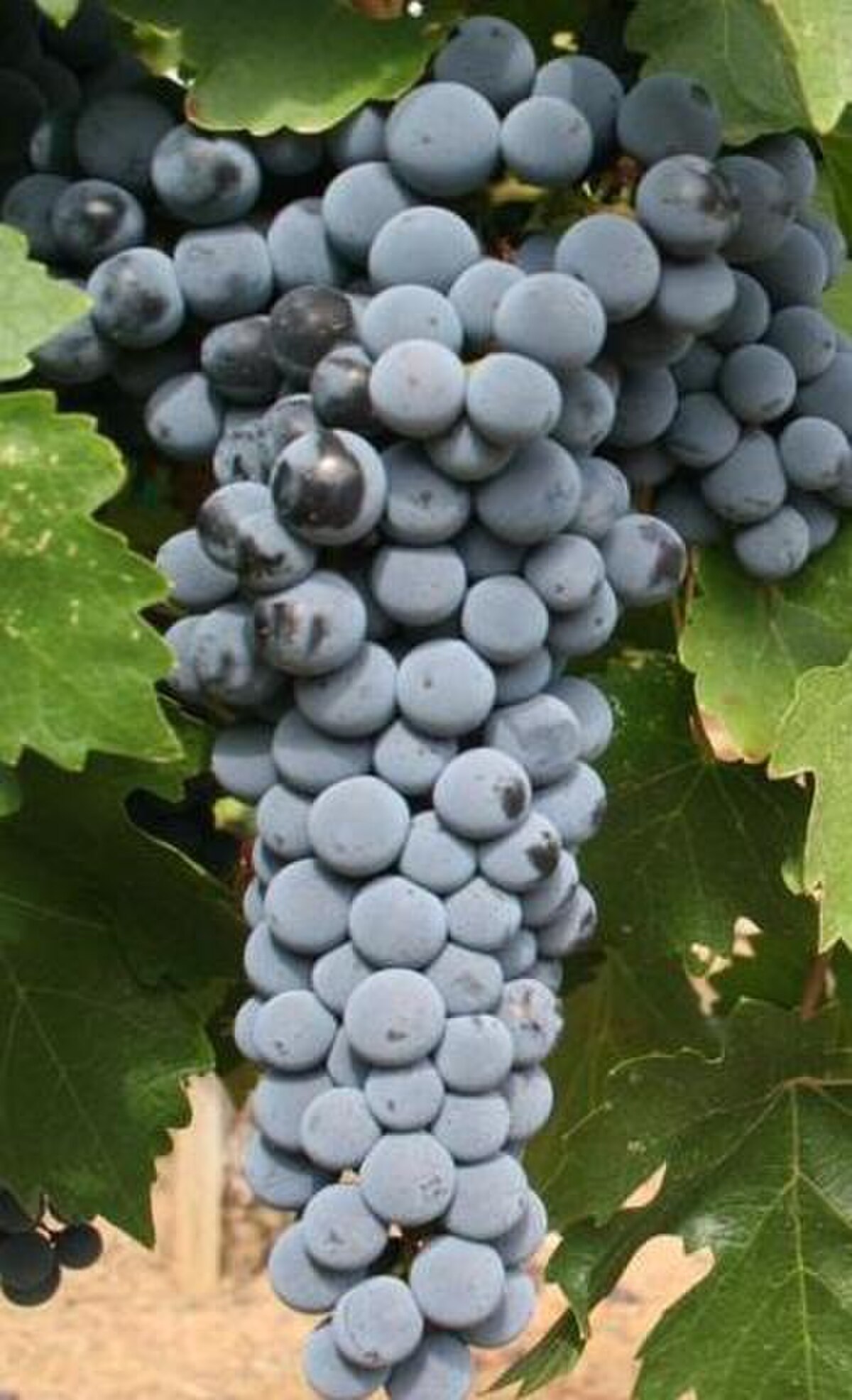
That is what a grape variety is: a fixed set of compounds the vine can make, which the place then turns up or down. Tasters call the aromas that come from the grape itself primary. Part of the template is physical. Cabernet berries are small and thick-skinned, so there is more skin per drop of juice, and skin is where color lives, and the tannin that dries your mouth.
A close-up of a large cluster of dark, dusty blue Cabernet Sauvignon grapes on the vine, with green leaves visible around them. Agne27 at English Wikipedia, CC BY-SA 3.0, via Wikimedia Commons
The parentage test
A template is inherited, so where did Cabernet Sauvignon get its own? That was guesswork for three hundred years, because nobody kept records of which vine came from which. In 1997 John Bowers and Carole Meredith at UC Davis ran DNA markers across the vine and published the answer in Nature Genetics.
Cabernet Sauvignon is the child of Cabernet franc, a red, and Sauvignon blanc, a white. The red parent had been suspected. The white one was a shock. Nobody bred it. Two vines in neighboring Bordeaux plots crossed by accident, probably some time in the 1600s, and somebody noticed the seedling was worth keeping.
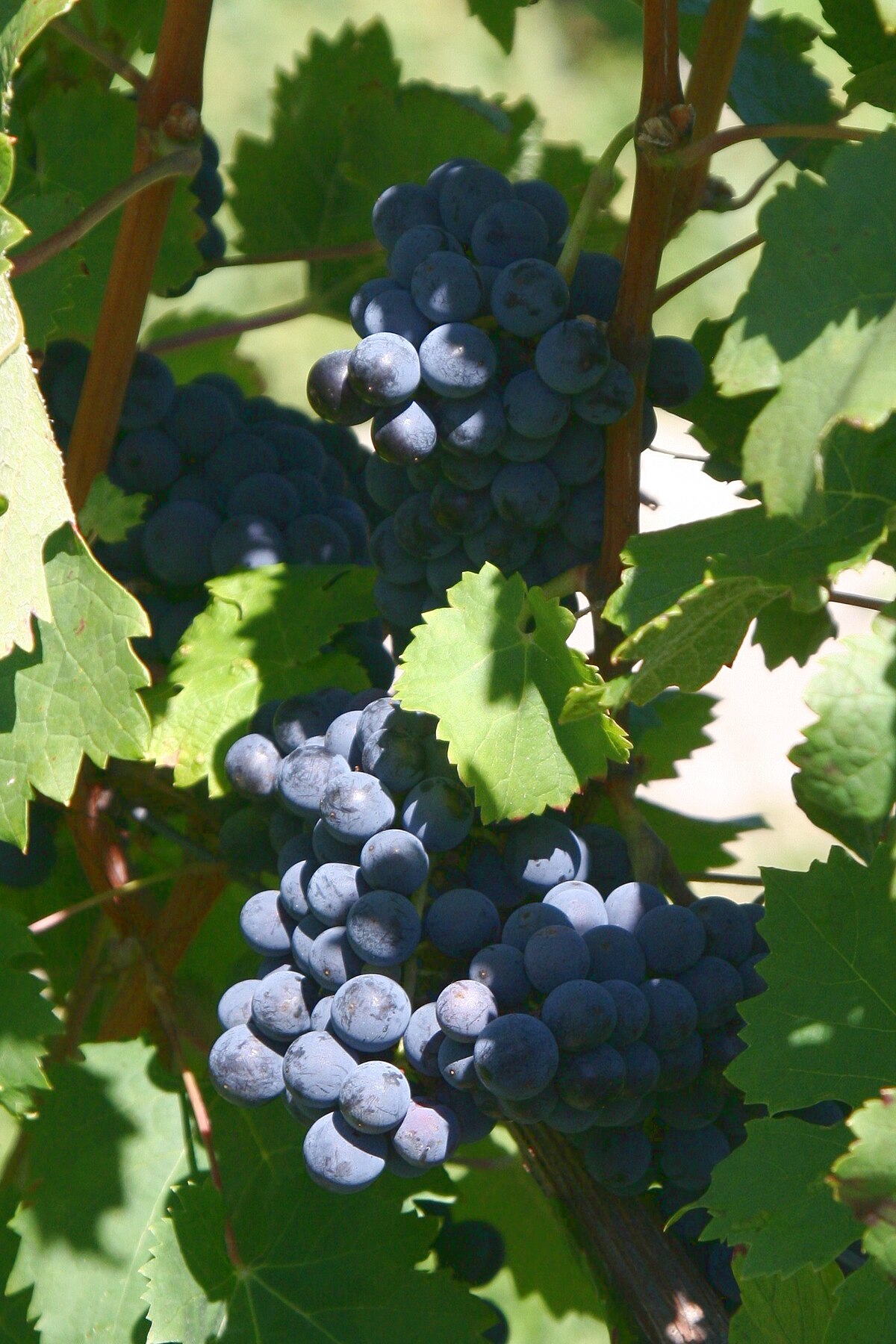
A cluster of dark purple Cabernet Franc grapes hanging from a vine, partially shaded by green leaves. Rosenzweig, CC BY-SA 3.0, via Wikimedia Commons
The name had been saying so for three hundred years. It is the two parents' names stuck together.
Reading the green
You can watch the inheritance in one flavor. The green bell pepper note in a cheaper Cabernet comes from compounds called pyrazines, and both parents are loaded with them. The same pyrazine is what makes a green pepper smell like a green pepper, and your nose finds it at parts per trillion.
Sunlight destroys pyrazines as the fruit ripens. So the greener the Cabernet, the cooler or shadier the fruit was when it was picked. Which is the template paying off. The grape sets what can be in the glass, the weather sets how much of it, and a green Cabernet is a reading of the sunlight it got.
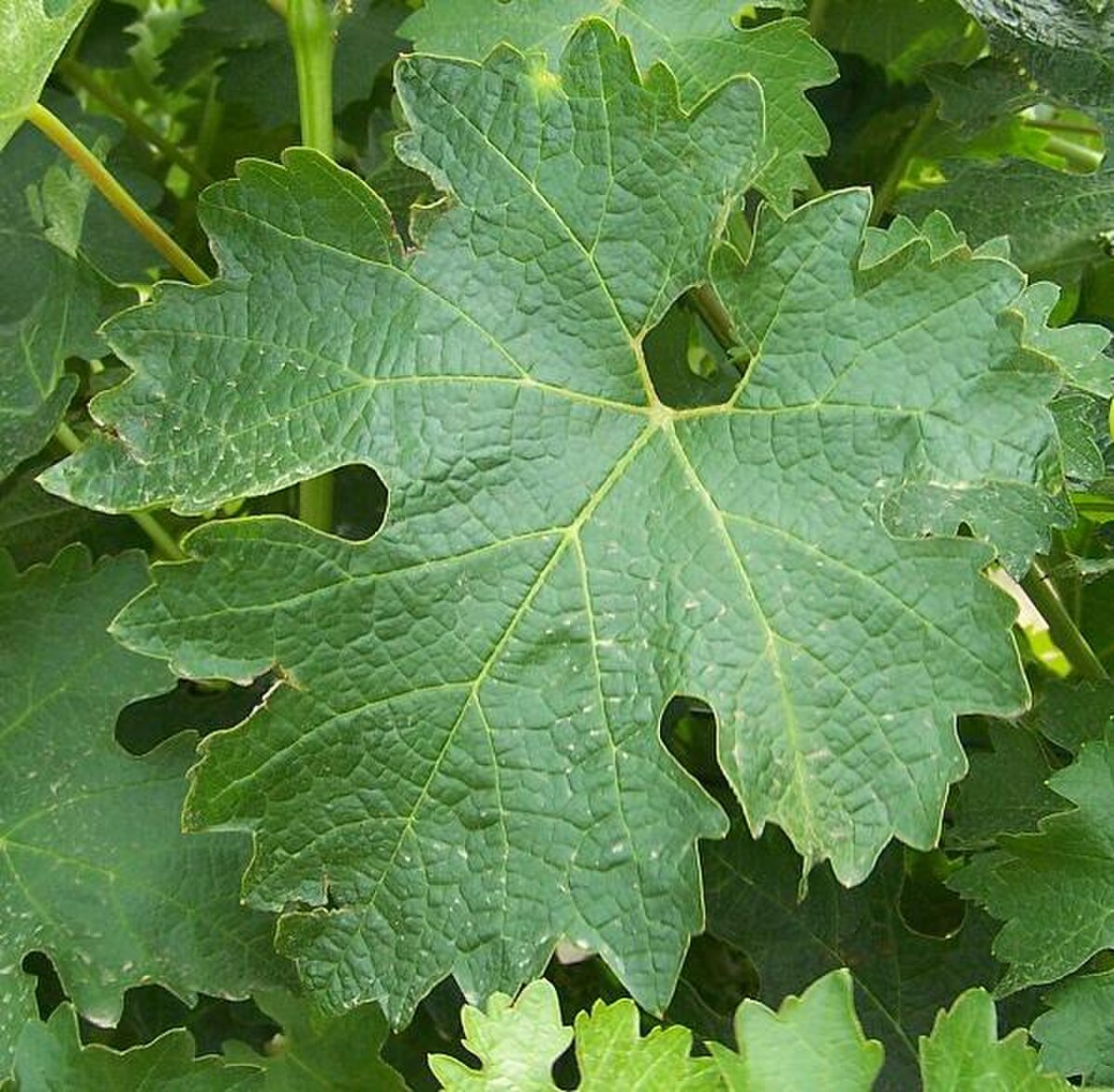
A close-up view of a Cabernet Sauvignon grape leaf shows its distinctive lobed shape and textured surface. Agne27 at English Wikipedia, Public domain, via Wikimedia Commons
How did Cabernet Sauvignon originate?
For centuries, wine drinkers believed Cabernet Sauvignon was an ancient Roman grape known as Biturica. DNA typing at UC Davis in 1996 finally proved its true history: it originated in seventeenth-century France as a chance crossing between red Cabernet franc and white Sauvignon blanc.
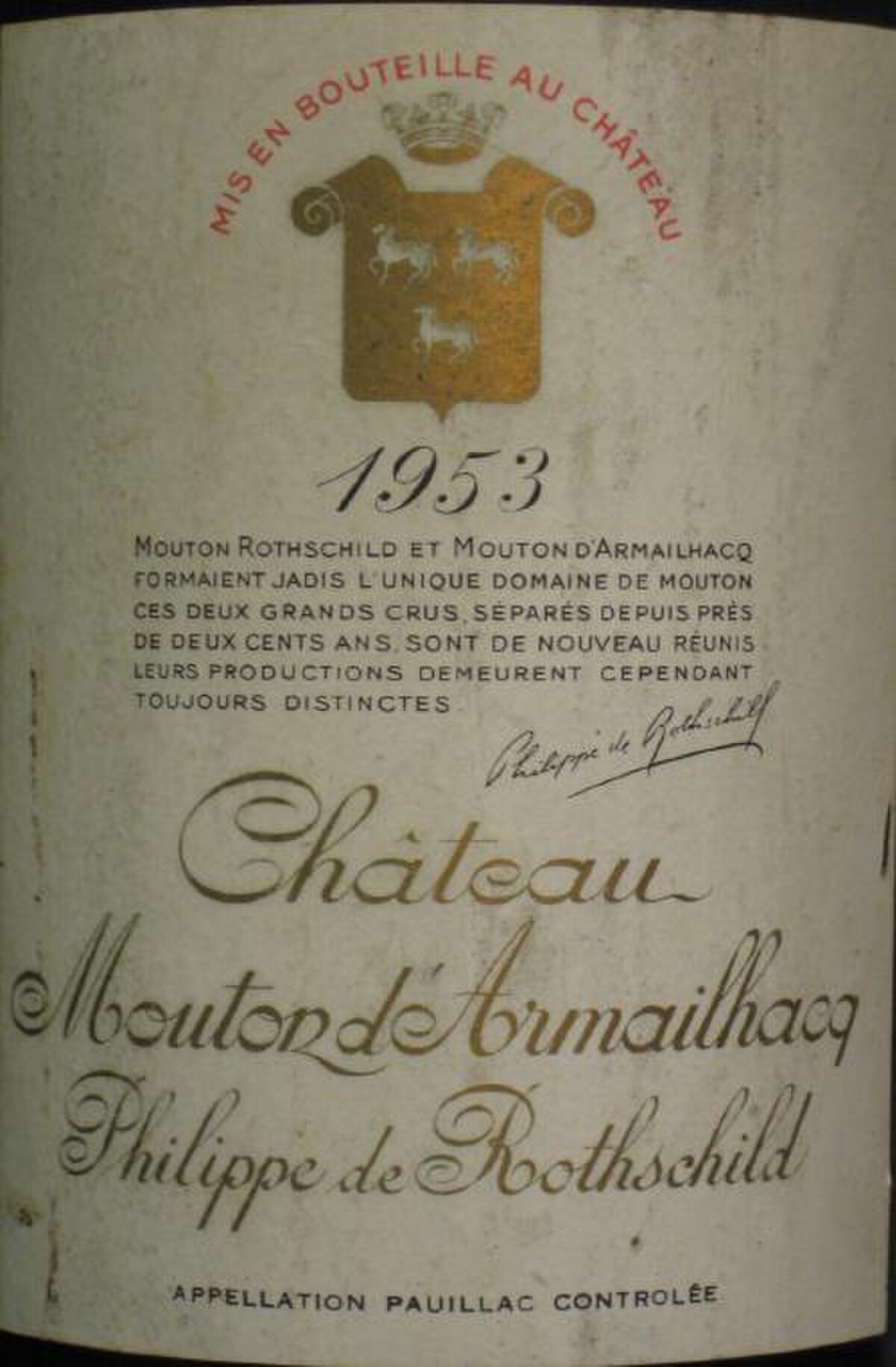
Château d'Armailhac was one of the earliest Bordeaux estates to actively cultivate and spread Cabernet Sauvignon vines. Murgh, Public domain, via Wikimedia Commons
The vine inherited distinct traits from both parents. It draws its blackcurrant aroma and structure from Cabernet franc and its green, grassy notes from Sauvignon blanc. The name itself is simply the two parental names joined together.
Growers adopted the grape across Bordeaux in the eighteenth century, led by estates such as Château Mouton and Château d'Armailhac in Pauillac. In 2016, researchers sequenced its genome, making Cabernet Sauvignon the first commercial wine grape to have its full genetic code mapped.
Why does Cabernet Sauvignon taste different in different climates?
Cabernet Sauvignon berries are small and thick-skinned, which gives the wine deep color, high acidity, and substantial tannins. The vine buds late in the spring, protecting it from early frost, but it also ripens late in the season.
Because it ripens late, temperature and sunlight strongly dictate the wine's final flavor profile. In cool climates, grapes retain higher concentrations of pyrazines, producing distinct notes of green bell pepper and herbs alongside blackcurrant.
In warmer regions with abundant sunshine, such as parts of California, sunlight breaks down these green compounds and allows the fruit to ripen completely, yielding flavors of black cherry, olive, or even jammy, cooked blackcurrants in very hot conditions.
Test yourself
Pinot noir from Oregon and from Burgundy still smell related. Why?
The variety fixes which compounds are possible. A variety is a template. Where it grows moves the levels up and down and can hide something entirely, but it cannot add a compound the vine has no recipe for.
A grower strips leaves to expose the bunches. What happens to the green pepper note?
It drops. Sunlight breaks pyrazines down as the fruit ripens, so a grower who wants less of that green edge pulls leaves to let light onto the bunches. Shade is what preserves it.
Play the lesson in edgi and the card is yours. It lands on your Map next to the ideas it connects to, and turns from matte to foil to gold as you learn more around it.
Can Cabernet Sauvignon produce white or bronze grapes?
Yes, rare mutations can alter its color. In Australia, a natural mutant vine with bronze fruit was named Malian, and a subsequent mutation from that vine produced white grapes named Shalistin due to a loss of pigment-producing anthocyanins.
Why is Cabernet Sauvignon frequently blended with other grapes?
In cooler regions like Bordeaux, unpredictable harvest weather often forces growers to pick the grapes before they reach peak ripeness. Winemakers blend it with earlier-ripening grapes to balance its acidity and fill out the body.
Has Cabernet Sauvignon been used to breed new grape varieties?
Yes, breeders have crossed it with several varieties. Crossing it with Grenache created Marselan, crossing it with Glera yielded Incrocio Manzoni 2.15, and crosses with the Spanish grape Sumoll produced Cienna, Tyrian, and Rubienne.