Blood Sugar LevelsWhy 4 grams fuels the whole body
Blood sugar level is the concentration of glucose, a simple sugar used for energy, dissolved in your bloodstream. Your body keeps this total amount to roughly four or five grams at any time, which is about a single teaspoon of sugar across five liters of blood. Maintaining this narrow balance is critical because your brain consumes about 60% of that circulating glucose while you rest, but persistently high amounts cause cell dysfunction and blood vessel damage.
By the edgi team We find the most surprising true thing about an idea and build a 60-second lesson around it.
You have about 5 liters of blood circulating through you, but only about 4 grams of glucose, roughly a single teaspoon, dissolved in it at any time. This is a vital, narrow range. If your levels dip, your brain struggles to function; if they double, that sugar starts to structurally damage your blood vessels.
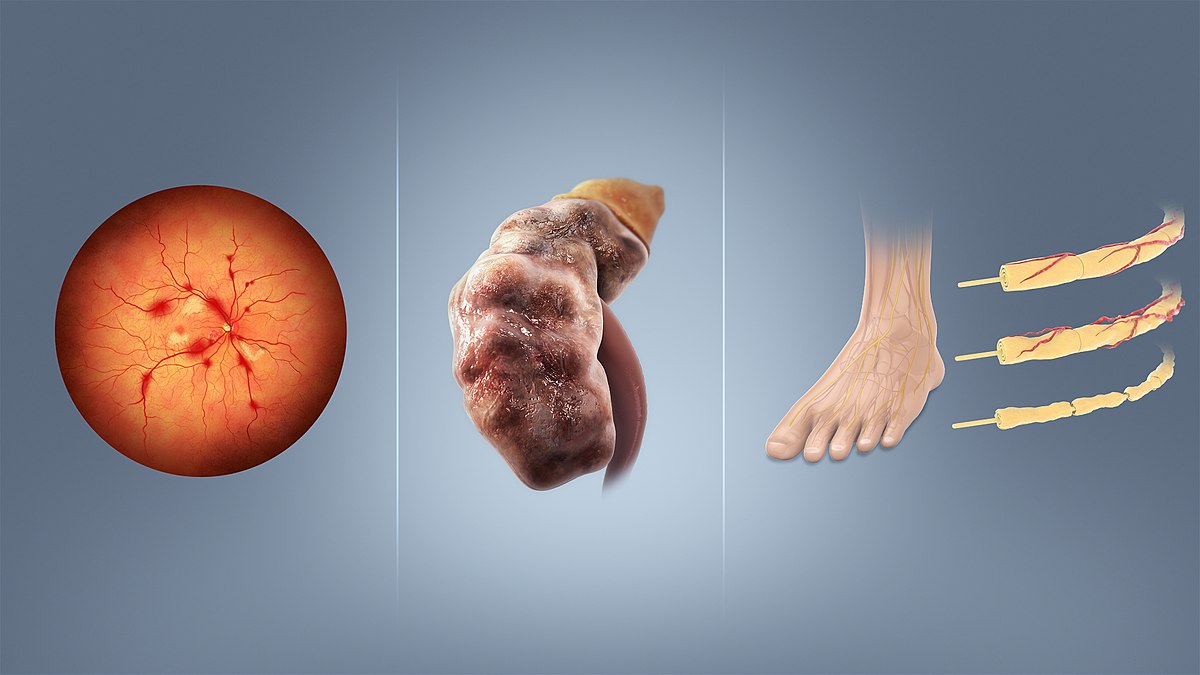
Three illustrations showing potential complications of diabetes: retinopathy (left, an eye with damaged blood vessels), nephropathy (center, a diseased kidney), and neuropathy (right, damaged nerves… https://www.scientificanimations.com/, CC BY-SA 4.0, via Wikimedia Commons
The thermostat
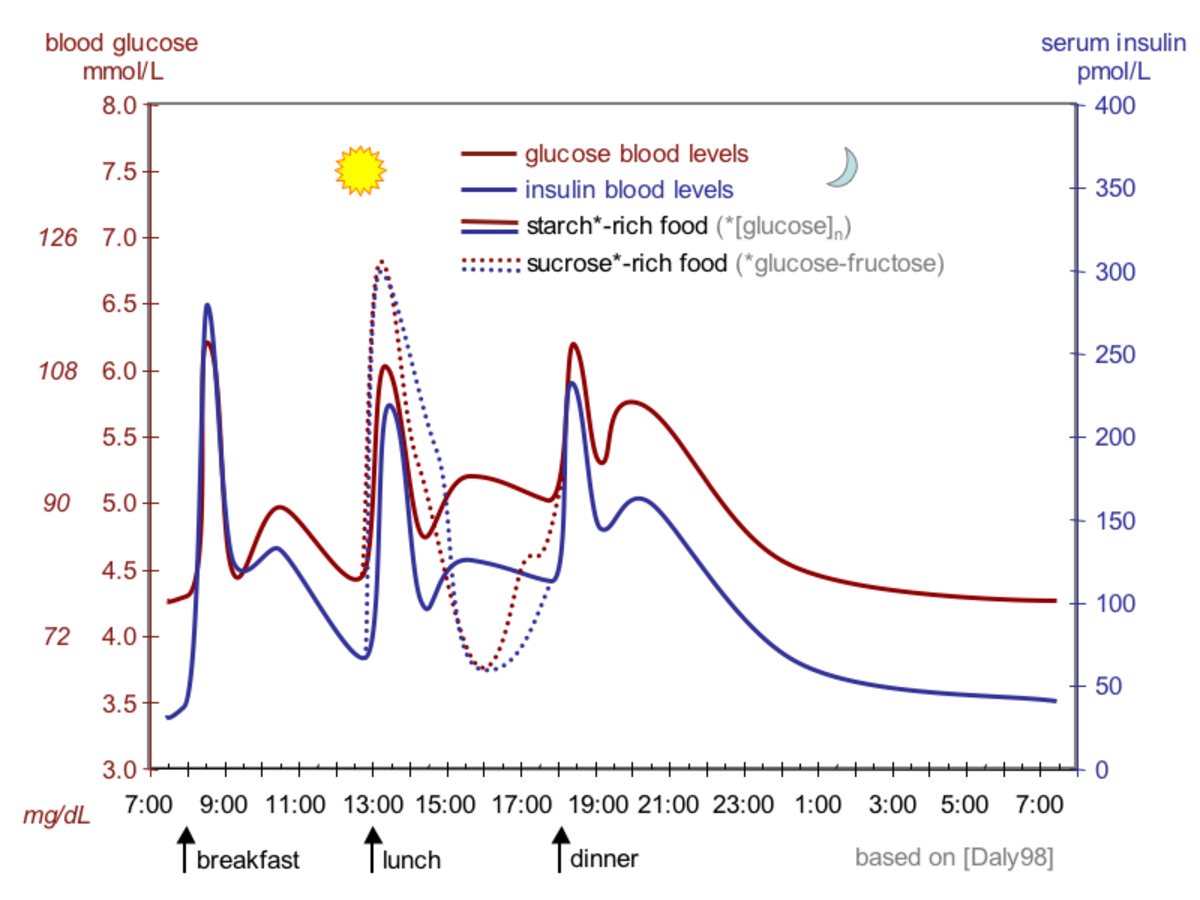
The pancreas acts as your body's thermostat for glucose. When levels rise, it releases insulin to store the excess. When levels fall, it releases glucagon to pull sugar from your liver's backup battery, called glycogen.
A graph illustrating the fluctuation of blood glucose (red line) and insulin (blue line) levels in humans over a 24-hour period with three meals. Jakob Suckale, Michele Solimena, CC BY 3.0, via Wikimedia Commons
This constant, automatic maintenance is a core part of your body's homeostasis.
The breakthrough
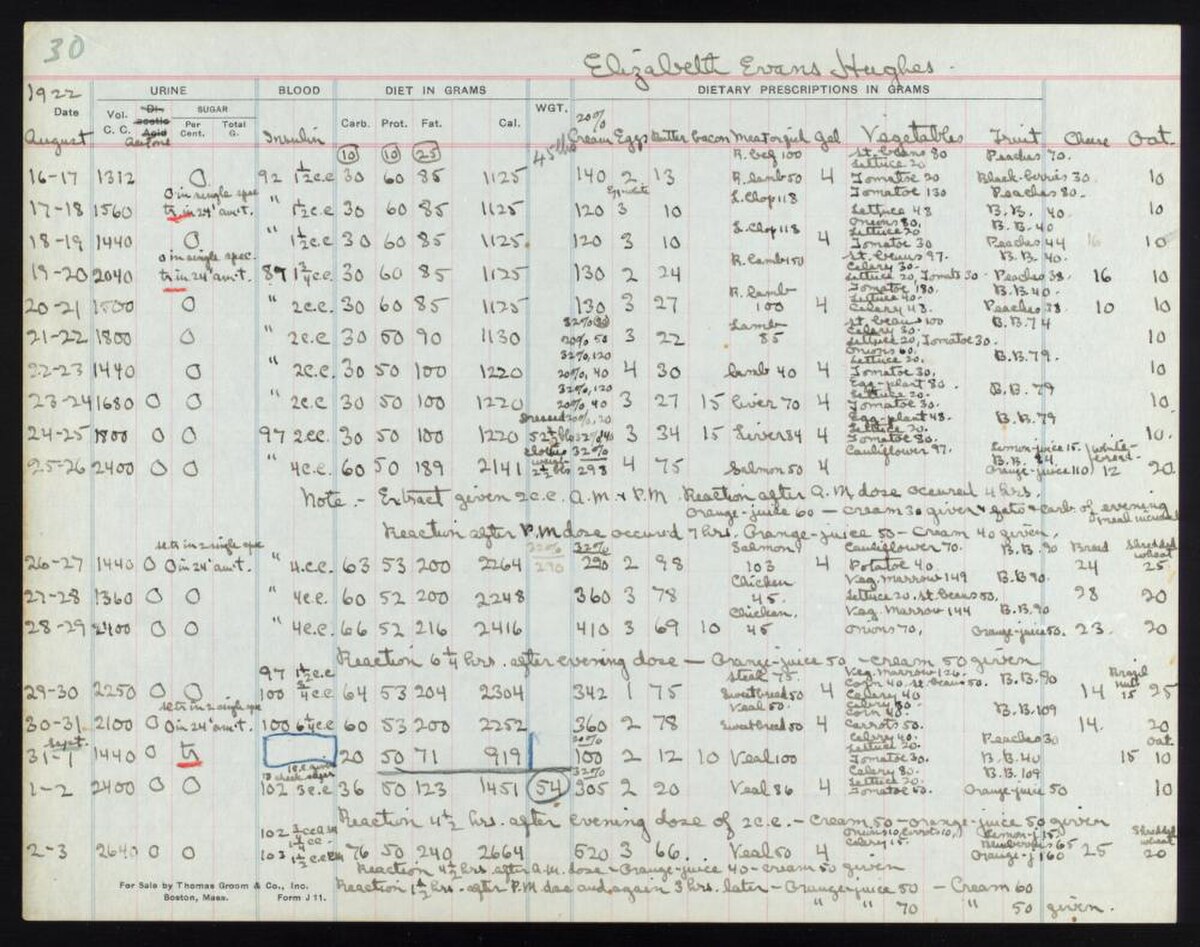
Before 1921, high blood sugar was a death sentence, often treated only with brutal starvation diets. Then, Frederick Banting and Charles Best isolated insulin from a dog pancreas.
Handwritten chart for Elizabeth Hughes from 1922, used to track blood, urine, diet in grams, and dietary prescriptions in grams. Thomas Fisher Rare Book Library, CC BY 2.0, via Wikimedia Commons
They injected it into 14-year-old Leonard Thompson, who was slipping into a diabetic coma. His levels stabilized almost instantly, changing medicine forever.
How the body balances glucose
Your brain consumes about 60% of circulating blood glucose in a fasting, resting state, yet the blood holds only about four grams of it at once. To prevent running out or overflowing, your body uses two opposing hormone pathways produced in pancreatic islets.
When you eat, blood glucose rises. The pancreas releases insulin, an anabolic hormone that prompts cells to absorb glucose from the blood and use it for energy through glycolysis. Excess glucose gets converted into glycogen and stored away in the liver and skeletal muscle cells.
When blood sugar drops between meals or during fasting, catabolic hormones like glucagon, cortisol, and catecholamines step in. Glucagon triggers the liver and muscle cells to break down stored glycogen and release just enough fresh glucose back into circulation.
Normal ranges and testing units
A healthy fasting blood glucose level for a non-diabetic human sits between 3.9 and 5.5 mmol/L (70 to 100 mg/dL). After meals, levels temporarily rise for an hour or two, reaching up to 7.8 mmol/L (140 mg/dL) or slightly more before settling back down.
Medical laboratories report these numbers in two different formats depending on the country. The United States, Germany, and Japan use mass concentration in milligrams per deciliter (mg/dL), while the United Kingdom, Canada, Australia, and India use molar concentration in millimoles per liter (mmol/L). Because the molar mass of glucose is approximately 180.156 g/mol, you convert mmol/L to mg/dL by multiplying by 18.016.
When regulation breaks down, health deteriorates quickly. Chronically elevated blood sugar is called hyperglycemia, the defining trait of diabetes mellitus, while abnormally low sugar is called hypoglycemia. Both states lead to cellular dysfunction.
Test yourself
How does the pancreas help keep blood sugar levels stable?
Insulin stores excess; glucagon releases stored sugar.. Insulin helps store excess glucose, while glucagon signals the liver to release stored glucose when levels fall.
What happens when blood sugar levels deviate from the one-teaspoon baseline?
Levels must stay narrow to prevent harm.. Blood glucose is kept in a narrow range because both dangerously low and high levels cause immediate biological consequences like brain dysfunction or structural vessel damage.
Play the lesson in edgi and the card is yours. It lands on your Map next to the ideas it connects to, and turns from matte to foil to gold as you learn more around it.
Alcohol causes an initial increase in blood sugar levels. After this temporary surge, it tends to cause blood glucose levels to fall.
What target blood sugar levels are recommended for diabetics?
The American Diabetes Association recommends a fasting blood glucose range of 3.9 to 7.2 mmol/L (70 to 130 mg/dL) for people with diabetes. Two hours after meals, the target is less than 10 mmol/L (180 mg/dL).
Do other animals have the same blood sugar levels as humans?
Blood sugar levels vary widely across the animal kingdom. Domestic cows, sheep, and goats maintain lower normal ranges between 42 and 81 mg/dL, while hooded seals can reach levels up to 283 mg/dL.