Extinction is the fading and eventual stopping of a learned behavior when it no longer produces a reward or encounters an expected trigger. Instead of erasing the original habit, the brain forms a second, separate memory that inhibits the old response. Because the original memory remains intact beneath this new layer, the old behavior can return when context changes or time passes.
By the edgi team We find the most surprising true thing about an idea and build a 60-second lesson around it.
Extinction is what happens when a behaviour stops paying. The lever no longer produces food, the message no longer gets a reply, and the behaviour fades out. The obvious reading is that the original learning has been wiped. Mark Bouton spent a career showing it has not. Extinction lays down a second memory on top of the first.
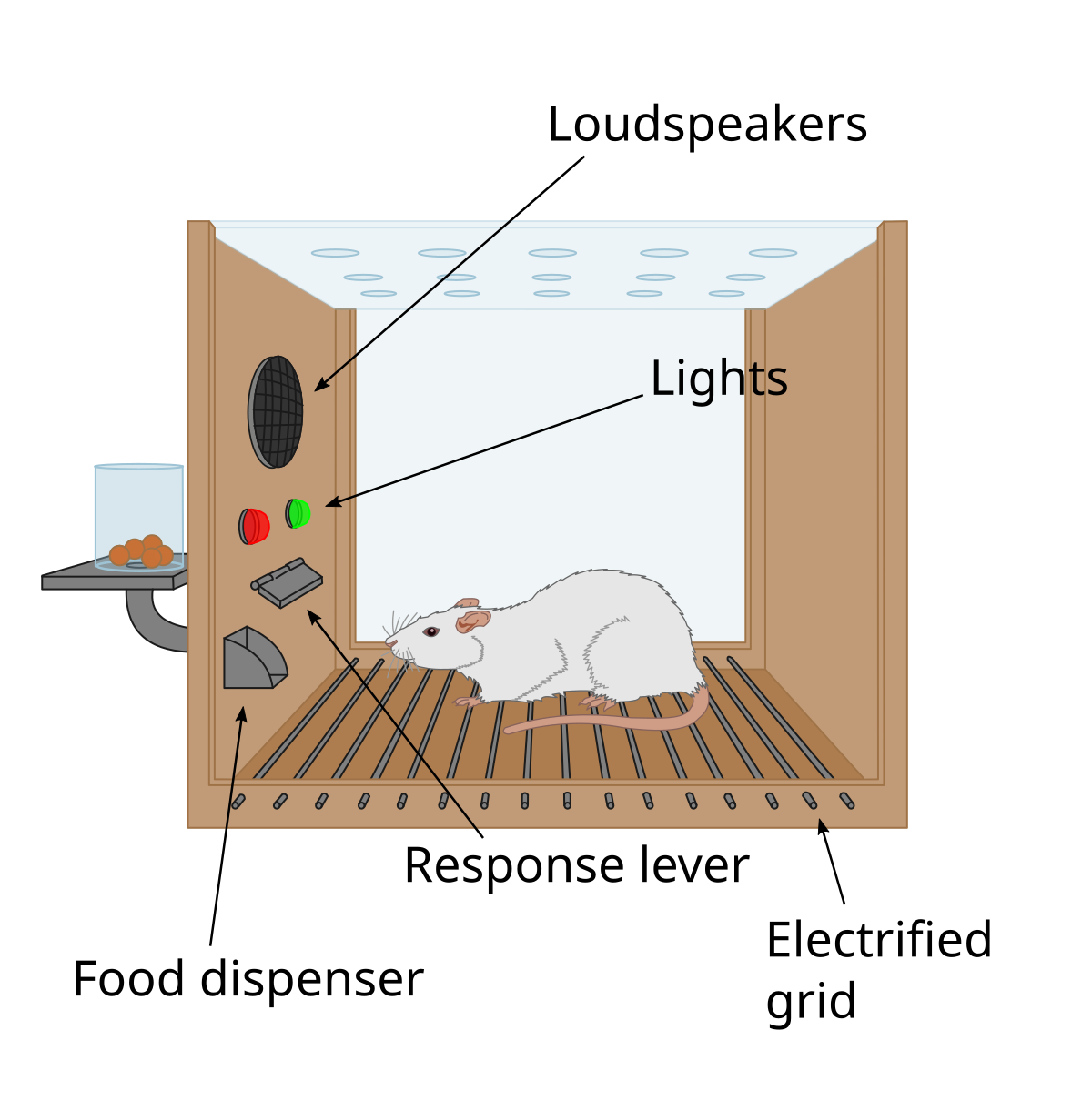
Diagram of a Skinner box, an operant conditioning chamber, showing its internal components. Original: AndreasJS Vector: Pixelsquid, CC BY-SA 3.0, via Wikimedia Commons
The second memory carries a narrower message: not here, not now. And it is far more tied to the place where it was learned than the original ever was.
Put it back in the old room
Renewal is the demonstration. Train the behaviour in room A. Extinguish it in room B until it is gone. Then test again in room A, and it comes back. Nothing was retrained in between. The behaviour returns because the lesson that stopped it was learned somewhere else, and room A never got that lesson.
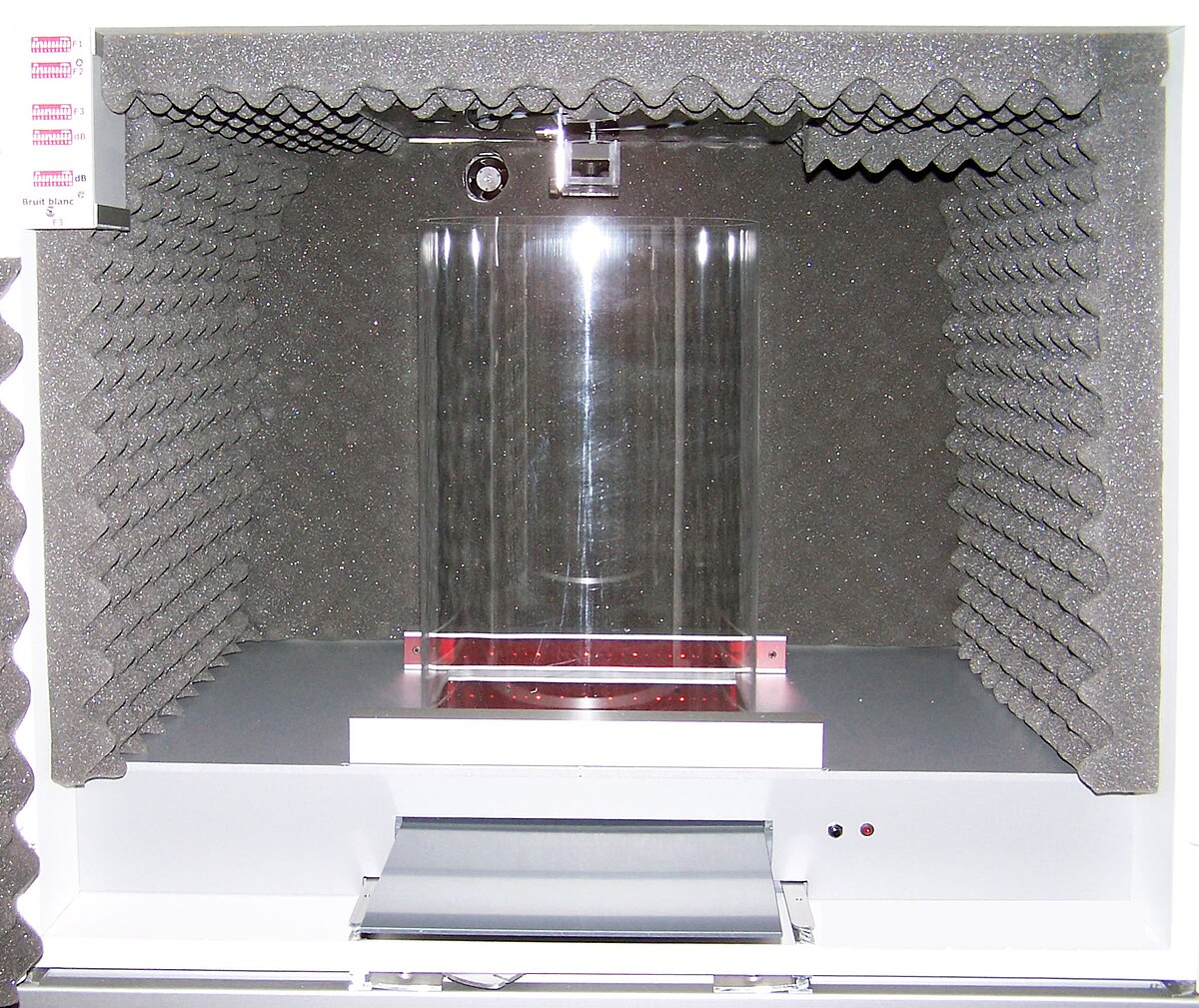
A fear conditioning apparatus for mice is shown, consisting of a sound-attenuating chamber lined with foam, containing a clear cylindrical enclosure on a metal grid floor. Bd008, CC BY-SA 4.0, via Wikimedia Commons
Waiting does something similar. Leave a gap after extinction and part of the behaviour reappears on its own, which is called spontaneous recovery. This is the shape of ordinary relapse. Someone stops drinking while in treatment and does well, then goes home to the same front door and the same six o'clock that every drink ever went with.
What to do with that
Exposure therapy runs into the same wall. Fear treated successfully in a clinic can return at home, because the clinic is where the new learning was done. Bouton's own answer is to do the unlearning in more than one place. A lesson learned in several rooms is tied to none of them, and it comes back less when the setting changes.
A soldier in uniform wearing a virtual reality headset and holding a rifle controller participates in exposure therapy for PTSD at Joint Base Lewis-McChord. Maj. Matt Lawrence, 807th MDSC Public Affairs, CC BY 2.0, via Wikimedia Commons
The work, then, is to take the new response into the old settings on purpose, one at a time. When something you thought was finished turns up again, that is renewal, not a wasted three months.
How classical and operant extinction work
Extinction occurs in two distinct forms of learning. In classical conditioning, a neutral cue like a tone or metronome is repeatedly paired with an unconditioned stimulus, such as food or a mild foot shock, until the cue alone triggers a conditioned response. Extinction takes place when that cue is presented repeatedly without the unconditioned stimulus. Pavlov's dog eventually stopped salivating to a metronome once the sound no longer predicted food, and a mouse stops freezing to a tone once shocks cease.
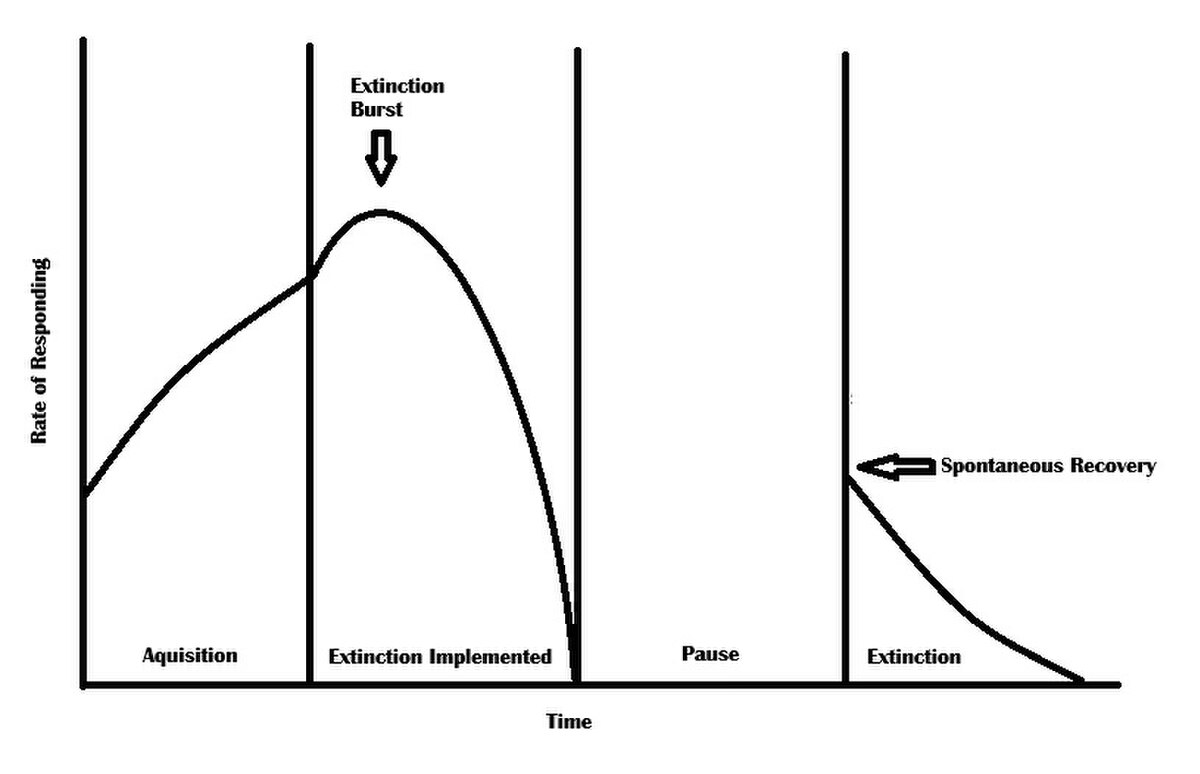
This curve records how rapidly an unreinforced behavior drops in frequency over time. LieSpotter, CC0, via Wikimedia Commons
In operant conditioning, extinction happens when a deliberate action no longer receives reinforcement. B. F. Skinner discovered this curve accidentally when a food pellet dispenser jammed on a Friday afternoon, leaving a rat pressing a lever that gave nothing in return. Over repeated unreinforced attempts, the rate of lever presses dropped back to baseline levels.
The brain mechanisms behind extinguished fear
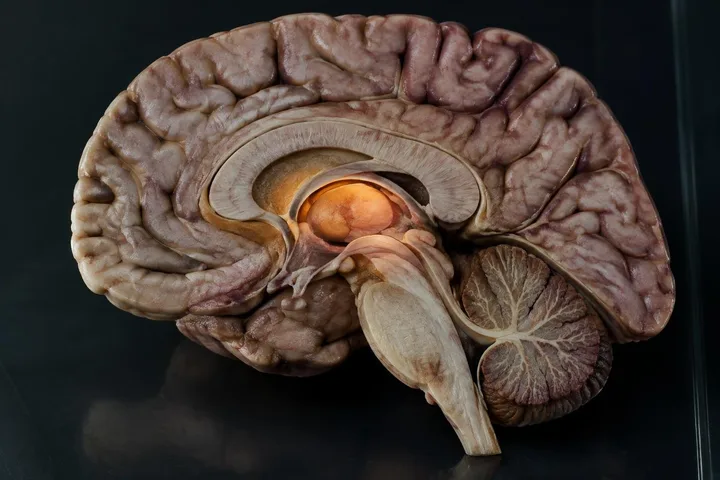
Neuroscientists have found that extinction relies on inhibitory brain circuits rather than the simple destruction of old synaptic pathways. Studies in rodents show that fear extinction involves interactions between the amygdala, the hippocampus, and the prefrontal cortex, operating through neurotransmitters such as GABA and NMDA.
Specifically, extinction of a fear response correlates with synaptic inhibition in the fear output neurons of the central amygdala, which project to the periaqueductal gray that controls freezing behavior. This inhibitory signal derives from the ventromedial prefrontal cortex, effectively placing a biological brake on the original reaction. When this inhibitory system fails to extinguish conditioned fear, anxiety disorders such as post-traumatic stress disorder can persist.
Test yourself
A fear of flying is treated successfully in a clinic, then returns on the first real flight. What does renewal say happened?
The new learning was tied to the clinic. Extinction writes a second, narrower memory that holds best where it was learned. The aeroplane never received that lesson, so the original one runs.
What does extinction do to the original learning?
It writes a second lesson over it. Bouton's work shows extinction generates new learning that is tied to the context where it happened. The first association is still there, which is why it can return.
Play the lesson in edgi and the card is yours. It lands on your Map next to the ideas it connects to, and turns from matte to foil to gold as you learn more around it.
How does extinction differ from ordinary forgetting?
Forgetting is the passive weakening of a behavior over time when it has not been performed. Extinction is an active learning process caused by repeatedly performing the behavior or encountering the cue without receiving reinforcement.
What is an extinction stimulus?
An extinction stimulus, also known as S-delta, is a specific cue signaling that reinforcement will not follow a behavior. For instance, if food pellets arrive only when a green light is illuminated, a red light acts as an extinction stimulus indicating no food will be delivered.